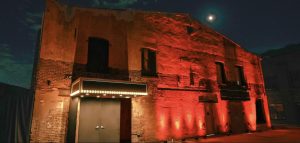
Housed in a 19th century industrial complex in Brooklyn, Refuge is a brand new venue that wants to revive the spirit of New York nightlife’s golden age, using bygone spots like Paradise Garage and The Sound Factory, as well as iconic international hubs like Space Ibiza, as reference points for its ‘hi-fi dance club’. With an exceptional sound system at front and centre of its design, a custom dancefloor, and an approach to programming that’s all about consistency and curation, it wants to contribute to its hometown’s clubbing ecosystem in the best way possible. Ria Hylton went to its opening weekend, and caught up with founders John Dimatteo and Craig ‘Shorty’ Benabeu to find out more.
Refuge has set itself a high bar. Nestled in a 19th century industrial complex, the brand new Brooklyn venue opened its doors in late September with the promise of becoming an essential “hi-def dance club”, with a focus on exceptional audio and carefully curated line-ups that celebrate New York dance music’s past, present and future.
Joining the ranks of local institutions like Nowadays in Ridgewood and Public Records in Gowanus, the East Williamsburg spot feels like a fine addition to the city’s contemporary clubbing landscape, but its cultural lineage seems to reach much farther back, to a time when the sound system was front and centre. From the preview party videos alone, there’s a clear sense that the space is reimagining a dancefloor experience of days gone by — a feeling confirmed by founders John Dimatteo and Craig ‘Shorty’ Benabeu, who cite New Jersey’s Zanzibar, The Sound Factory and Paradise Garage as inspiration.
Brooklyn has been the centre ground for New York clubbing for well over a decade now — a conscious antidote to the bottle service culture that edged out Manhattan’s golden era. But the borough faces the same issues as Manhattan years before — rising rents and restless neighbour complaints threaten nightlife at every turn, which is why it took John Dimatteo and Craig ‘Shorty’ Benabeu several years to settle on their new club location. The wait has clearly paid off.
When we arrive an hour into the club’s 24 hour opening weekend in late September, local DJ Miss Gypsy is on the decks spinning classic New York sounds and the floor is filling quickly. The strict no phone policy means we must make a mental note of the five disco balls hanging from the ceiling, the proofed window openings, and the circular lighting design above. The real stars of the show, however, are the four perfectly angled speaker stacks at the edges of the dancefloor. Throughout the weekend, members of staff polish them with a cloth — a small but telling gesture in a room where everything feels deliberate, lovingly curated.
The weekend line-up includes much-loved local spinners Jacky Sommer (Analog Soul) and Mike Servito, as well as DJs from further afield, like Detroit’s DJ Holographic and Paranoid London, fronted by Josh Caffé. Berlin’s Bruno Schdmidt also makes an appearance. The crowd is a heady blend too — professional dancers, nightlife veterans, and curious newcomers mingling easily. “It feels like 5,000 scenes rolled into one — it’s still trying to figure itself out,” one dancer notes to a group of friends. “Fuck Berlin, New York is the best place to party in the world,” another exclaims.
One reveller, who’s come direct from Jamie Jones’ Paradise party in Greenpoint, insists we get up and dance. “You can sit when you’re dead!” he booms, cajoling us to our feet. He’s still there mid-morning when we return and the crowd is down to its core.
It’s hard not to feel impressed by the space — its programming, crowd, sound, and overall reverence to the city’s club culture. Reviving a high standard like this is no mean feat, but Refuge makes it look effortless. In an era where hi-fi listening bars and ‘audiophile’ venues are on the rise globally, it stands out as something genuinely different and exciting.
DJ Mag caught up with Dimatteo and Benabeu to learn more about the venue, its sound system and its plans for the future. Read the Q&A below.


Congrats on your opening weekend. What was the original spark that led you to open Refuge?
John Dimatteo: “For well over a decade, we’ve felt that New York has been missing a true cultural destination club but for dance music lovers from around the world. A club that could define a generation, stay open as long as the party lasts and only closes when the people decide. We created a club that is built around sound and where every single detail was designed with intention to create the vibe and feeling that has made this city a legendary global clubbing destination. Now that underground music has crossed somewhat into the mainstream, we felt a responsibility to present it in the way it was originally intended and in the type of club that this music was born in. Over the years some of that spirit has been lost and Refuge is here to bring it back because New York needs it.”
You’ve been involved in the scene for decades — what lessons from all those years did you carry into Refuge and what clubs most influenced your vision for the venue?
Dimatteo: “Refuge is the culmination of everything I have learned as a promoter, DJ and businessman. One of the biggest lessons I learned is to create something that you’d actually want to be part of yourself. When you build for your own taste, your best work comes out and it’s a lot more fun. For me, some of the core values for Refuge come from Sound Factory (46th Street ’97-’04) and Space Ibiza. For Shorty, It’s Sound Factory (27th street ’89-’95), Zanzibar, and Paradise Garage. You will find some very noticeable elements from these clubs like our Levan horns and floor, and some others you may overlook — like the bowls of fruit on the bar.”
I heard Refuge was seven years in the making, with a long search for the right space. What ultimately drew you to East Williamsburg and this specific building?
Dimatteo: “The search to find the right building started in 2018 and over the years we viewed over 50 different spaces, trying to find one that was suitable for this concept. And one that was able to be sustainable long term — we nearly signed a lease in 2018 for a larger space on Randolph Street. We ended up in a small pocket of East Williamsburg, creating a secluded area that is filled with clubs, art galleries, music studios, restaurants, roof top bars and is far away from residential [housing], making it the perfect location for us. We like this specific building due to its architecture and natural rustic appeal, which is an art piece itself.”
How does the club being in the heart of a 19th-century industrial complex contribute to the overall experience?
“Refuge is tucked away behind a maze of industrial buildings inside a nearly 200-year-old free standing building that looks like a house, which — combined with the outdoor space — makes it a rare find in New York City. The old, weathered bricks add to the soul of the building. Once you step behind our walls the city disappears, which I think sub-consciously creates a true disconnect for those that enter and is a key part of our overall experience.”
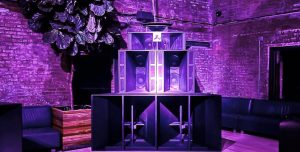
Can you explain how designing the club around the REX sound system shaped your approach to the space?
Craig ‘Shorty’ Bernabeu: “Once the space was made legally occupiable, we began with acoustic tests inside and outside the building, then hosted a series of pop-up events to study how the room responded. We started with a Kong Version 1, later moving the DJ booth and upgrading to a larger Kong Version 2. Each party helped us refine the sound. Seven months later, we built an entirely new 6-way system called REX with horn-loaded mids, vintage JBL Tweeters on the Full-Range, vintage JBL wooden Diffraction horns, and 3-way upsized horn loaded side fills from Kong that are now hung from the ceiling.
“Further acoustic tests followed adding more acoustical ceiling panels to eliminate reflections for the perfect balance. At Refuge, the sound system came first. Most clubs design the room, then fit in the speakers where convenient. We did the opposite, mapping the speakers to form a perfect square dancefloor, angled precisely to avoid phase cancellation. The rest of the venue was built around that sonic foundation, keeping flow in mind so that guests can roam freely without ever having to do an about face.”
What’s one detail about Refuge — architectural, acoustic, or cultural — that you’re most proud of but people might not immediately notice?
Bernabeu: “The dancefloor is one of the things we’re most proud of even though it’s something most people won’t immediately notice. It’s a custom, floated maple wood floor built specifically for dancing, designed to flex just enough to return energy with every step. It’s nearly four inches thick, and raising it triggered a massive amount of additional structural, electrical, and plumbing work, but for us it was essential. The floor isn’t just part of the design, it’s part of the sound and movement of the room. You can’t have a true dance club without a proper dancefloor and we weren’t willing to compromise on that. It also helps with the acoustics.”
Many venues chase headliners, but you want to emphasize sound and atmosphere — what’s your long-term approach to programming?
Dimatteo: “Our approach to programming is all about consistency and curation. We focus on building weekly parties that carry a similar energy and vibe week after week, rather than chasing headliners or ticket sales. Each night features multiple artists, all treated equally and booked purely for the music. It’s about creating an atmosphere where the sound and the crowd are the stars, not necessarily the names on the flyer. We have also hosted some bigger names without announcing them at all.”
How do you balance the demands of running a business with the more idealistic side of curating sound and community?
Dimatteo: “That balance is never easy. We lead with the ethos and creative vision first, then build the business model around it. It’s about protecting the spirit of what we’re doing above all while still keeping things sustainable. I’ve noticed that everyone we are working with, from staff to vendors, all buy into our vision and do whatever they can to help us and work within the confines of our budget. You will find our staff and vendors on the dancefloor on any given night when they are not working, it is really incredible. Having a team that shares that mindset makes all the difference, people who believe in the project, go the extra mile and aren’t afraid to wear multiple hats to make it all come together.”
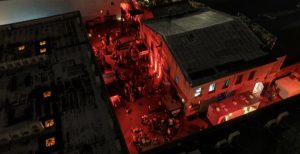
How do you see Refuge fitting into, or challenging, Brooklyn’s clubbing ecosystem?
Dimatteo: “I think Refuge fills a gap that isn’t currently being served in Brooklyn or New York in general. We’ve created our own niche that stands apart from what’s out there, but it also complements the rest of the scene. Our model is built around long hours and fluid programming, so we feed off the local ecosystem rather than compete with it. The way we see it, the more venues that are open and thriving, the better it is for everyone.”
The opening weekend brought together such a wide range of ages on the dancefloor. What role do you see Refuge playing in bridging generations of clubbers, from longtime veterans to newcomers?
Dimatteo & Bernabeu: “Refuge doesn’t cater to any single demographic, we cater to a mindset. It’s for like-minded people who love great music and great parties, no matter their age or background. We’re a true melting pot, bringing together all walks of life and cultures under one roof. That’s how the New York scene was when we were coming up, and that’s how it should be. The city has always been a melting pot, and our club should reflect that. A place where everyone connects through the music and where the older generations can show the younger ones what a proper party should be like.”
How do you think the culture around high-fidelity sound has evolved since the early days of disco and house?
Bernabeu: “In the disco era, everything was hi-fi. Every recording and most disco club sound systems were fully analog, rich, and alive. In the 1990s audio quality took a back seat to convenience. Digital audio was cheaper, faster, and easier to make and sell and because of that hi-fidelity faded. Only in the past decade have people rediscovered what was lost. Hi-fi bars have re-emerged and with Refuge we’ve taken that resurgence one step further, creating what we call a ‘hi-def dance club’.”

Leave A Comment
You must be logged in to post a comment.