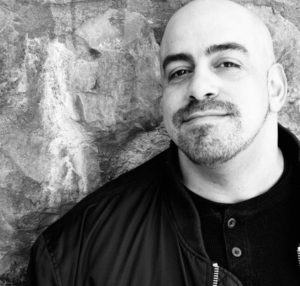
A movement born from New York dance floors found its voice in Amsterdam. Elliott Matos didn’t just build parties—he built GDE, a cultural force that reconnected house music with its queer, Black, and underground roots at Amsterdam Dance Event.
Introduction: The Story Behind the Spotlight
There are two histories of house music. One lives in festival lineups, streaming charts, and global branding. The other lives in bodies—on dance floors where identity, resistance, and joy collide.
Elliott Matos belongs to the latter.
Long before diversity became a talking point in electronic music, Matos was building something inside Amsterdam Dance Event that forced the industry to confront its own origins. That something became GDE—Gay Dance Event—an underground movement that re-centered house music around the communities that created it.
Origins: A Childhood Inside the Culture
Matos didn’t discover nightlife—it was embedded in his upbringing. Raised by Puerto Rican parents in New York, his early life was steeped in Disco-era nightlife, Latin jazz and salsa, Queer club culture, and the golden age of New York dance floors “My parents were going to the Palladium, Latin Quarters… my mother was at Studio 54,” he recalls.
Music defined the environment. Sneaking into his sister’s room to play her records, Matos developed a deep relationship with sound—one rooted in curiosity, not performance. That foundation would shape everything that followed.
New York as Training Ground
Before Amsterdam, there was New York. Before GDE, there was the dance floor. As a teenager in the late ’80s and early ’90s, Matos moved through the city’s club ecosystem—Tunnel, Limelight, and beyond—absorbing the energy of a scene still deeply connected to its underground roots.
Clubs like Tunnel and Limelight offered exposure, but it was his job in a Chelsea record shop that gave him access. DJs like Tony Moran, David Morales, Frankie Knuckles, and Danny Tenaglia came through regularly.
“They’d ask, ‘What’s new?’” Matos became a cultural intermediary—tracking releases, sourcing promos, and understanding how music moved before it ever reached the dance floor.
Amsterdam: Where Everything Changed
A move to Europe shifted everything. Originally aiming for Berlin, Matos landed in Amsterdam and quickly embedded himself in its nightlife. At Club Church, he started from scratch—painting walls, working coat check—until opportunity struck.
On New Year’s Eve 2008, he stepped in behind the decks. “I had my CDs with me. I just played.” The reaction was immediate. Matos ended up with a residency, and with it, a new chapter was set to begin.
The Partnership: Elliott Matos & Benjamin Aillery
Meeting Benjamin Aillery transformed the trajectory of Matos’ life. Aillery was bold, intuitive, and fearless—a natural disruptor. Together, they built a record label, a creative studio, a network of artists and collaborators, a shared vision for nightlife. “We were life partners [but not romantic],” Matos says. “We pushed each other.” Their dynamic was equal parts enthusiasm, creativity, and defiance, and it set the stage for what came next.
If Matos was the cultural archivist, Aillery was the visionary disruptor. Together, they were unstoppable. “We egged each other on,” Matos says. “He was like, ‘Let’s do it.’ I was like, ‘Okay, let’s do it.’”
The Void at Amsterdam Dance Event (ADE)
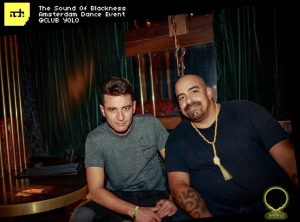
By 2009, Matos and Aillery were fully immersed in Amsterdam and increasingly aware of something missing. Although ADE was massive. it lacked queer visibility, Black and Latino representation, female representation, and a connection to house music’s roots.
“There was nothing there that reflected where house music came from,” Matos says. So they built it themselves.
“We didn’t ask for permission. We built what was missing.”
The First Event: A Defining Moment
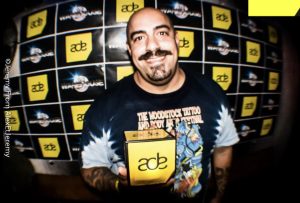
Their first event, which featured Peter Rauhofer and Star 69 Records, was held on a Sunday, which was typically the slowest night of the week. But this time, it didn’t matter. “The line was insane,” Matos says. Crowds showed up from everywhere. “The line was insane. People from all over—England, Turkey, Israel. That’s when we knew… we had something.” The energy was electric. Then, something clicked. “We realized that this is what people want.”
Matos and Benjamin saw the gap—and filled it.“We were like, there’s nothing here. Let’s bring our history here.” They began importing not just DJs, but culture: the legacy of the Paradise Garage, the spirit of Sound Factory Bar, and the energy of queer Black dance floors
“When Frankie walked in, when Danny walked in, all these New York heads… people were gagging,” Matos laughs. “Like, what is happening? We’re in Amsterdam and this feels like home.”
The Birth of GDE
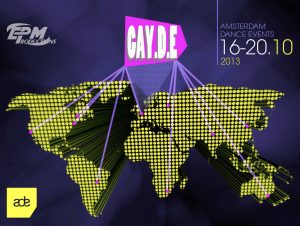
“Gay Dance Event.” aka GDE. Matos and Aillery mirrored ADE’s structure, branding, and format, thereby creating a parallel experience that centered queer and underground culture. In the beginning, it was called Gay.D.E. “There were so many queer events happening,” Matos says. “We were like—it’s not ADE, it’s Gay Dance Event. GDE.”
At first, ADE pushed back, but eventually, something shifted. “They saw what we were doing… and they appreciated it.” GDE wasn’t just nightlife: it was intentional curation.
There was Sounds of Blackness, a tribute to the Black roots of house music, inspired by New York’s Sound Factory era. There was also Women of House, a direct response to gender imbalance and a lack of female representation in DJ lineups.
They curated lineups that brought together artists across political and cultural divides. Matos recalled one memorable moment that perfectly sums it up: A Palestinian and Israeli DJ met at a GDE event and formed a connection that extended beyond music. “That’s what house music does,” Matos says.
Matos and Aillery pushed boundaries socially and politically by challenging discrimination within nightlife and creating space for dialogue around identity and safety. “They were worried we were putting a spotlight on things,” Matos says of early reactions. “But we were just telling the truth.” Eventually, ADE caught up, launching initiatives like ADE Green, focused on social responsibility.
“House music has always been about people who don’t have a voice.”
GDE operated without sponsors or institutional backing. Everything was self-driven. There was no funding, no safety net, and no guarantees. “No sponsors. We worked for nothing. We did it for love,” Matos says. They booked venues themselves. They flew in DJs through personal networks.
At one point, Matos and Aillery were literally biking across Amsterdam, coordinating events in real time. “It was just us. Running around, making it happen.”
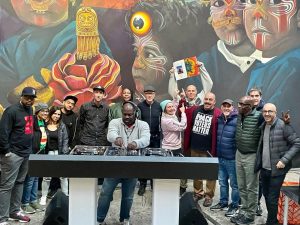
Sometimes, it got messy—like the now-legendary boat party where Aillery, who secretly hated boats, got seasick and bailed. “I was left running the whole thing alone,” Matos laughs. “But it turned into one of the most beautiful moments—sunset over the canals, house music playing… magic.”
At their peak, Matos and Aillery ran events across 10+ venues over five days—coordinated through relationships, hard work, and trust. These weren’t just events. They were experiences rooted in connection. Not everyone understood GDE. At one point, organizers expressed concern that it might create division. Matos disagreed. “Visibility isn’t division.” Years later, ADE introduced initiatives focused on inclusivity, but GDE had already laid the groundwork.
Loss and Legacy
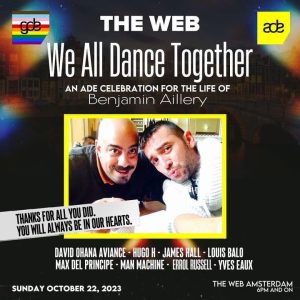
In recent years, the story has taken a more personal turn. The passing of Benjamin Aillery changed everything. He passed away unexpectedly, and while his passing was tragic for all who knew him, it was especially devastating for Matos. “It’s hard to go back,” Matos says. “I was with him from sunrise to sundown. The city… it reminds me of him everywhere.”
Their partnership helped to shape not only GDE but an entire era of Amsterdam nightlife. Today, a broader team, including Curtis Atchison, Reginald Johnson, Manny Ward, First Lady, and Hugo H., continues their work, expanding GDE while honoring its roots.
Full Circle: From Clubs to Community
Matos now focuses on political and community work in the Northeast U.S. , channeling the same energy into housing advocacy and grassroots organizing. While the work is much different, the mission remains the same: to create space, amplify voices, and build community.
The Future of House Music
Despite constant claims that nightlife is fading, Matos sees something different, something more hopeful and optimistic. He foresees a throwback to an earlier time. “I see young people craving connection.” He hopes that this spirit will continue, because that’s what house music is all about: unity, connection, and participation.
GDE continues to run annually alongside Amsterdam Dance Event, evolving each year while staying grounded in the culture that built it. It emerged from a refusal to let black and queer culture vanish from house music and from a desire to honor the history and the roots of house music. And by doing so, Elliott Matos and Benjamin Aillery along with their collaborators created something beautiful.


Leave A Comment
You must be logged in to post a comment.