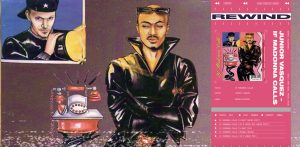
The ultimate bitch track. Junior Vasquez’s ’90s house gem captured a scandalous chapter in New York nightlife—and cut his friendship with Madonna short.
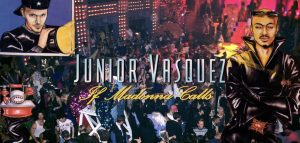
Sometime during the mid ’90s, Junior Vasquez received a message on his answering machine from his then-BFF—who just so happened to be the world’s biggest pop star. “Hello Junior, this is Madonna,” the Queen of Pop drawled. “Are you there? Call me in Miami.” Without telling her, the lauded New York DJ and producer recorded the voicemail and chopped it up into an explosive house banger that’s come to represent the golden years of Manhattan nightlife.
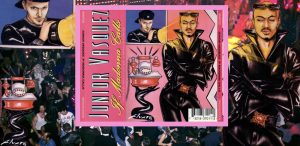
Released as a single with multiple versions on June 7th, 1996 via Groovilicious Records, “If Madonna Calls” is the ultimate bitch track. A pillar of ballroom culture, bitch tracks exude raunchy, derisive humour with venomous lyrics meant to derogate its unlucky subjects. The song dropped at the peak of Madonna’s popularity, and permanently strained Vasquez’s friendship with the singer.
“If Madonna Calls” is etched in history books as a pop culture phenomenon. The track sparked wild rumours about the duo’s relationship, providing endless entertainment for queer scenes globally. Bolstered by the intoxicating air of gossip, its impact on dance floors was immediate. From club nights to ball runways, voguers and queens would ham it up, seemingly playing out Vasquez and Madonna’s beef in real time.
Vasquez, whose DJing in New York drew an international fanbase in the ’90s, played the notorious hit at peak-time, often several times in a night. Heard at Manhattan hotspots like Sound Factory (which he co-owned alongside friend and professional party girl Christina Visca), Tunnel, Palladium and Limelight, the infamous sample quickly incited gossipy mayhem. As Madonna’s voice projected from mammoth speakers at these downtown meccas, where she herself was a regular, clubbers would turn to each other and gasp, “I can’t believe he’s doing this!” Word got around that the celebrity missed one of Vasquez’s gigs and the song was his response to the betrayal (a tale that still hasn’t been verified, but simply too salacious to pass up).
Friends and collaborators suggested a more innocuous narrative: “If Madonna Calls” was a not-so-humble brag made to show the world that Vasquez was close with a household name. But Madonna didn’t appreciate the joke and he ended up paying her legal fees to resolve the tension. Due to legal reasons, the original voicemail was never released, and replaced with house singer Kelly Bienvenue’s impersonation. “[Madonna] got really, really pissed off,” Visca told me in her raspy voice. “I mean, if I were her, I would have taken it as a compliment. But I guess she didn’t.”
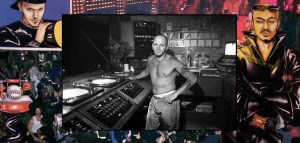
Vasquez made numerous mixes, from “Lectro Dub” to “Tribal Break”, that Groovilicious put out in 1996. His many house renditions sample a ringing telephone and “4th Measure Men” by 4 You (AKA Marc Kinchen) with vocals by ballroom legend Franklin Fuentes. The bitch track pioneer’s legendary tagline, “If Madonna calls, I’m not here,” delivered in a thick New York accent, triggers the brain’s reward pathways like a handful of skittles. He later jeers, “Hola señorita cosa!” or “Hi miss thing!” (ballroom slang used to greet someone self-absorbed.) As if the mockery couldn’t get worse, Fuentes then caps the song with a lethal blow: “Actually, if she calls, disconnect her!” The jacking production on each version spoke to the needs of Vasquez’s diverse dance floors, which spanned Garage alumni, club kids, straight couples, drag queens and dancers of all races. The sharp, angular synth stabs on the “X-Beat” edit had enough stride for house kids and drag queens to vogue to, while its hard, pumping rhythm satisfied the circuit boys. These gems reverberate throughout clubs today. Eli Escobar still plays them at his Madonna tribute parties in New York. “When people hear, ‘This is Madonna,’ they go crazy,” he told me.
“If Madonna Calls” peaked at No. 2 on the US Billboard Dance Club Songs chart in August, 1996 but its popularity didn’t sit well with the Material Girl. “Knowing Madonna, she keeps it really tight when it comes to her privacy. It probably triggered her that she didn’t know about it,” Victor Calderone, a New York DJ who has remixed “Ray Of Light,” “Frozen,” “Beautiful Stranger” and more, said over the phone.
Vasquez himself was surprised by Madonna’s response. The ritual of throwing shade was a part of the ’90s downtown scene, and to the young artist, his work was merely an extension of the culture. It was “just a campy record,” he told Page Six in 2018.
The song was a shining example of the attention-seeking behaviour that defined the era. To be seen was to be a diva, and when too many divas get in the kitchen, burns are unavoidable. When drag queens strutted and vogued down the runways that opened up on Vasquez’s dance floors, it was a common sight to see wigs sliding off stocking-covered heads and girls spitefully tripping each other. “If Madonna Calls” was “a giddy, gossipy treat that was much needed at that moment,” longtime nightlife columnist Michael Musto explained via email.
Some people interpreted it as a diss track, but those close to Vasquez, who described him as “cunty,” “shady” and “diva” to me, just saw it as another one of his party tricks. “The cattiness and the drama of it all—Junior was very much about that, and that’s what made him so special,” Calderone summed up. “It’s all about perception,” echoed Escobar. “There’s a really big sense of humour involved in that record that she might not have appreciated.” It seemed as if everyone took turns being the butt of Vasquez’s jokes. In 1994, he released a bouncy house track mocking a friend he worked with, Simeon, called “I’m Simeon, Dammit”. Vocalist Mark Hughes takes on a pouty voice to whine: “I’m Simeon, and I’m straight, goddamit!”
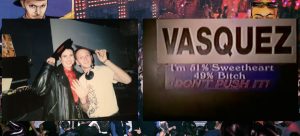
By the early ’90s, the in-demand DJ was already in the phonebook of every pop luminary. “If Madonna Calls” took his career to even greater heights. When Whitney Houston and Mariah Carey wanted a club edit, they trusted his intuitive ability to work any crowd. Dubbed the king of New York house, Vasquez was considered a god by club rats, and he certainly acted like one. A sign on one of his dressing rooms read: “I’m 51 percent sweetheart, 49 percent bitch. DON’T PUSH IT!”
“People can say what they want about Junior Vasquez, but I think [he] has a terrific sense of drama,” François K told DJ History last year. “When you go and hear Junior play, he will entertain you. He will challenge you. You might not like it. But he’ll create those dark atmospheres. He will stop the music and make something really grand happen.”
Vasquez came from humble beginnings. Born Donald Gregory Mattern to a German-Italian family in Pennsylvania, he moved to New York on Halloween night in 1971. He cut hair and took classes at the Fashion Institute of Technology with dreams of being a designer. Then he met Shep Pettibone, a DJ on KISS FM, and watched the radio figure work. After setting his sights on music, Vasquez reinvented himself. “I wanted to create a new persona for myself and I wanted that person to be Spanish. Who doesn’t love a Spaniard?” he once told 5 Magazine.
As an aspiring DJ, he spent hours studying the queer scene. He travelled to ballroom houses in the Bronx. He took his Jeep to the Greenwich Village piers, historically known as a safe haven for gay and transgender youth, where he listened in on conversations to incorporate the language and verve into his tracks. An unofficial member of the influential House of Xtravaganza, Vasquez grew familiar with what the scene wanted to hear. “[He] loved the energy of the runway kids,” longtime member Karl Xtravaganza told Red Bull Music Academy in 2016. “Many of his own tracks of the period were really written for voguing kids.” Vasquez’s 1989 remix of Sweet Pussy Pauline’s “Work This Pussy,” for instance, dominates runways to this day.
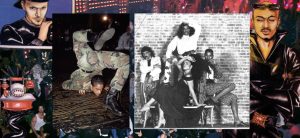
That year, Vasquez began an all-night-long weekend residency at the Sound Factory that went from 10 PM to the following afternoon. These nights helped fill the nightlife void that the Paradise Garage left after it closed in 1987. Taking the spacey house and disco that Larry Levan popularised, Vasquez made them harder by adding Latin house and tribal into the mix. He had no desire to DJ outside of New York, so tourists flew in just to see him play. Donatella Versace, André Leon Talley and Marc Jacobs all made appearances.
Around this time, Madonna began frequenting the Sound Factory and became a common sight during Vasquez’s residency. Often arriving at 1 AM, she’d get water and sit on the club’s giant Phazon speakers. According to lore, she was known to enter Vasquez’s booth and whisper in his ear between songs. If he played a song she didn’t like, she’d hold her nose and squeal, “Stinky!” he told Higher Frequency in 2005. Sometimes, Madonna was possessive—it was widely known she wasn’t thrilled about Vasquez’s relationship with her rival, Cyndi Lauper.
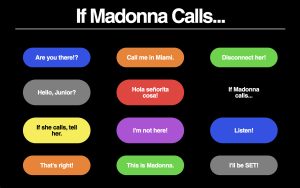
Vasquez and Madonna were attached at the hip. At a 1995 party for her album Bedtime Stories, Vasquez attended and “held her hand because she didn’t want to do it by herself,” the Higher Frequency interview mentioned. When asked what she found special about Vasquez’s DJing by MTV News at the event, she curled her fingers as if holding the essence of his taste between her hands, saying “his soulfulness and his feel for what people want to hear, you know?”
It was in Sound Factory’s hallowed halls that Madonna was introduced to voguing. Vasquez used the space as a residence for House of Xtravaganza and House of Aviance. Madonna picked out two dancers from the Sound Factory runway, Jose Gutierrez and Luis Camacho, who would feature in her chart-busting “Vogue” music video and the 1990 Blond Ambition World Tour. This marked the start of her issues with the queer community—and her reputation for burning bridges in the name of art.
A controversial 1991 documentary, Truth Or Dare, filmed during the Blond Ambition World Tour, resulted in a lawsuit from dancers Oliver Crumes, Kevin Stea and Gabriel Trupin, who accused Madonna of exploiting them. Trupin, who wasn’t openly gay at the time, begged her to delete his steamy kiss scene with fellow dancer Salim Gauwloos. She didn’t.
More than 30 years after they first met, Madonna is still obsessed with the culture that Vasquez introduced her to–in 2023, her Celebration Tour featured a ballroom dance-off segment. But some nightlife folks have grown disillusioned with her.
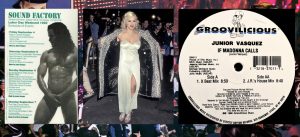
“It just felt like all she was doing was coming to you for information or whatever you were into, so that she could use it,” Shawn Dickerson, a former Twilo bouncer, revealed to me. “She came to my scene to pick up the dances and lift that whole voguing thing,” Vasquez told Higher Frequency. “Her big thing was that I was trying to make money off her name. On the contrary, she came to me for remixes, so who’s making money off whose name?”
In 2003, Vasquez got Madonna’s approval to remix “Hollywood” for a Versace show, but the duo didn’t reconcile. That was just “a personal favour” to Donatella, the star’s long-time publicist Liz Rosenberg told New York Magazine that year. “I can assure you that Madonna will never work with Junior again,” she added.
After several decades to reflect on the irreverent humour of “If Madonna Calls,” the cultural icon seems to have finally gotten the joke. During a 2021 pride party at Manhattan club Le Bain, the then-63 year-old danced with Telfar, Violet Chachki and her daughter Lourdes when Kaytranada dropped the “X-Beat” edit. “Yes, Madonna megafans, we can confirm that late last night Madonna was in NYC vogueing in satin opera gloves to ‘If Madonna Calls’ at 4 AM,” Interview Magazine reported at the time. “We saw it, and we live for it.”



Leave A Comment
You must be logged in to post a comment.