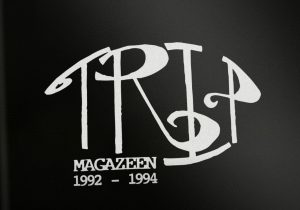
tripmagazine.jpg
A new book reproduces every issue of the seminal Florida rave magazine, Trip Magazine, spotlighting an overlooked chapter in dance music history.
The kids down in Florida had a massively outsized role in the evolution of the American rave scene. While everyone had heard of and many were catalyzed by the Storm raves in New York and the Bay Area full moon raves, the ingenious flyer network of the era also spread word about these massive parties in the city of Tampa and Orlando, cities otherwise associated with gorgeous beaches, long highways and dingy strip malls, cheap hotels and mass-produced mouse ears. It was almost a novelty to learn that people not only lived there, but had constructed one of the most exciting rave scenes in the south.
In the early 1990s the underground, as Michaelangelo Matos put it, was indeed massive, inspiring spontaneous parties that coalesced into semi-continuous scenes in seemingly every city and college town in the country. Even in this phase of fermentation and optimism, Central Florida really captured the imagination, especially when you were shivering at a map point at 1am and wondering if the blue mars lights streaking down I-94 toward Dolton were already busting the party before you got there. And as Tampa and Orlando stood out, their talent stood up against that of many cities in America, including ones several times their size. Artists like Rabbit In The Moon, DJ Three, DJ Icey and Q-Burns Abstract Message were prominent figures almost from the moment there was anything like a “national” scene. It says something that most of these people are still active in some capacity in the scene today.
Many of those figures appeared in the pages of TRiP, a fanzine that covered the Central Florida scene for several years in the early 1990s when things were getting big, but before they got bigger, and then became bigger still. Some of them actually wrote the pages of TRiP — it was a participatory scene then, so a magazine columnist was also a DJ, sold records at a hole in the wall and most importantly threw the raves that tied everything and everyone together. It was DIY, and what appeared on the outside to be a massive rave underground was in reality stimulated, nurtured and propelled by “a really small group of people who truly give a fuck,” according to the tagline on TRiP.
This ethic burned through the pages for everyone that read it, and now everyone can read it. Blurring Books has put together the omnibus TRiP MAGAZEEN: 1992-1994, collecting all sixteen issues of the seminal Tampa Bay area rave scene. (On my copy the back cover calls it “America’s first electronic music zine,” which was errantly printed according to an attached press release that credits Project X, Brand X, Woody McBride’s Disco Family Plan, Heather Heart’s Under One Sky, Milwaukee’s Massive and more American rave zines which predate it.)
It was DIY, and what appeared on the outside to be a massive rave underground was in reality stimulated, nurtured and propelled by ‘a really small group of people who truly give a fuck.’
Such has been the dizzying pace of technology and media that the words a publisher might have used to describe TRiP ten years ago — “it was like a blog, but on paper” — would now have to be footnoted with a further explanation of what the word “blog” means. Suffice to say, you can almost feel the toner and glue sticks that made these pages. The book is a pure reproduction, page by page, of every issue of TRiP, capturing many of the quirks (several issues begin with an article in medias res, continued from a page further back in that issue) but also its heart. The inside front cover of the premier issue (featuring The Shamen) boldly declares that “‘Alternative’ music as we know it is dead,” and announcing this — a new underground movement rising up like steam volcanoes — as an, if not the, “alternative to ‘alternative.’”
That same introduction also emphasizes how small the Tampa scene was (“small but STRONG,” they add on an upbeat note.) This feels like a revelation to me, someone snapping back the curtain on the wizard or confessing there was a small man inside the robot cage all along. Launched when desktop publishing was still in its infancy (Quark XPress, soon to be a standard, had been introduced about 5 years earlier and nobody had a copy except through their job), TRiP looks charmingly homespun. But these pages contained everything a scene then needed to sustain itself — places to go, things to listen to and a permanent record of both to bring new converts up to speed.

The religious reference is appropriate — getting into this cold felt like being a neophyte and studying your Bible. You’d find or fish out a year old copy of TRiP (or Reactor, or whatever there was where you were) and your heart would burn for the excitement of discovering something new, something unknown and a little scary. But you also got down the patter and learned the rituals of a new and emerging culture.
In his foreword to the book, DJ Three charts his own progression from what is broadly known now as “alternative dance music” (“anything from Industrial Dance, Post Punk, Acid House, Hip Hop and Grunge”) to this new scene. He departs from the path usually carved by dance music historians, who frequent emphasize direct generational links to illustrate the transmission of dance music culture from the Garage to the Warehouse to the Music Institute and so on. But family trees are never that elegant — I have no doubt that more kids at raves in the ’90s came to it from New Order rather than Fingers, Inc.
You can get dizzy thinking about this: that British DJs were being inspired by the music of certain american cities, and Americans were being inspired by the same British DJs inspired by the music of certain cities in America.
The pages of TRiP often gaze elsewhere — in Three’s experience, first to Los Angeles but ultimately somewhere further abroad. His belief was that the incendiary LA rave scene “was the only place in the US where Rave Culture was happening on a scale even slightly similar to the UK.” Likewise, a year before founding the zine, TRiP editor Peter Wohelski was in London, “hanging out in Soho and West End record shops.” Back in Tampa, the first issue of TRiP features a Scottish band on the cover and an article about Vinyl Solution, a UK record label born at a London record store. You can get dizzy thinking about this: that British DJs were being inspired by the music of certain cities in America, and Americans were being inspired by the same British DJs inspired by the music of certain cities in America, and this was all basically happening at exactly the same time.





Leave A Comment
You must be logged in to post a comment.