
At Brooklyn’s “hi-def dance club” Refuge, two mainstays of New York nightlife have joined forces to execute their vision of the perfect club, building on the city’s mighty legacy and carrying that inspiration forward into the future. Patrick Hinton headed out to the debut of legendary Detroit-meets-New York party No Way Back at Refuge to find out more
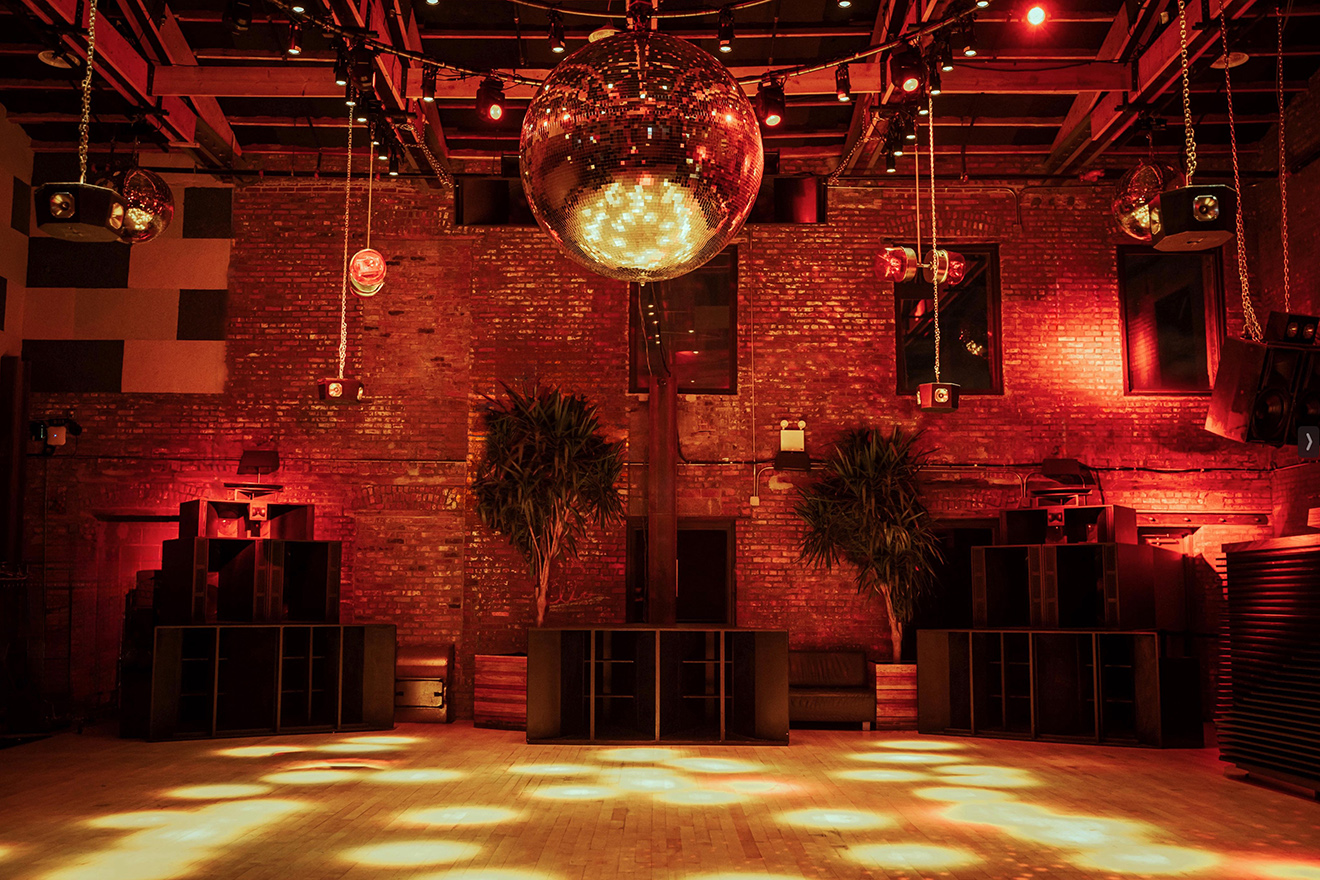
Recessed off the main streets of Williamsburg is a spacious courtyard and building that has stood for at least 150 years, though its uses and architecture have been adapted over time. Originally a resting place for horses in the 19th century, it’s since been a boxing basement for Irish immigrants circa World War Two, a factory, and an organic food restaurant with a ban on taking photos. The current leaseholders have done a lot of work on transforming the site again, much of it in ways you might not notice, reinforcing the structural integrity to allow this beautiful old building — with its red brick walls, heigh ceiling and column free interior — to keep on standing. This time, the aim is to create one of the best nightclubs in the world.
Founders John Dimatteo and Craig “Shorty” Bernabeu searched across the better part of a decade for the perfect place to execute their vision. Starting around 2017, they explored countless options in Brooklyn (at least 50 in the pre-pandemic years, and more thereafter) before finding exactly what they were looking for at 360 Ten Eyck Street. The last couple of years have been spent developing the space into a 500-capacity “hi-def dance club” called Refuge, which officially opened in September. With a focus on flawless sound, marathon parties and the finest of details that enhance a nightclub experience, Refuge is founded upon rock-solid values and its operators have bold ambitions for the future. However long it’s taken to dream, plan and get to the point of opening, they want a legacy that will last tenfold.
“I want to see Refuge become the cultural institution that I know it can be, become a household name in the music scene. Not a trendy, hype venue, but one that’s going to withstand the test of time,” says Dimatteo. “We feel that New York was missing its destination venue, the kind that people are trusting and going to regardless of who’s playing, one that’s a temple of sound, that stays open all hours, and that upholds the fundamental values that were set forth in previous incarnations [of the city’s nightlife].”
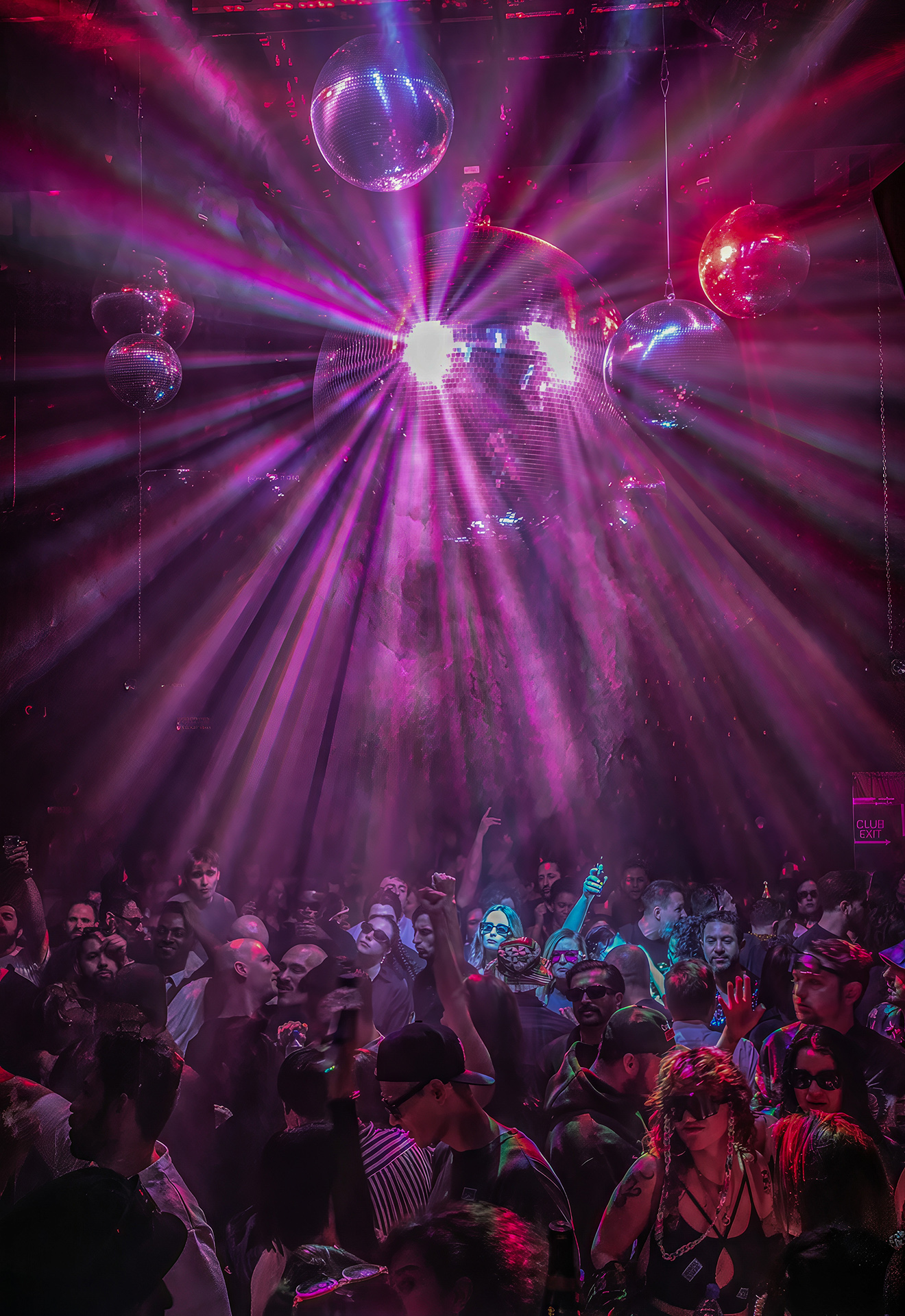 Credit: Nicolas De Panam
Born and bred in New York, Dimatteo’s attuned to that heritage. His introduction to dance music came at the age of 12 when he’d tune into Hot 97 on Wednesday nights and weekends for the radio station’s techno broadcasts, often live recordings from thriving nightspots like the Palladium which he’d tape to listen back on repeat. It was the early ’90s and the boom of the city’s superclub era. As the decade wore on he began to frequent fabled nightspots like The Sound Factory, Roxy, Tunnel and Limelight to catch local heroes like Jonathan Peters, Danny Tenaglia and Junior Vasquez. Soon he was picking up work flyering outside before starting to throw his own parties, learning under legends like Peter Gatien and Richard Grant.
Shorty’s roots run back further; he was out at spots like the Paradise Garage in the ’80s, an era often described as ‘the golden age’ of New York clubbing. His gravitation towards nightlife was fuelled by a lifelong obsession with high-end audio. Raised upstate, his father was an audiophile whose best friend owned a hi-fi shop, making access to a supply of the newest and finest audio equipment a defining feature of Shorty’s childhood. In ’81 he began illegally working underage in a car audio shop, first sweeping wire then entrusted with building competition car soundsystems, “which got very exotic”, later progressing into home theatre, hi-fi, then nightclubs upon moving to New Jersey. “I caught the Richard Long bug,” he says, referring to the preeminent sound designer of the time whose systems could be found powering the likes of Studio 54 and Paradise Garage in Manhattan, The Warehouse and The Music Box in Chicago, and Zanzibar and Club 88 in Newark, where Shorty got his first club jobs working on Long’s soundsystems.
These days Shorty is an audio legend in his own right. His storied career includes founding the brands Thrive Audio and SBS Slammer, through which he’s designed pioneering analog audio equipment and custom-built many a soundsystem, including for Eris Drew and Octo Octa’s T4T LUV NRG and revered nightclubs around the world. The first opportunity came about from a collision of his employment origins and ultimate passion, when he worked on the sound at the Eldorado Bumper Cars in Coney Island, which to this day is home to one of the last surviving Richard Long systems. There he met Scott Fitlin, who recommended Shorty to David Morales for maintenance on the system at Def Mix, the studio he was running alongside Frankie Knuckles. “Scotty had told David, you need to get Shorty in here, turn this thing out,” Shorty recounts. “David says, ‘Come on in, let’s see what you’re made of.’ That’s exactly how he put it. ‘Let’s see what you’re made of kiddo!’.” They were blown away. Morales promptly recruited Shorty to rebuild the soundsystem of a nightclub he’d purchased in Montreal, Stereo. It won a variety of awards, a common theme of his work since, which includes custom-built systems for clubs in Singapore, Honolulu, Shanghai, and Analog BKNY and Nowadays at home in New York.
 Credit: @sicoli.eth
Shorty and Dimatteo criss-crossed paths through the nightlife industry, and don’t remember exactly when they first met, but they know when they first worked together: the return of Sound Factory in January, 2015. A comeback party was organised by the club’s co-founders at Hells Kitchen nightspot Stage 48, “Sound Factory present: Out Of The Ashes Phoenix Rising”, and Richard Grant employed John and Shorty for the promotion and sound respectively. “The fact that he’d come to John and I said a lot, because Richard didn’t trust nobody,” recalls Shorty, “He was a very stern kind of guy, you had to be the best to be involved with him.” It turned out to be the final act of Grant’s legendary nightlife stint — he died days before the event took place. A baton passed, and for Dimatteo and Shorty, it was the beginnings of a new chapter. Though they wouldn’t embark on it just yet.
While Shorty had stayed in the world of underground nightlife and the analog soundsystems he first fell in love with, in the mid-’00s Dimatteo went in a different direction, scaling up from clubs to concerts as the EDM boom swept America. Founding a company called Area Event, he put on the first Swedish House Mafia show in New York and became Tiësto’s exclusive promoter in the tri-state area for a time. “At the company’s peak, we were booking and promoting 700 to 800 shows per year across multiple US markets,” he says. But while he was doing mostly EDM events, “that’s not the music that I personally love,” he notes. In 2018 Dimatteo gave it up and moved into adjacent industry, finance. But at the same time, he was already plotting a return to nightlife, to something more in line with his roots. A club with music and art as the focus, no VIP, phones discouraged, marathon parties that roil on all-hours, and high-end sound, which brought him back to Shorty, and eventually, to Refuge.
 Credit: Nicolas De Panam
There’s no better acid test for experiencing the club and soundsystem than a No Way Back party. The hallowed coming together of DJs from Detroit’s Interdimensional Transmissions and New York’s The Bunker is a word-of-mouth phenomenon for those who know. The parties tend to stretch across multiple days and immerse crowds in mind-altering psychedelic techno and trippy venue dressing. Many who’ve experienced these reality-bending events since their inception in 2007 will tell you — with wide-eyed sincerity — that their lives were changed. Around a month on from Refuge’s opening, No Way Back’s debut at the venue adds at least one more convert to those ranks.
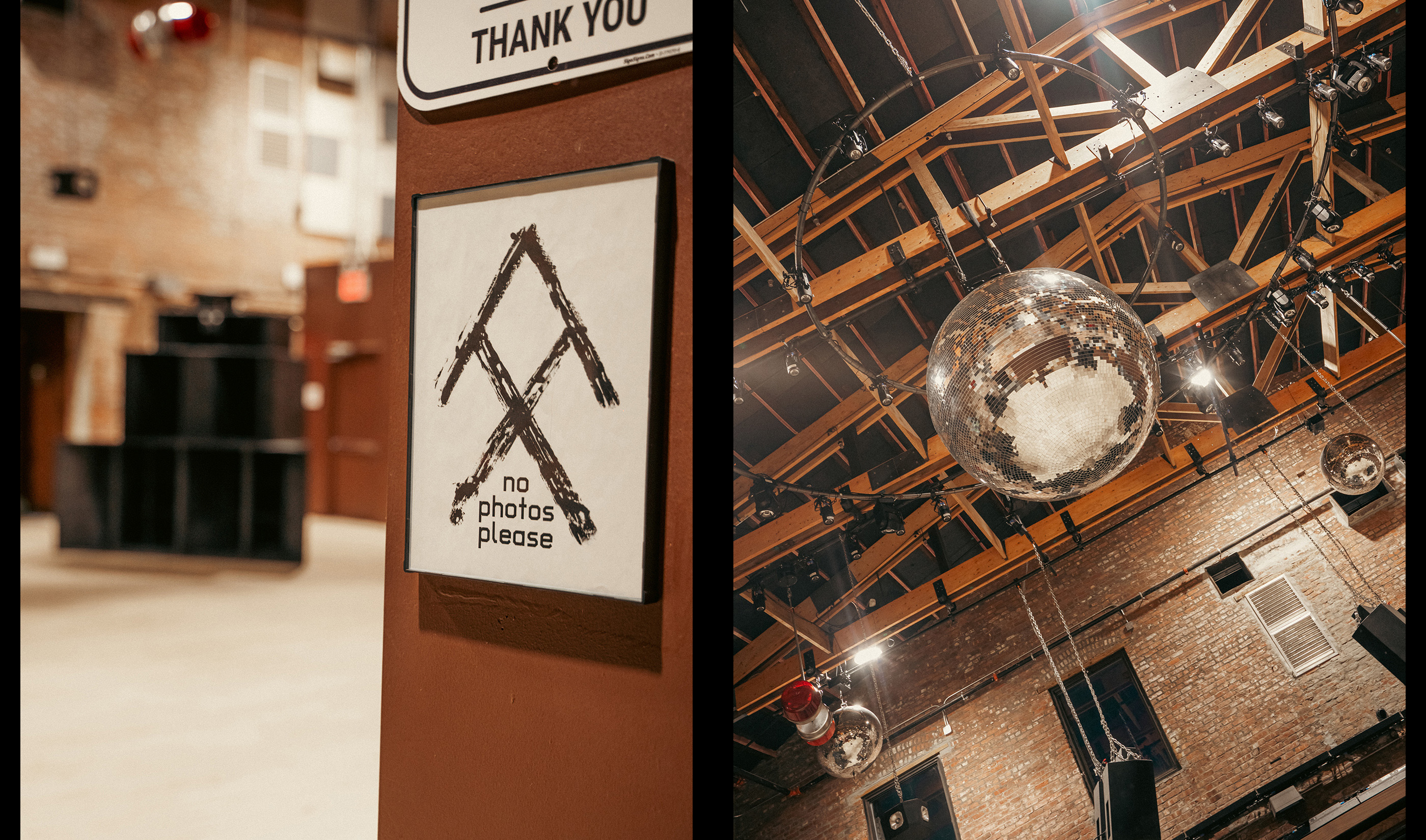
After a Saturday evening walking the bustling streets of Manhattan, arriving at Refuge soon after midnight feels like crossing a threshold. Though it’s not far to walk from Brooklyn’s Grand Street subway stop, the streets en route are wide and empty, making the space feel secluded and secret upon approach, with stickers placed over phone cameras at the entrance maintaining the mystique. “You have to search to discover the place. You really don’t know it’s there unless someone tells you, so that aspect is a big plus for us,” says Dimatteo. The vast courtyard is bathed in a deep red light and there’s a casual, DIY vibe to the outside setup. The bar is a pop-up table covered in liquor bottles, the toilets are in a portable trailer, and people are sprawled across sofas and cushions in one area in which a carpet is laid across the concrete. It’s still a work in progress at this point, but brimming with potential.
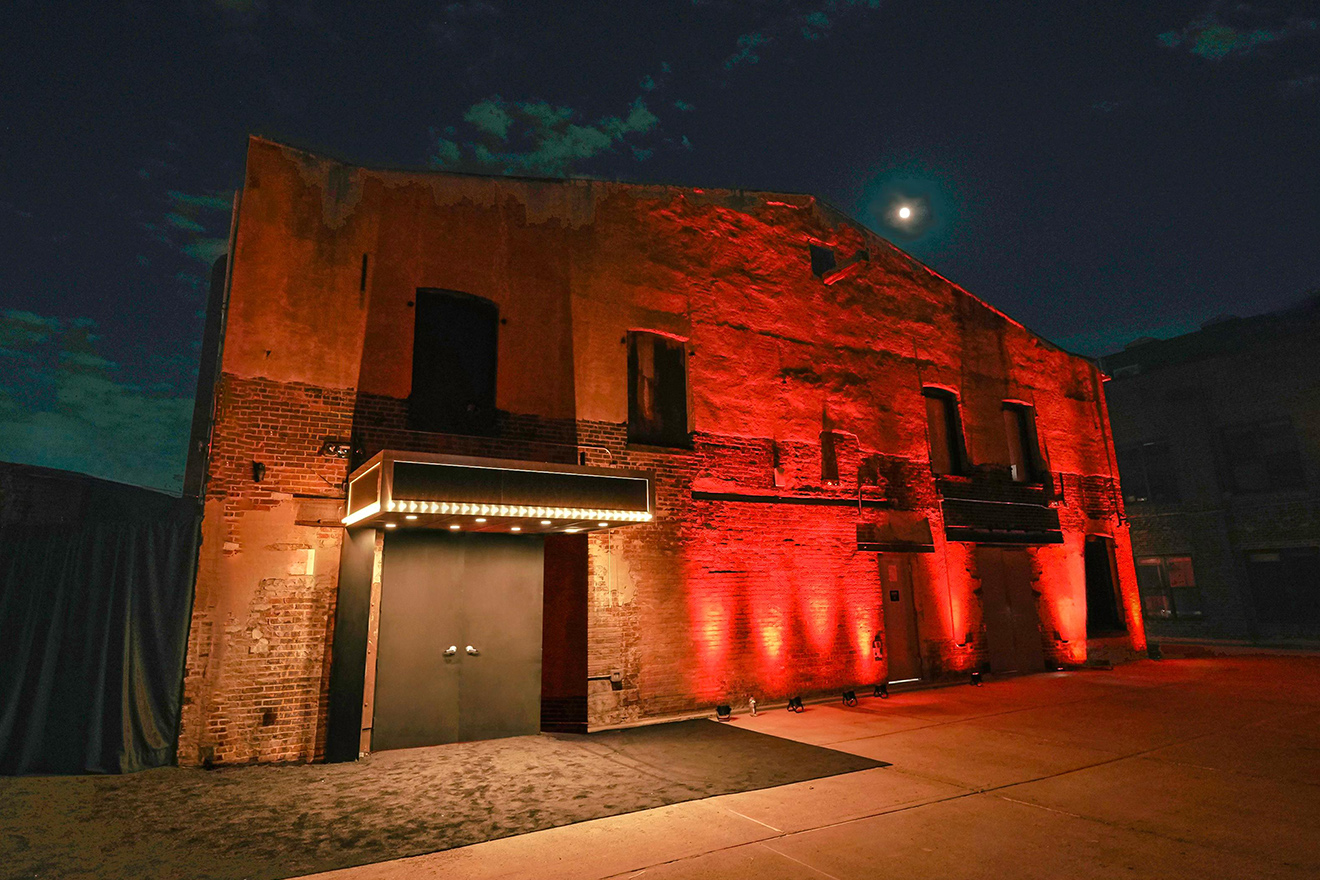
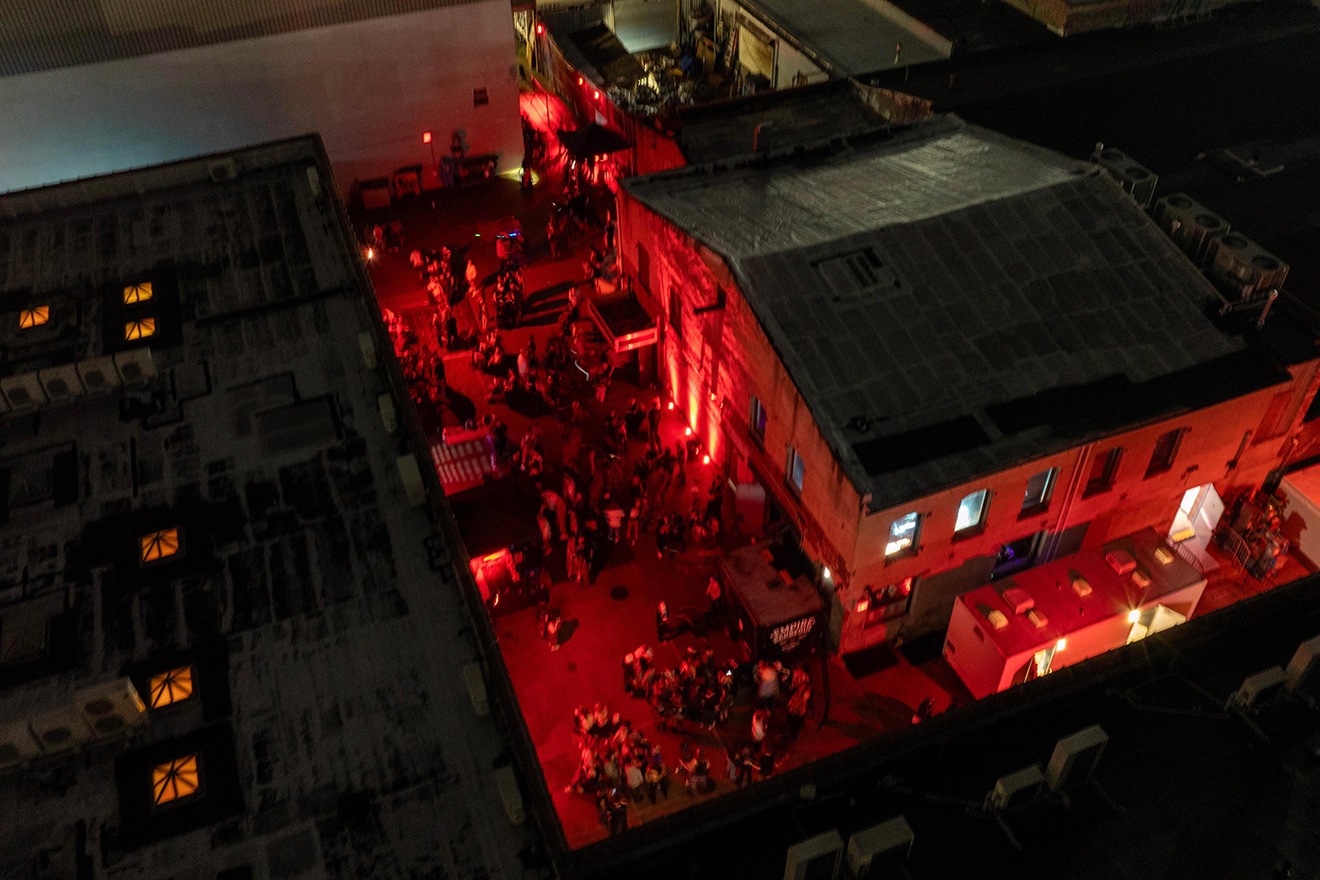 Credit: Nicolas Escalante
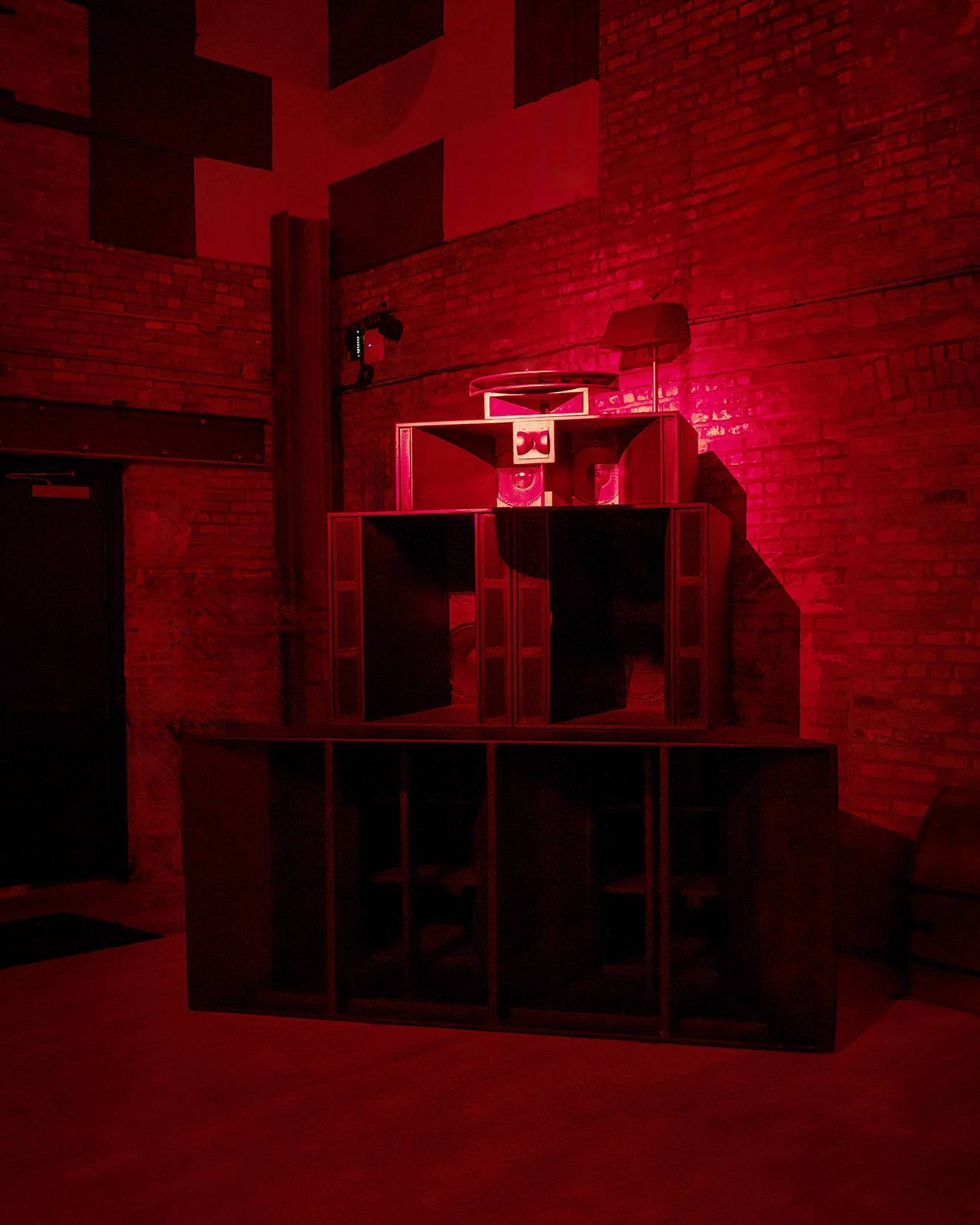
Heading inside is another wormhole. Scott Zacharias is laying down a soundtrack of raw, hypnotic techno to open, with dancers feeling their way into the party, swaying to the low-slung beats in a haze of palo santo incense. Moments of airy transcendence emerge from the murk, with flickering melodies, scuzzy electro and punchy snares drawing the crowd into the DJ’s thrall. It’s music that comes alive through a high-quality soundsystem, enabling all the intricate details and textural qualities of the records to be heard and felt, and Refuge delivers some of the best club sound we’ve experienced. Towering speaker stacks, built like pyramids that the average NBA player could climb inside, flank the dancefloor’s corners and envelope the room in entrancing sonic vibrations. The tempo is at 108 BPM when Brendan M Gillen, AKA BMG, the founder of Interdimensional Transmissions and No Way Back, takes the reins at 2:AM. He gradually guides the party from atmospheric to throbbing, pushing through sleazy basslines to frantic melody stabs and the punchy, flanged synths of the New Romantic era. “The crowd was totally up for it; they were right with every transformation, paying super attention,” says BMG, describing the soundsystem as “immaculate”. “New York is a city that has a lot of great sound,” he continues. “From my experience, this is the best soundsystem in New York right now.”
“I’m not designing sound that attacks you, I’m designing sound that embraces you,” says Shorty of his approach. His attention to detail is second to none. During test events while the club was under construction, he had a different soundsystem in place called KONG. “Anything I do, it symbolises strength,” Shorty notes of his naming choices. After seven events, he got to work on some changes, then after seven more, he decided an entirely new system was needed. “I told John, I gotta build a whole new soundsystem. They thought I was nuts,” Shorty says. “He goes, ‘but how much better is it gonna get?’. It’s gonna get a lot better.” He stresses that last part with steely conviction. With a track record that ensures deference to his expertise, he started designing and building a new soundsystem from scratch. The process took three months, with the result given the name REX (the Latin word for ‘king’). “It’s a four-point analog soundsystem with a centre bass horn and fill speakers that fly above the stacks up high in the ceiling, and that basically gives me a never-ending reproduction of sound which makes it sound bigger than life,” explains Shorty. “There’s no digital processing, so it allows it to be very musical and very pure, with no degradation or elements missing. It’s got a lot of finesse and it’s real gentle and emotional.”
“It’s so true to the late age of disco, which people don’t necessarily understand how high fidelity disco was compared to how low fidelity our [’90s] rave experience was. They were much more serious about sound,” notes BMG.
“A proper analog soundsystem changes the entire vibe and experience for the guests and the DJ,” adds Dimatteo. “Having a soundsystem that is just so clear and so perfect, even when you hear tracks that you know well, you’re gonna hear parts of it that you didn’t hear previously. It creates those ‘wow’ moments at the club.”
 Credit: @sicoli.eth
Another benefit is it doesn’t need to be turned up too loud to sound clear and full, which is kind to the ears and conducive to the marathon parties Refuge is making a staple of its programming. “People can enjoy and feel the soundsystem, and not leave with the hearing fatigue and the howling and whistling ears,” says Shorty, who takes hearing health and clubs’ responsibility to protect attendees seriously. “You could come in in a bad mood and a great soundsystem’s gonna change your mood. It’s like the old saying goes, ‘music soothes the savage beast’,” he adds. “If you have a bad sounding system that’s loud, it’s annoying you, it’s edgy, it’s harsh, it’s hollow, the bass ain’t really hitting right, you’re like, I just gotta get out of here, so you cut your night short.”
“People will stay longer because their ears are not bothering them, and they can also talk at a reasonable level if they wanna have a conversation at the bar or something like that, they’re not screaming, so it’s less stress on people physically,” agrees Dimatteo.
“The soundsystem is right up there with the talent that you’re booking.You’re listening to what the DJ is transmitting and you want that to be in the fullest fidelity possible,” says Amber Gillen, the visual artistic director for Interdimensional Transmissions and No Way Back. “This soundsystem at Refuge was a sheer delight to just walk around and experience and not feel like I was getting harmed by anything coming out of the speakers.”
“You experience the sound throughout your body, but it doesn’t hurt your head,” concurs BMG. “Sometimes it feels like priorities have gotten shifted where people focus on having super crazy lights or some other kind of gimmick. Refuge is focusing on what the true ingredients of a great party are, and on what enables people to last and experience it for longer.”
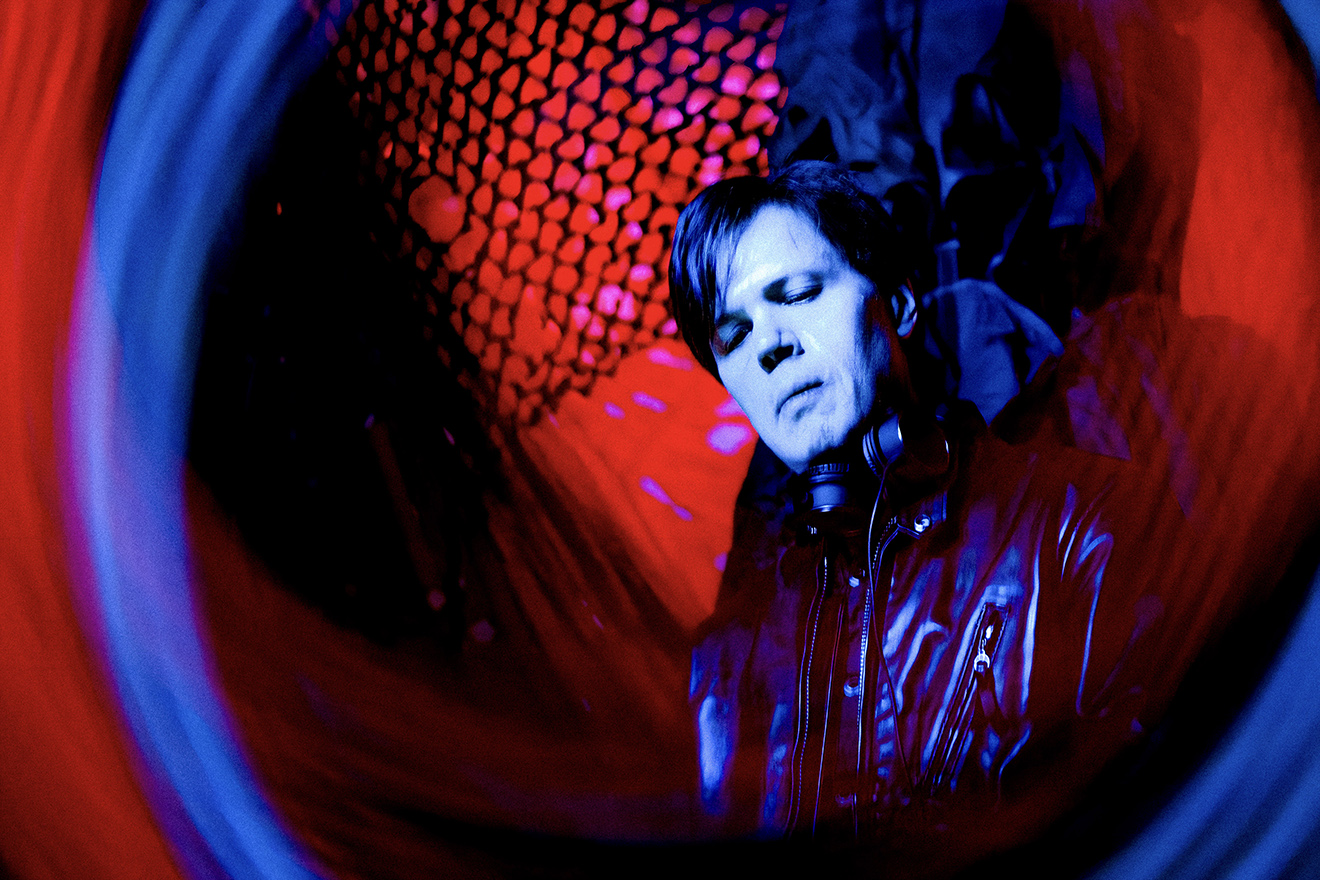 BMG at No Way Back | Credit: Andrew Charles Edman & Austin Thomas Richey
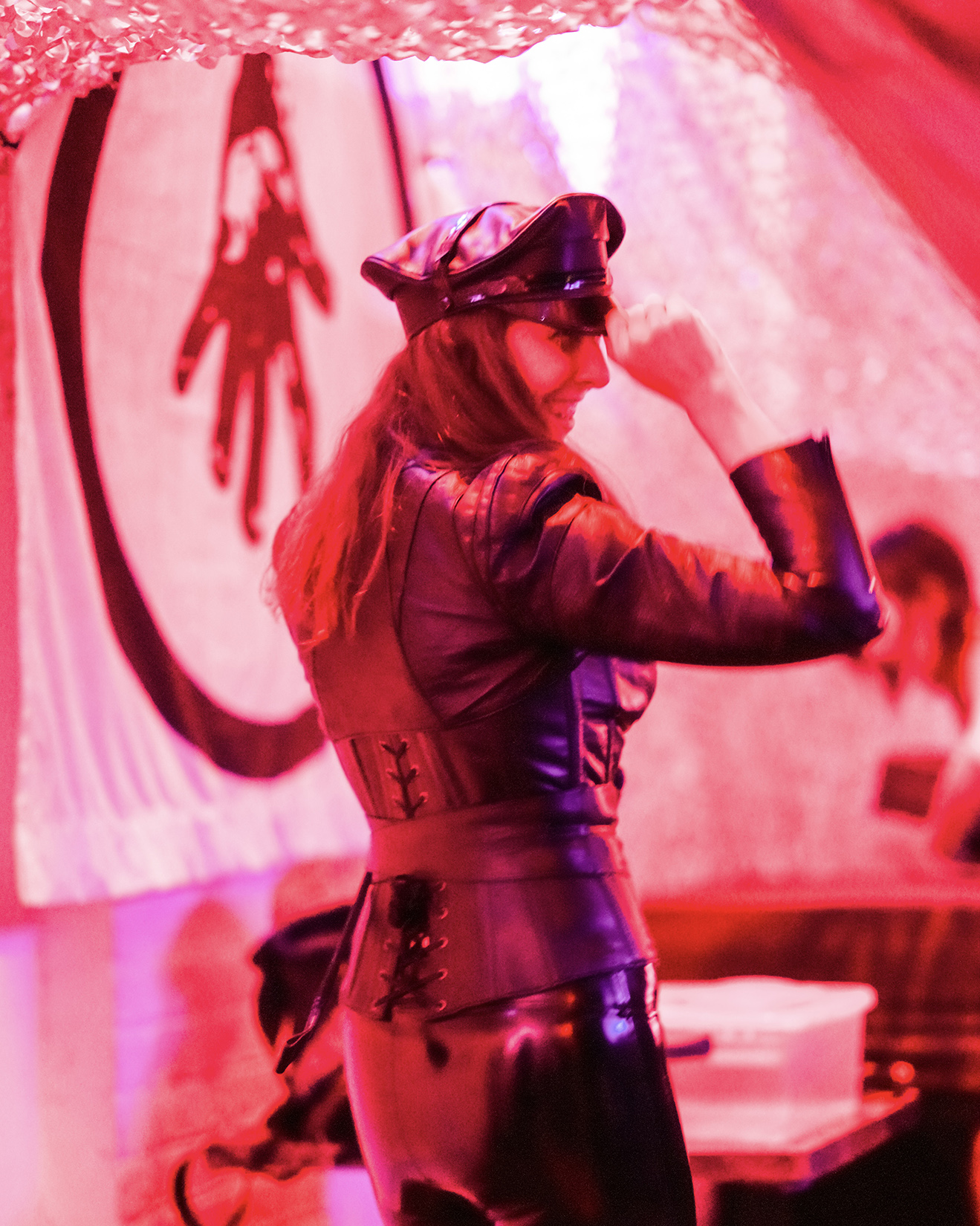 Amber Gillen at No Way Back | Credit: Andrew Charles Edman & Austin Thomas Richey
Refuge didn’t stop at ears when it comes to clubber comfort, factoring limbs into their design too. “We did a floated dancefloor, which is unheard of today. People thought we were crazy,” says Shorty. Made out of maple wood, the raised dancefloor is springy and shock absorbing, meaning the physical toll of dancing for hours on end is minimised. “Being on a rock solid cement floor impacts on your joints and makes you sore,” notes Shorty. But with a floated dancefloor, “people stay in the room longer, they have more fun because they really dance and let loose. It feels great on the feet and body. You don’t see it anymore today, at least here in New York, where it’s mostly cement warehouses.” It wasn’t a simple feature to install — the doors had to be raised four inches to match the floor, requiring lintels to support the building and installation of ramps for accessibility — but it’s one Refuge didn’t blink at. “It’s a forgotten but important aspect of a nightclub design,” states Shorty.
BMG says the prospect of a floated dancefloor was a head-turner when it came to organising the party. “The investment into sound is extremely special,” he notes, “but particularly, what super sold me on it was the spring-loaded hardwood dancefloor.” “No one does that anymore,” corroborates Amber.
The effect is noticeable as the hours fly by and there’s no sign of the weary legs and aggravated headspace that can come with marathon parties in warehouses with brash sound. The crowd stays thick and fixated through the early hours as the DJs flex their range. Dimatteo is making marathon sets a feature of the programming to encourage that. “When you have longer sets, a DJ can really express themselves musically, tell a story, and go into their bag and play tracks that they might not normally get to play,” he says. “We had François K play a Led Zeppelin original one night just to hear what it sounded like. I think longer sets create those nights that people leave and never forget.”
The audio quality has that effect too, notes Shorty: “You can play anything your heart desires. The way REX is designed is so a DJ can really go outside the envelope, and play with different genres of music that they enjoy but don’t really get to play.” There’s signs of this in action when Derek Plaslaiko steps up at 4:AM and opens on an acapella of ‘Brown Sugar’ by D’Angelo, who died at home in this city days prior. It sparks an abrupt emotional shift and applause in the room, before the dancers are pulled back into entrancing basslines and skittery percussion. Another emotional peak lands when he draws for Jesper Dahlbäck’s 1997 classic ‘What Is The Time, Mr. Templar?’, filling the space with deep sonic bliss, before firing into molten electro with rolling snares and rave stabs to up the ante. Patrick Russell takes the baton and immerses the crowd in beguiling, textured sounds that land between dark and funky, including the unstable synth tones, marching drum hits and shout-through-distortion vocals of Belgian new wave band The Neon Judgement, hitting overdrive through manic, swirling acid and jittery, syncopated rhythms. The bar is on a break from serving until 8:AM but there’s free water and fruit bowls for rave sustenance, as well as a food and coffee truck outside. I happily help myself to an apple before spiralling back into the zone.
 Credit: Nicolas De Panam
By the time Erika comes on at 8:AM the sun has risen and she plays accordingly with airier and uplifting selections. “I imagined that earlier in the night it was like a warm, techno wormhole,” she says of her early morning arrival. “I went to a different, more light-oriented style.”
Usually No Way Back parties stay on the darker tip and the dressing feeds into this ‘techno wormhole’ vibe with vast parachutes draping the dancefloor and camo netting on the walls. “I grew up on a street with a bunch of Vietnam vets and in early raves we used parachutes. I always thought it was cool to give a new meaning to these war tools,” explains BMG. “We like the idea of taking these militaristic things, that could be used for some kind of violence, and repurposing it for something that we find to be uplifting and healing to people rather than destructive,” adds Amber. At Refuge, she blocks out the sunrise-facing windows to “push the night off a little bit”, but with wide-open doors at the back, light is inevitable in the space and necessitates a more stripped-back dressing. The approach works well at Refuge, with features like the disco ball bringing an even greater contrast of tones, hanging among the parachutes and netting and sparkling as the sun pours in. “The light filtering through the parachutes in the morning makes for these shafts of light. It’s gorgeous,” reflects BMG. “It felt like I wouldn’t be blocking any of the sound waves up in the higher part of the room,” adds Amber, who says the elite sound at Refuge factored into her decisions. “I wanted to honour the soundsystem, I hadn’t experienced it yet, so I ended up doing a really minimal setup for my normal standards.”
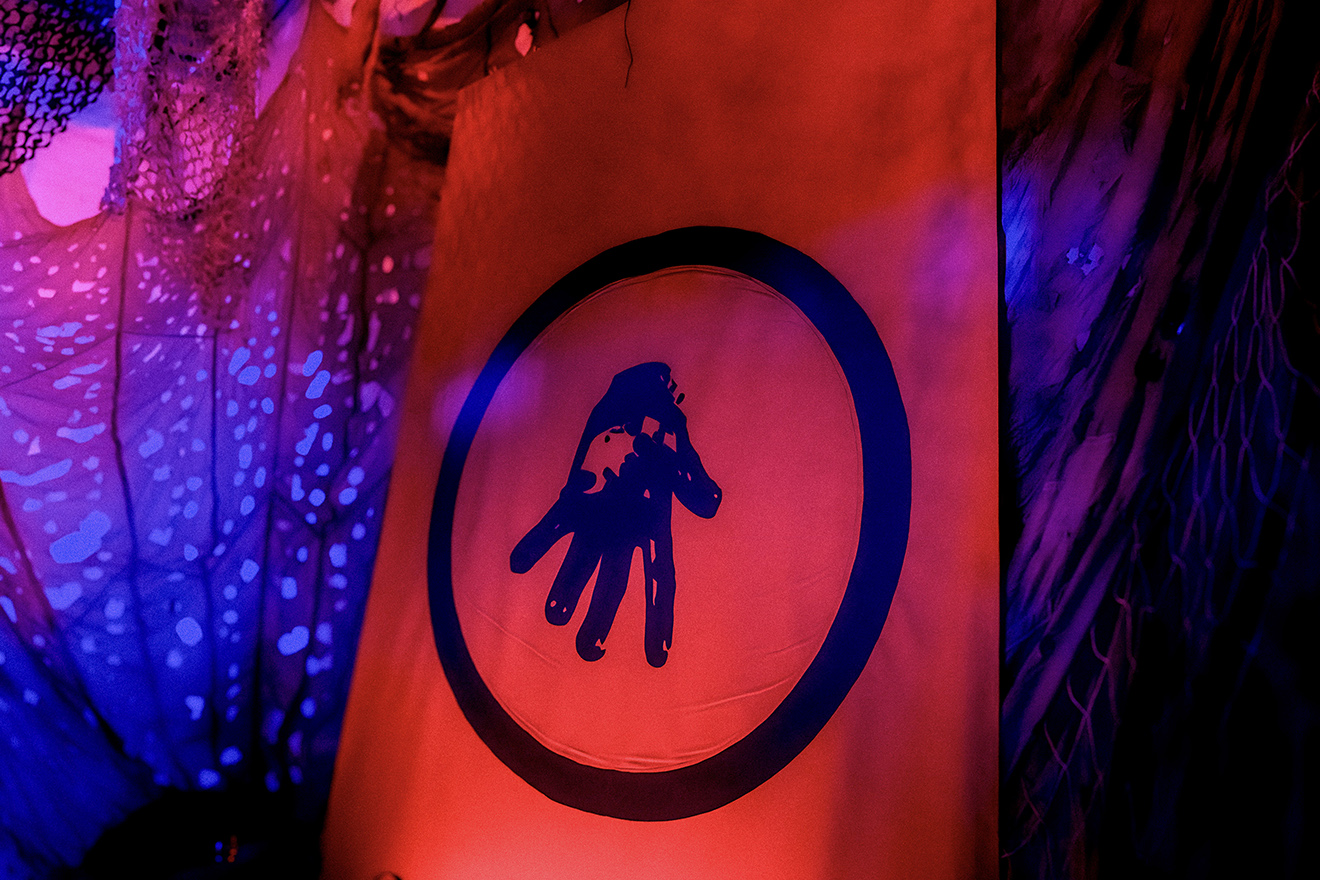
 No Way Back | Credit: Andrew Charles Edman & Austin Thomas Richey
Refuge being in its early days and still figuring out the space has other impacts on the party. Carlos Souffront is unable to play due to the DJ booth not being complete and unable to support the isolation necessary for playing vinyl, but he still attends and gets stuck in on the dancefloor. The cancelled set is a shame, though reflective of the perfectionism Shorty, John and co are striving for. The booth that’s completed a few weeks later is a complex, master feat of engineering. Designed in collaboration with Marc Dizon, it’s a fully modular setup with a pull drawer system that supports four CDJs, three Technics turntables, DJM-V10 and custom-modified Urei mixers which are connected at all times and six bespoke isolators per channel.
Teething problems are par for the course at any new venue, and scrutiny rests on how they are addressed. The team at Refuge operates on an MO that the work is never done, and improvements can always be made. “Great venues are never finished,” says Dimatteo when we catch up in early 2026. “Refuge is not a fixed product, it’s a living system, both spatially and sonically. With every party and every event, we observe, adjust, and improve the experience.” If a part that could improve the soundsystem doesn’t exist, Shorty will design and build it himself — he even hand-makes the cables. “It’s gonna be consistently upgraded. It’ll be never-ending,” he says. “My mind is always working. Houses need to be improved, you know, I’m always nitpicking and criticising myself.” Even before the club opened, that’s been the nucleus of their approach. Deep into the lengthy search phase they were “actually pretty far down the road with another venue”, but Shorty called in acoustics expert Al Fierstein (whose résumé includes Studio 54, Paradise Garage and Sound Factory; “literally inventing disco sound with Richard Long as we know it today,” in the words of Dimatteo) who steered them away from that option. They hit reset. After locking in 360 Ten Eyck Street, Fierstein was instrumental in treating the acoustics of the room and ensuring the sound doesn’t bleed out and bother the neighbourhood, securing the longevity of Refuge as its own little world.
This winter amidst New York’s intense cold snap the courtyard area has been transformed with the addition of tenting, electrical heating, insulated flooring, carpeting and fire-treated fabric to meet the needs of the season; and a new configuration is planned for when the weather warms. 12 extra indoor bathrooms are also being installed to ease queues and crowd flow. “Alongside that, we’re introducing expanded food and drink offerings and outdoor music programming, creating a more complete daytime and seasonal ecosystem around Refuge,” adds Dimatteo. “These additions aren’t just upgrades, they’re part of shaping Refuge into a more holistic, year-round experience rather than a single-format venue.”
Investment of this scale is only possible thanks to the changed nature of the US clubbing industry a decade on from the burst of the EDM bubble. The popularity of so-called ‘underground’ sonics has bloomed again. DJs who’d wear that label are now often found playing the concert-style arenas Dimatteo previously shifted into — and are more than capable of packing out mid-sized nightclubs every weekend. “It’s great to see house and techno artists play in these large venues for tens of thousands of people, but this music was birthed in places similar to what we’re doing at Refuge, in small nightclubs focused on experience and quality of audio,” says Dimatteo. “Underground now is a style, it’s not technically underground, right? It’s kind of hit the mainstream, but the style of music and the style of party is what’s considered underground,” he continues. “We wanted to build a place that really shows how this music was intended to be presented.”
 Credit: @sicoli.eth
Ultimately, Dimatteo recognises technical excellence isn’t enough on its own to make a great club. “The perfect party is created by the people that attend it,” he asserts. “There’s no VIP here, no one person is better than the other.” The covering of phone cameras encourages a locked-in crowd and freedom of expression. “Everyone’s in the same room for the same reason: to enjoy music, have a great time, and maybe meet people they would not normally ever meet,” continues Dimatteo. “All walks of life are attracted. We’ve had a really eclectic group of people, and for me, growing up in the New York club scene, that’s what it’s all about. You would go out and meet people you would never see in your ordinary daily life and connect over great music. And I think when people can connect on that level, they can connect on so many others. People can form lifelong relationships with people they meet at the club, people that they’ll be talking to long after the club is gone.”
The programming intends to reflect a sense of timelessness. “We’re not looking for hype DJs that are just hot today,” notes Dimatteo. “We’re booking based on quality of music, not who sells tickets.”
The DJs at No Way Back deliver quality in spades, and the trust and appreciation Refuge provides is reciprocated. “I’ve lost count of how many No Way Backs we’ve done in New York. This one was probably my favourite,” says BMG. who hails from Detroit. Though noting the stark differences to the cities creates a different context for throwing events, describing his hometown as having “more of an outlaw feeling” to New York and its bustling and hustling population, he’s effusive with praise for the quality and diversity of the city’s club community at large. “It’s like a rainbow coalition. It’s so many different subgroups that are coming together to make this thing happen, where things were homogenised in the past, it’s much more vibrant,” he observes. “New York’s in a renaissance of its dance scene. Globally, this is maybe the closest we’ve ever had to the disco heyday of the ’70s.”
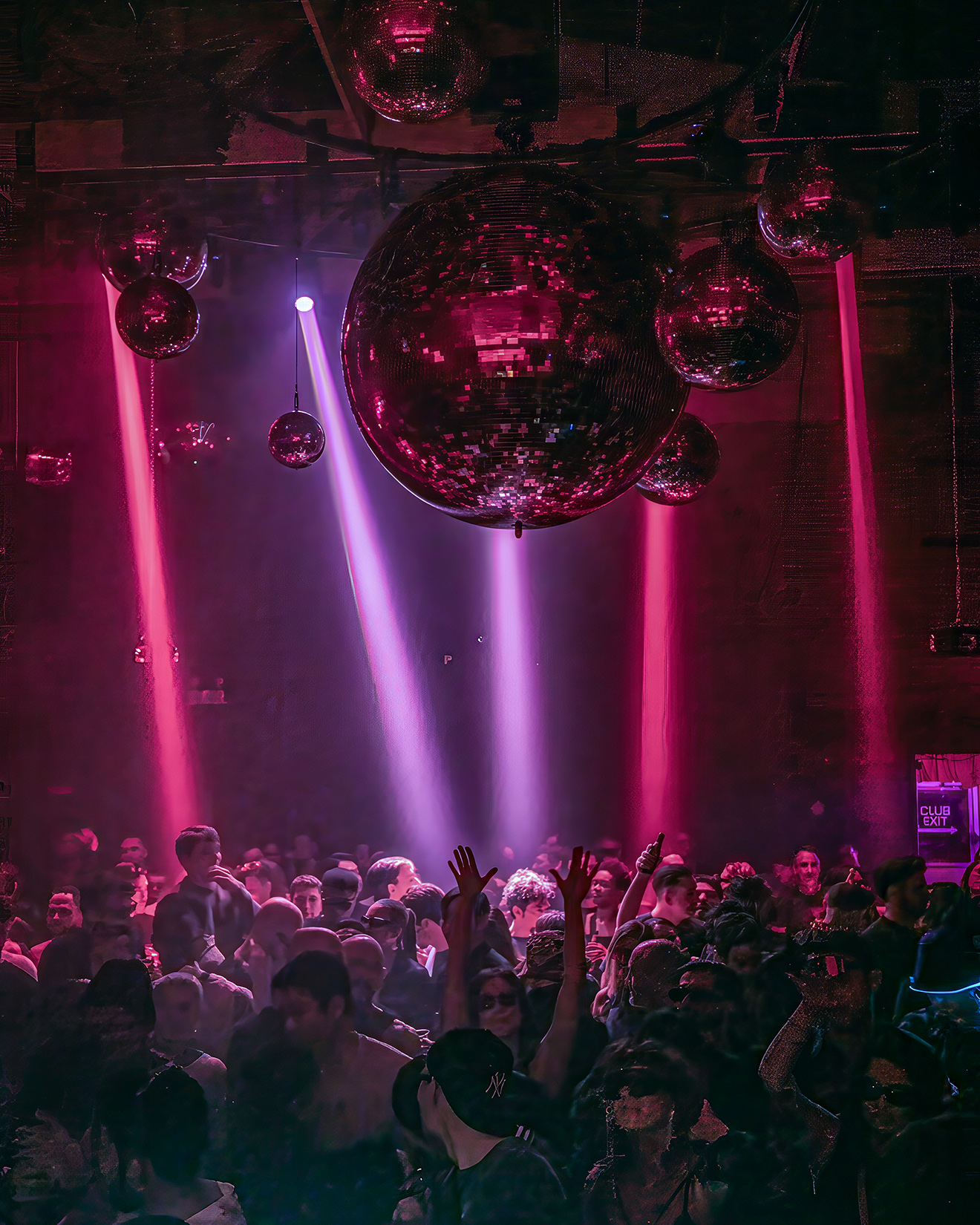
Historically and now, New York is blessed with many top-tier clubs and parties. For those seeking quality house and techno that hits across eras, Refuge has created an environment that’s hard to beat. The detail-oriented approach builds upon the city’s rich legacy while endeavouring to set forth its own, with a drive to always improve.
In the final stretch of No Way Back, a new day has broken and the vibe has shifted. People lounge contentedly under the autumn sun outside, the indoors is doused in a hazy glow through the parachutes. The light illuminates the striking features of the room, less visible in last night’s murk, and the diverse crowd inside — grey-haired rave lifers, fresh-faced transplants, stamina crew who’ve rolled through from other parties around the city, New Yorkers from all walks of life, soaking in the sounds. Mike Servito is on closing and treating them to a mix of skippy percussion, wonky electro and hardier rave sounds from Philip Bader. Acid swirls into the mix and keeps the energy high in the home straight, before his set appropriately ends at 3:03PM exactly. There’s a smattering of woops and applause from the remaining clubbers, at least one gasp of horror that it’s all over, and congratulatory words of “we did it!” among crews impressed by their staying power. It’s a beautiful, warm afternoon and all the possibilities of a balmy Sunday in New York await. Shorty and John only have eyes for one plan; they’ll be down at Refuge, fine-tuning the soundsystem, surveying potential upgrades, as they prepare to go again.

Leave A Comment
You must be logged in to post a comment.