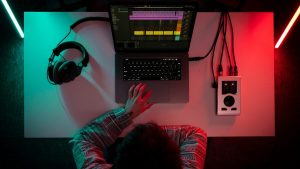
By declining to hear Thaler v. Perlmutter, SCOTUS left intact a rule that fully AI-generated works without meaningful human input cannot be copyrighted under current US law.
The Supreme Court of the United States on Monday declined to review a case that could have reshaped the future of AI-generated content and the copyright laws dictating its usage. In declining to hear Thaler v. Perlmutter, the Justices left intact a lower-court ruling that says works generated entirely by AI without human authorship are not eligible for copyright protection in the United States.
The case centered on computer scientist Stephen Thaler, who sought copyright for an image created by artificial intelligence and argued that the technology’s output should qualify for copyright protection. The US Copyright Office rejected the application in 2022 and a federal judge upheld that decision in 2023 before the D.C. Circuit affirmed it in 2025.
It’s a significant development for creatives and particularly for electronic music producers, for whom new use-cases are emerging constantly, whether it’s to develop stems, vocals or even generate entire songs with the simple push of a button on platforms like the controversial Suno.
For producers using AI in their workflow, the implications extend beyond the creative process itself. Questions of ownership can now overlap with how thoroughly a creator documents their contributions, how clearly those contributions are addressed in collaborator agreements and, in some cases, the commercial rights granted by the AI tools themselves.
In practical terms, that means artists may need to clearly identify the human decisions that shape their work, whether through composition, arrangement or editing. They’ll also have to make sure the AI tools they’re leveraging lawfully permit that material to be distributed and monetized commercially.
Meanwhile, streaming platforms are drawing their own lines around AI music. Spotify, for instance, has already moved to eradicate “tens of millions” of AI-generated tracks and now explicitly bars songs that mimic an artist’s voice without consent. Those guardrails were thrust into mainstream focus by virtue of HAVEN’s viral track “I Run,” which was pulled from Spotify after racking up more than 13 million streams amid controversy over AI-generated vocals allegedly resembling the voice of Jorja Smith.
Meanwhile, the French streaming platform Deezer has taken additional steps to contain the spread of AI-generated content. The company revealed it was flagging 10,000 fully AI-generated tracks per day as of early-2025, or roughly 10% of all daily uploads. By late-2025, that figure climbed to 28% of daily uploads. This year, Deezer said it’s receiving a flood of roughly 60,000 fully AI-generated tracks every single day and determined that a large share of streams appear to be fraudulent. As a result, the platform has continued to exclude AI-generated tracks from algorithmic recommendations while demonetizing suspicious streaming activity.
All of that brings the focus back to the core issue raised by Thaler v. Perlmutter. As the music industry’s distribution channels take a more aggressive approach to AI-generated music, the question of who can actually claim ownership over that content becomes more consequential.
That does not mean AI-assisted works are automatically shut out from protection. But the US Copyright Office’s position suggests meaningful human authorship is still needed to qualify. For now, the outcome of the case means that if producers want to be extended copyright protection over AI-assisted music, they need to do more than simply hit “generate.”




Leave A Comment
You must be logged in to post a comment.