In the ’80s and ’90s, these spaces birthed dance icons, genres and subcultures. Why do so few remain? madison moore charts their decline and lifelong impact.
In the past four decades, the number of permanent venues for America’s Black queer nightlife has completely collapsed. The communities that frequented these clubs often faced intersectional discrimination for being both Black and queer, othered and threatened by outsiders while likewise experiencing judgment and rejection within their own social environments. Yet these spaces—brick-and-mortar beacons of acceptance and testaments to the fortitude of a flourishing Black avant-garde going back to the 1920s—were still able to establish themselves as true centres for culture. Consistency and stability meant that crowds developed a personal relationship with the space itself, offering both a sense of comfort and familiarity as well as a supportive base from which to explore further creative experimentation.
There’s no one-size-fits-all explanation for this decline. But the compounding devastation of the HIV/AIDS crisis, widespread gentrification, persistent racism and homophobia meant pioneering spaces that birthed whole genres, dance styles and subcultures went underwater, and often never resurfaced.
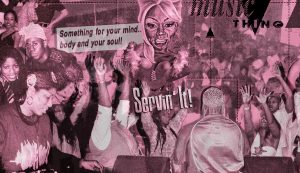
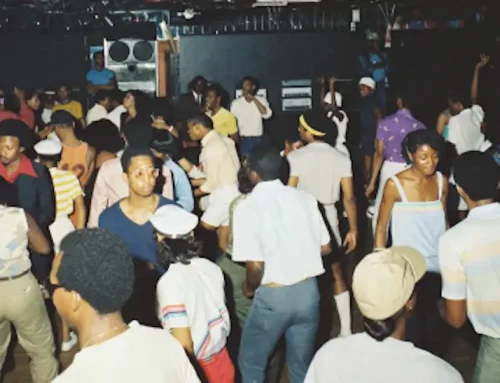
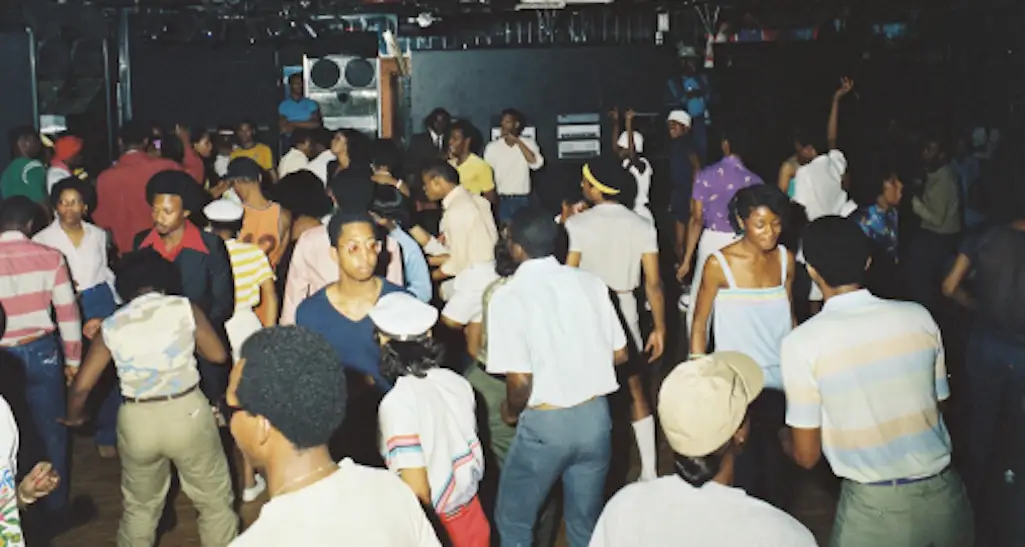
America’s Black queer underground managed to survive and thrive during the late ’80s and first half of the ’90s. Musicians, poets, dancers, club kids and voguers congregated at clubs and afterhours venues, creating self-sufficient ecosystems that thrived on community-building and innovation. The venues were typically frequented by working-class folks of all ages and persuasions, and became sanctuaries or places of worship: disco and house were gospel, and scripture declared that all dancers should express themselves wholly.
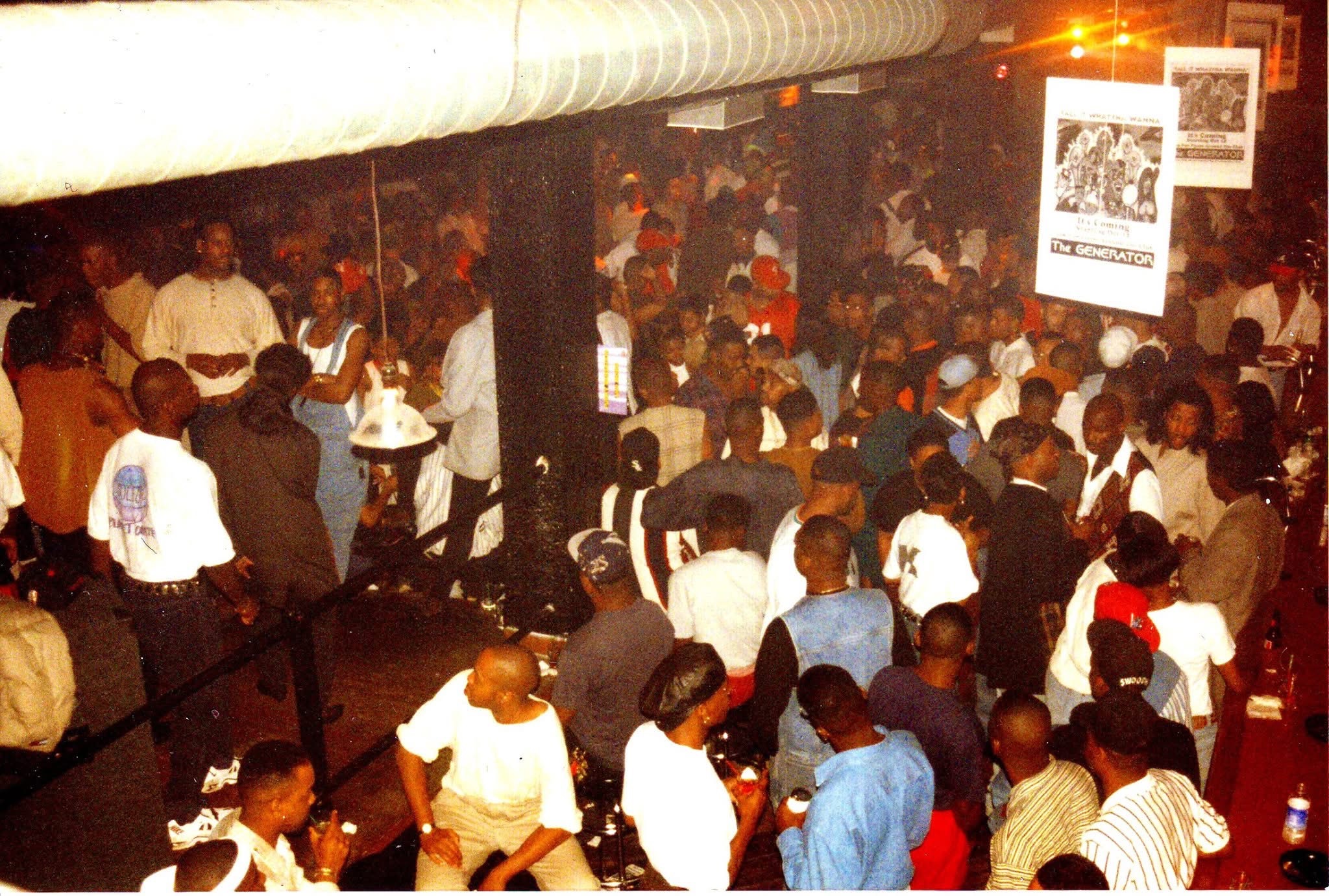
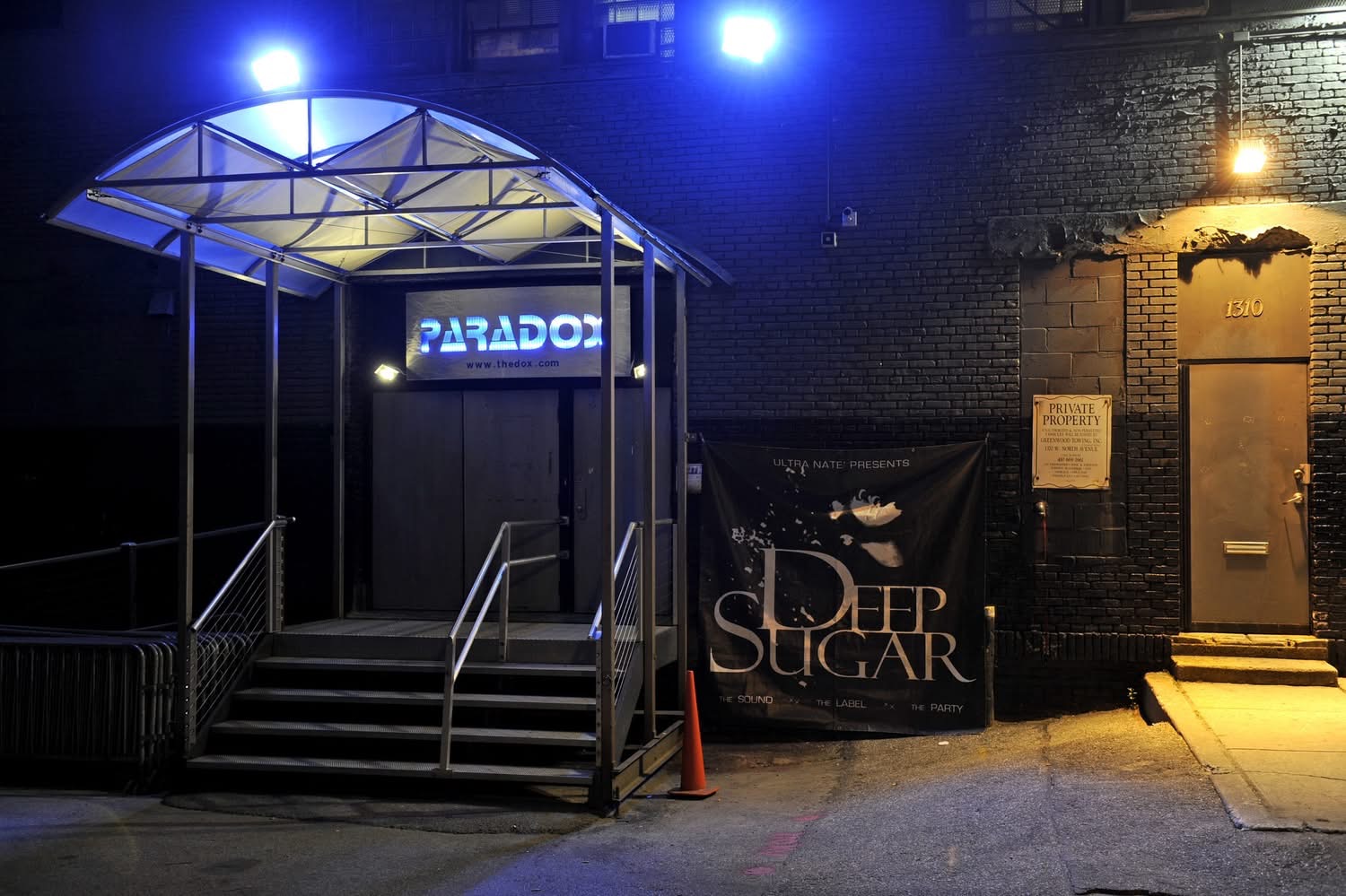
Venues were dotted around the country, flourishing as standalone sites and talent incubators while contributing to a greater picture of Black queer creativity. There was once New York’s Paradise Garage; Detroit’s Club Heaven; the lesbian-owned Jewel’s Catch One in Los Angeles; Chicago’s The Warehouse. and The Generator; and Baltimore’s Club Bunns, The Hippo and The Paradox. These havens all birthed significant trailblazers, timeless music and cultural movements, laying the untearable roots of contemporary club culture.
In a 2025 report report Are Gay Bars Closing? Using Business Listings to Infer Rates of Gay Bar Closure in the United States, 1977–2019, professor Greggor Mattson of Oberlin College notes that bars serving people of colour are at the most risk of closure. “While all gay bar listings declined by 36.6 percent between 2007 and 2019, the number of listings for bars serving people of colour declined by 59.3 percent, higher than closures for those for queer women or ‘cruisy men’s bars.'”
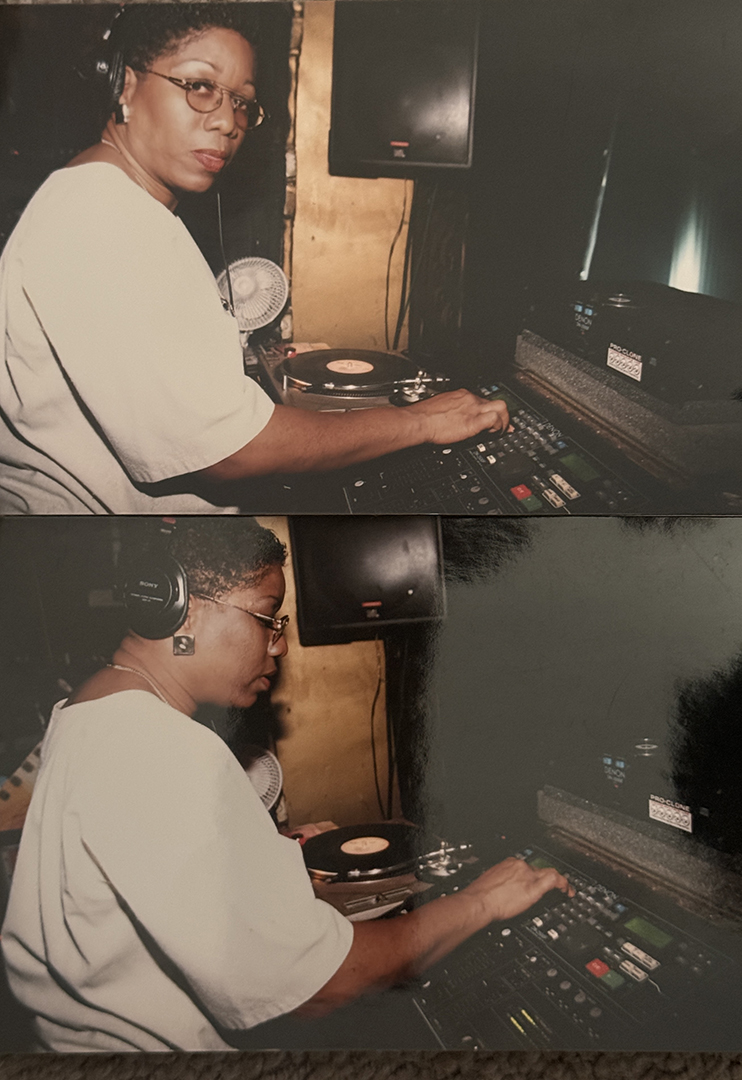
Clubs were crucial gathering spaces for all types of Black queer creatives because they were situated outside the white gaze–and gays. During the ’80s and ’90s, bouncers at mainstream gay venues regularly demanded three or more pieces of ID from non-white folks. The point was to frustrate and embarrass Black individuals on entry, maybe even to deter them from returning. At some venues in Chicago, door staff “assessed whether or not too many Black and brown patrons were in an establishment at a given time, and limited access for those who arrived too late,” scholar Micah Salkind noted in Do You Remember House?: Chicago’s Queer of Color Undergrounds. Detroit’s “Godmother of House Music,” Stacey Hotwaxx Hale, vividly remembers the same dehumanising process when trying to enter white gay spaces. “Of course, I was a Black woman, and that was enough,” she asserted. “That was straight-up racism.”
But it was in those clubs where Hale and her peers fine-tuned their DJ chops and expanded their musical horizons, leading them to become modern-day icons of electronic music. At Club Heaven, another treasure of the D, Saturday nights from 1984 to 1994 were soundtracked by the legendary Ken Collier, who effortlessly merged the gap between Motown, techno and house. But even Heaven came down to earth, burdened with the same quadruple threat of exclusion, demographic change, shifting styles and economic precarity that affected Black queer clubs across the nation. Attendees braved both attacks from local toughs and the judgmental stares of churchgoers. HIV/AIDs afflicted much of the club’s audience, the city’s taste radars moved towards harder hip-hop and techno, and the club finally closed in 1994 after being sold to a developer.
“There was nothing fancy about this club at all, but the sound was incredible,” Karizma told Red Bull Music Academy in 2016. “It was basically just a warehouse with concrete floors and the DJ booth was way above the crowd … The system—still to this day—there’s only been a couple of other sound systems that rival it: Ministry of Sound and Shelter. That was a big thing for somebody in Baltimore because we don’t really have a lot of major clubs. That was our major club.”
Juana, a Chicago-born, Washington D.C.-based DJ who is a staple of the American queer underground, was too young to experience Club LaRay, but she came of age at a time when its legacy had a marked influence on Chicago nightlife. Reflecting on her college days in rural Illinois, she recalled only “very, very white gay spaces, Black frat parties and our underground house party circuit.” She craved spaces where Blackness and queerness were celebrated simultaneously because “that was so off limits to me.”
One of those spaces was Da Prop House, where DJ Spen from Baltimore and DJ Sedrick from D.C. would hold court. “DJ World played there,” Juana said. “The way [he’d] blend disco, house, acid, techno and a little bit of hip-hop was the story of my life.” In her own DJing, especially at peak-time, Juana strives to recreate the loose, vibrant energy of places like Da Prop House. “I’m certain I wouldn’t be the DJ I am,” she said, “without the sense of belonging that I experienced in the clubs.”
In Remember the Time, E. Patrick Johnson describes a similar self-discovery on the dance floors of Black queer clubs in Washington D.C., such as The Edge and Tracks, as well as Traxx in Atlanta, which was one of the city’s first Black-owned gay clubs. “We hold on to each other for dear life as the beat of the music, the smells of Drakkar, Cool Water, Eternity, Escape and CK One,” he wrote. “The sweat drenching our shirts, and the holy sexual spirit that presides works us into a shamanistic state of euphoria. Time stands still.”
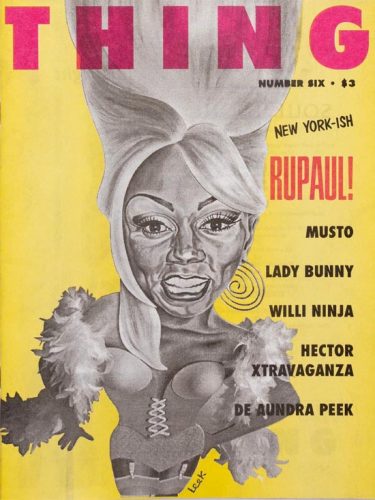
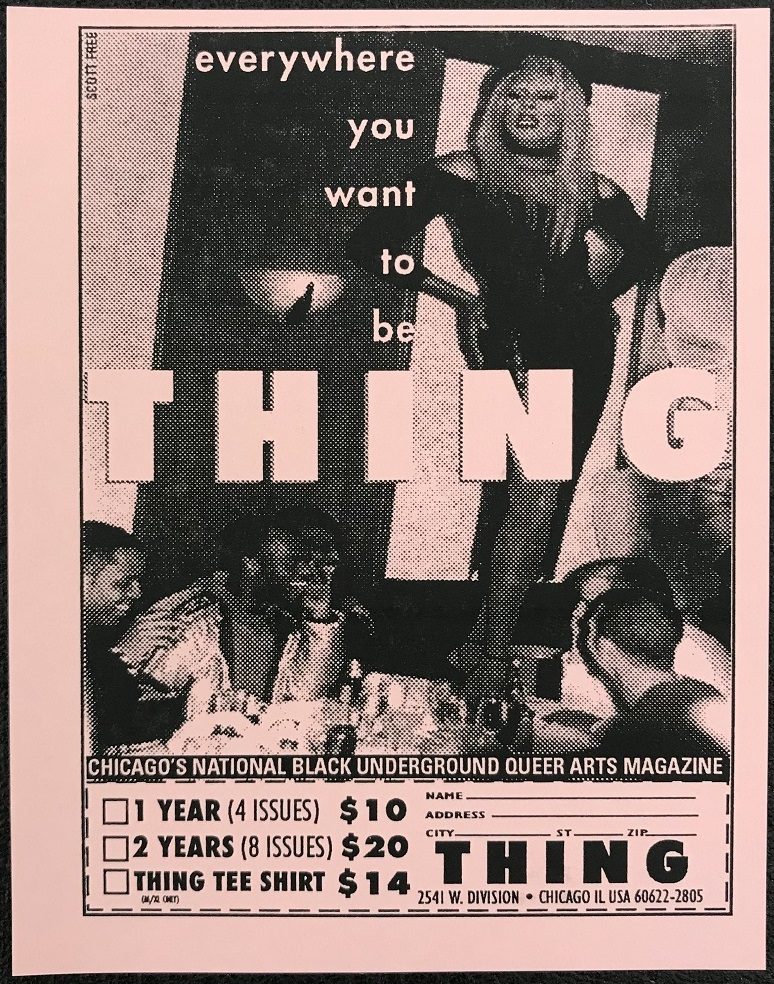
Cultural dynamics in the other direction also played a role. As queer people became accepted and more visible in media, thanks to personalities including but not limited to drag queen and television host RuPaul, it reduced the urgent need for places catering to underground, queer social and sexual life. Homonormativity often led to a kind of self-censoring or sanitisation of the behaviour that might once be found in these gay clubs, with mainstream gay activism tending to focus on legislative acceptance by, and integration into, dominant heteronormative social structure.
Gay bars and clubs worldwide have gotten straighter with every bachelorette party that descends upon them, to the extent that straight folks often outnumber queer people on queer turf. Despite this, contemporary politicians still target the community, and disproportionate police harassment often occurs at Black venues.
“There’s a similar thing that happens with Blackness as a commodity,” Abdu Mongo Ali, a multidisciplinary artist, poet, DJ and producer, said. “[Its] something for people to participate in culturally or artistically, when actually, they don’t really fuck with Black people. Ironically, when Black queer people didn’t have much visibility and public tolerance, we had more spaces.”
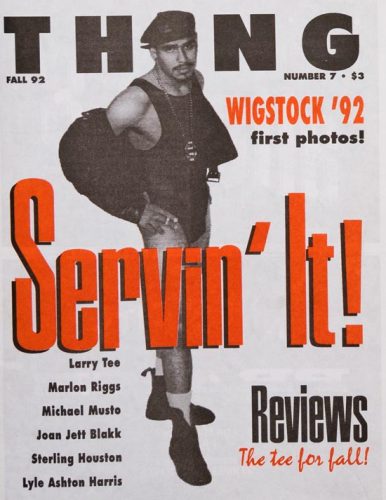
“Toxic masculinity became a more profitable and desirable sell for the music industry than the gay-coded liberation of dance music,” Juana described, likening the shift from house to hip-hop to the Disco Demolition era, when disco was targeted for its proud queerness and pushed back underground. After the AIDS epidemic, the persistent hum of homophobia cranked up the volume to become a musical and sociocultural constant.
The ownership structure of Black venues also impacted their longevity. It turns out that most vibrant Black queer gathering spaces weren’t actually Black-owned. Dozens of places, like ’90s D.C. staple Tracks, were white-owned but catered to Black audiences. “What started out as a designated Black night turned into two and three nights a week as Black patrons took over some of the clubs, showing up on the ‘regular’ nights,” E. Patrick Johnson explained. In 2025, Hood Rave founder Kumi James, AKA BAE BAE, told LA Public Press: “I’ve been looking to purchase a venue that used to be a popular bar in my neighborhood, but the listed cost is astronomical. Almost $2 million for the building alone.”
Rhode Island-based Aron Ringgold, AKA DJ Roller, who’s known locally for twirling on light-up roller blades at the club, agreed with the sentiment: “When you don’t own, you can’t control. I’ve never met a Black club owner my whole life.”
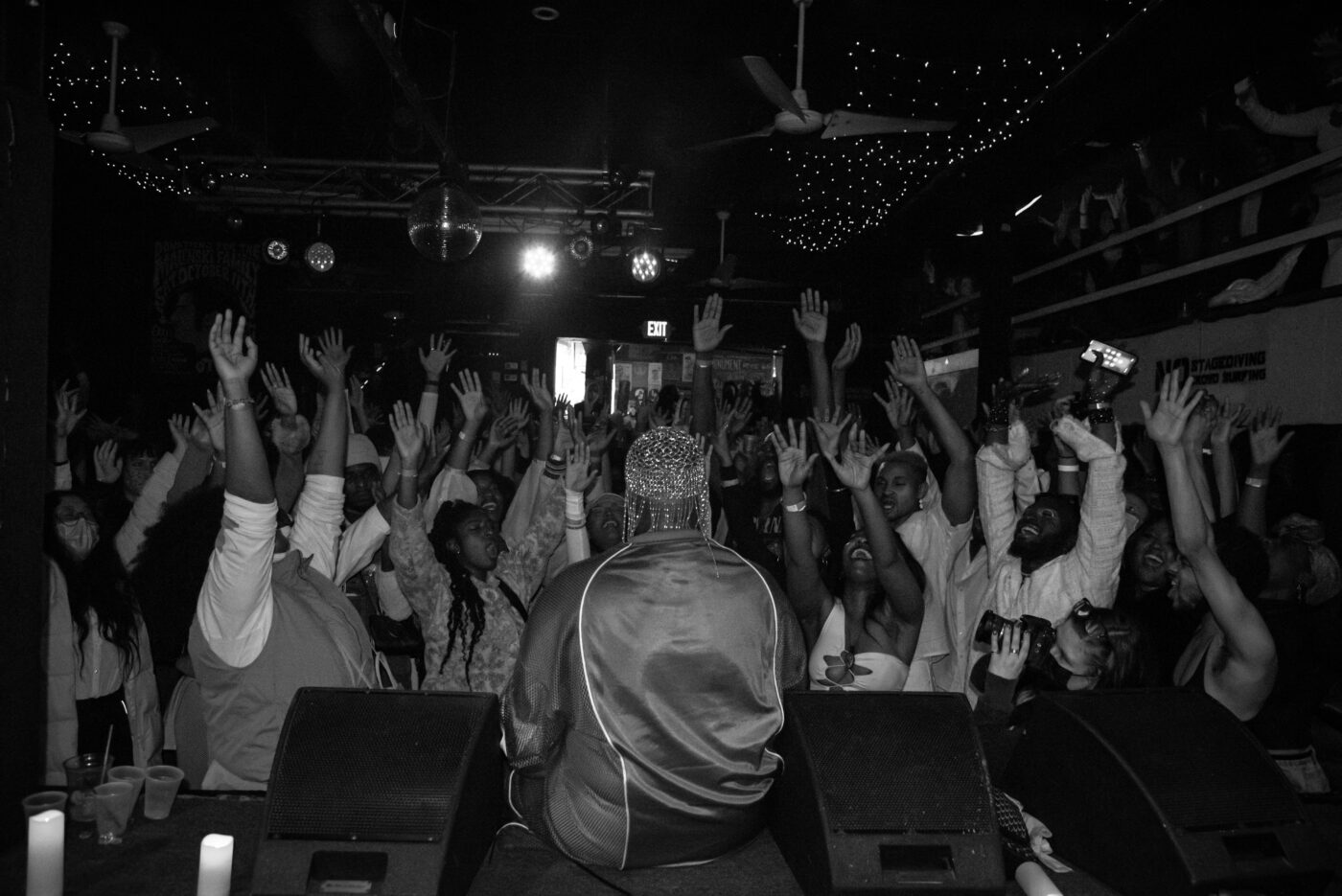
It’s clear, then, that a lack of venues isn’t preventing people from coming together. In fact, constraint always breeds innovation. The precarity of Black queer life—the precarity of being denied access or fighting for air—forces us to be imaginative. For Brooklyn DJ Dee Diggs, who runs the House of Diggs event series, the DIY lifestyle has its risks and rewards. The idea of coming in and taking over a space holds a lot of power, she explained. At the same time, there are enormous legal and financial challenges when operating off-grid.
So, we mourn what’s lost while staying open to the future. Black queer spaces have been essential to nightlife, and they remain so even if a party’s address changes. “For a lot of Black people, [DIY] isn’t that feasible,” Diggs observed. “Having the support and structure of a club helps a lot of scenes and parties grow.” Even with all of the looping, looming threats, it’s time to start tending to this once-verdant garden with an eye towards endurance, while holding tight to the same indefatigable energy that has always been the Black queer underground’s signature.

Leave A Comment
You must be logged in to post a comment.