

Honey is low-key, but decidedly not incognito, in jeans, a bomber jacket and a large blue hat that obscured most of her face. It was evident that she’s a regular. Before sitting down, she said to a waiter, “I’ll have what I always have,” as well as a glass of non-alcoholic rosé. She doesn’t drink, because you can’t tour as much as she does with a hangover. Within minutes of settling into our booth, an eccentric woman wearing Coke-bottle glasses sidled up, beaming. “Honeeeyyy, how are you? So good to see you.”
“I like feeling like I’m part of a community or neighbourhood situation, so I like going to places where people know my name,” Honey explained. That’s not hard. Over the course of her decades-long career, Honey has established herself as one of the most formidable house DJs in the world. She’s a scene luminary who’s been able to stay true to her roots in the early Chicago house movement even as she orbits the top tier of pop, and has been elevated to name-brand status herself—quite literally in the case of Honey Fucking Dijon, her collaborative line with Comme des Garçons.
“I’m getting recognised much more since the Beyoncé album. It opened up a whole new audience for me,” she said. If anything, that sells it short: In the past few years, Honey has played Pedro Pascal’s birthday party and headlined London’s 45,000-capacity Finsbury Park, remixed Lady Gaga and got an onstage shoutout at the BRITs from Charli xcx. She’s a reliable presence at fashion weeks and, at least once, appeared on the front page of a German tabloid for attending a Bottega Veneta show at Berghain during Covid-19. Search for her name on Getty Images and you’ll find red carpet photos alongside stars like Law Roach and Colman Domingo.
And, somehow, Honey is still a credible doyenne of the underground. Her 2018 Boiler Room has 12 million views—a rare modern-era set to receive widespread acclaim from both the mainstream and dance music’s headsy corners—and a quick trawl through generally venomous forums like Reddit suggests even the site’s self-styled experts haven’t found reason to cast her aside. She has true legend status: Unimpeachable, even when she makes the kind of overtures to the mainstream that could obliterate the credibility of lesser DJs. Her close friend and early mentor Derrick Carter recognised this quality when describing Honey in a 2017 feature for Mixmag: “She’s a fierce bitch. Dance music needs more fierce bitches,” he said. “We’ve shared and seen the ways that people try to silence you. Standing strong and being that fierce bitch is one hell of an antidote to that.”
A few years ago, she moved to West London after spending years splitting her time between New York and Berlin. Notting Hill is “not vibey at-fucking-all—I’m not gonna get laid in my part of town,” she claimed, but she likes the quiet. “If I’m in Shoreditch or Dalston, I get recognised quite a bit. When I go East, it’s a disaster for me.”
Honey’s tranquil new life in Notting Hill speaks to a desire to slow down and reconnect with a slightly more analogue way of life—although this seems more like an ideal she’s working towards. She’s trying to get away from social media, “because opinions are not facts, and everyone on social media has a fucking degree in opinions.” As a performer with a penchant for layered a cappellas and on-the-fly edits, she’s never been a stickler about vinyl DJing, but she’s started buying records again so she can play some vinyl-only sets, going back to the way she learned to DJ. She’s also building a “library-slash-music room” in her home to house her books, magazines (she owns every issue of i-D and W, some of which are worth hundreds), art and records, so that she has a “sacred space to create.” This is all part of her desire to get “back to a purist way,” she said, because she doesn’t “want to lose the humanity, especially with everything going AI, right?”

For decades, Honey was known, first and foremost, as a DJ and scholar of house, so while her shift into production has been seamless, the acclaim wasn’t preordained. Her move into production was born out of necessity, she explained, because she wasn’t “hearing music out there that I wanted to hear.” True to that idea, The Nightlife flows like a top-tier Honey Dijon set, high-tone disco and house drifting into pop, rowdy techno and moments of sublime release.
“This album is a dedication to nightlife and what I experience on the dance floor. As an artist, I expanded [when] working on Renaissance, and [learned] how to tie together so many different musical inspirations on a body of work,” she said. “There’s such an attack on nightlife. If you think about how vibrant London used to be, it’s not so much anymore, and there’s talk about all these spaces being closed in Berlin due to gentrification and real estate.”
As happened a few times in our conversation, Honey began to sound weary of the world she’s found herself in. Perhaps, inadvertently, this has helped to further inspire her mission to give nightlife to the people, regardless of whether they’re homies or hotel magnates: “Marginalised people come to cities, they build them up, then the wealthy want to come in and own it,” she sighed. “It’s sort of the same thing in house music. The people that built it have been erased from it. So [The Nightlife] was a dedication to that, in my own little way, about how important these spaces are for people, especially queer people.”
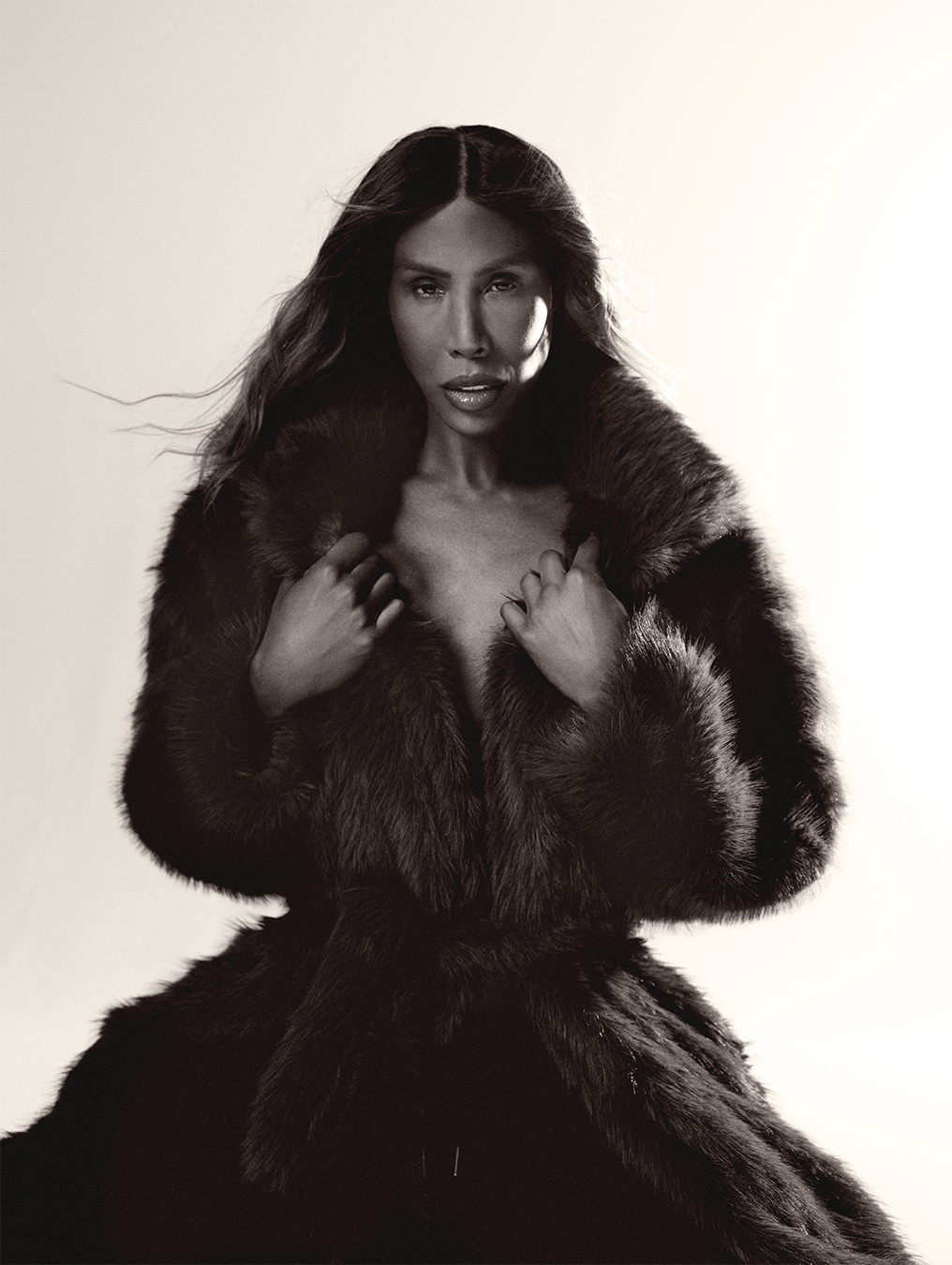
By her own telling, Honey “came out of the womb grown.” At school, she excelled. “I love words,” she said. “I’m a wordsmith; I love double entendres, I love homonyms, I love synonyms.” When she was barely a teenager in the ’80s, she started sneaking out to the warehouses and loft parties where house music was being born. “If I kept my grades up, I could spend the night at a friend’s house and we would go clubbing,” she said with a smile. As happened frequently in our conversation, specific memories then gave way to broader feelings: “As a queer person, going into those spaces and finding my people was super liberating. House and techno to me is not just about entertainment. I take it very seriously, because it was very important to me.”
She was coming of age during the birth of a musical movement, but also at a time when gay and trans people were being demonised by governments and the general public during the height of the AIDS epidemic. “Being Black prepares you,” she said, for the idea that the government might one day turn its back on you. “[House and disco] was a soundtrack to a lot of peoples’ lives. It gave them salvation, gave them comfort, gave them freedom,” she explained, rattling off the virtues of those early clubs in a way that suggested they’re never far from her mind. “The clubs helped them find medical information, connect with their peers, find love. I miss that a lot about our cities. That’s the thing that makes me a bit sad.”
A relatively sedate figure in-person, Honey became animated as she described her teenage years in the ’80s as a fantasy of art, music and excellent partying. A smile stretched across her face as she thought about the trouble she’d got herself into. She was “a moth to the flame” of culture and everything that might entail. “I did my first line of cocaine watching Female Trouble by John Waters at 17,” she said matter-of-factly. “That was just as mind-opening as fucking hearing Danny Tenaglia for the first time, or Derrick Carter.”
It was in Chicago that Honey first encountered house legends Derrick Carter and Mark Farina. “How did I meet them? By going up to them and introducing myself,” Honey said. She’s never had “a problem telling people that I love them. I know a lot of people say you should never meet your heroes. I think that’s not true,” she implored. “I think you should surround yourself with the things that light your spirit. I just wanted to know the people that were creating music and DJing that touched me.”
She credits her drive and eventual success with the fact she was never afraid of failure. “I remember starting to DJ, and I would go and play on Derrick’s decks, and he said, ‘Get off my turntables, you suck,'” she recalled, laughing. “Can you imagine someone you love and idolise telling you that you suck? I even remember another mentor of mine telling me, ‘Your DJing is all over the place.’ I’ve had my fair share of people tearing me down. I’m sure that people, when I play now, think I’m great, and then there’s people that think I’m shit. You got to take both with the same grain of salt.”
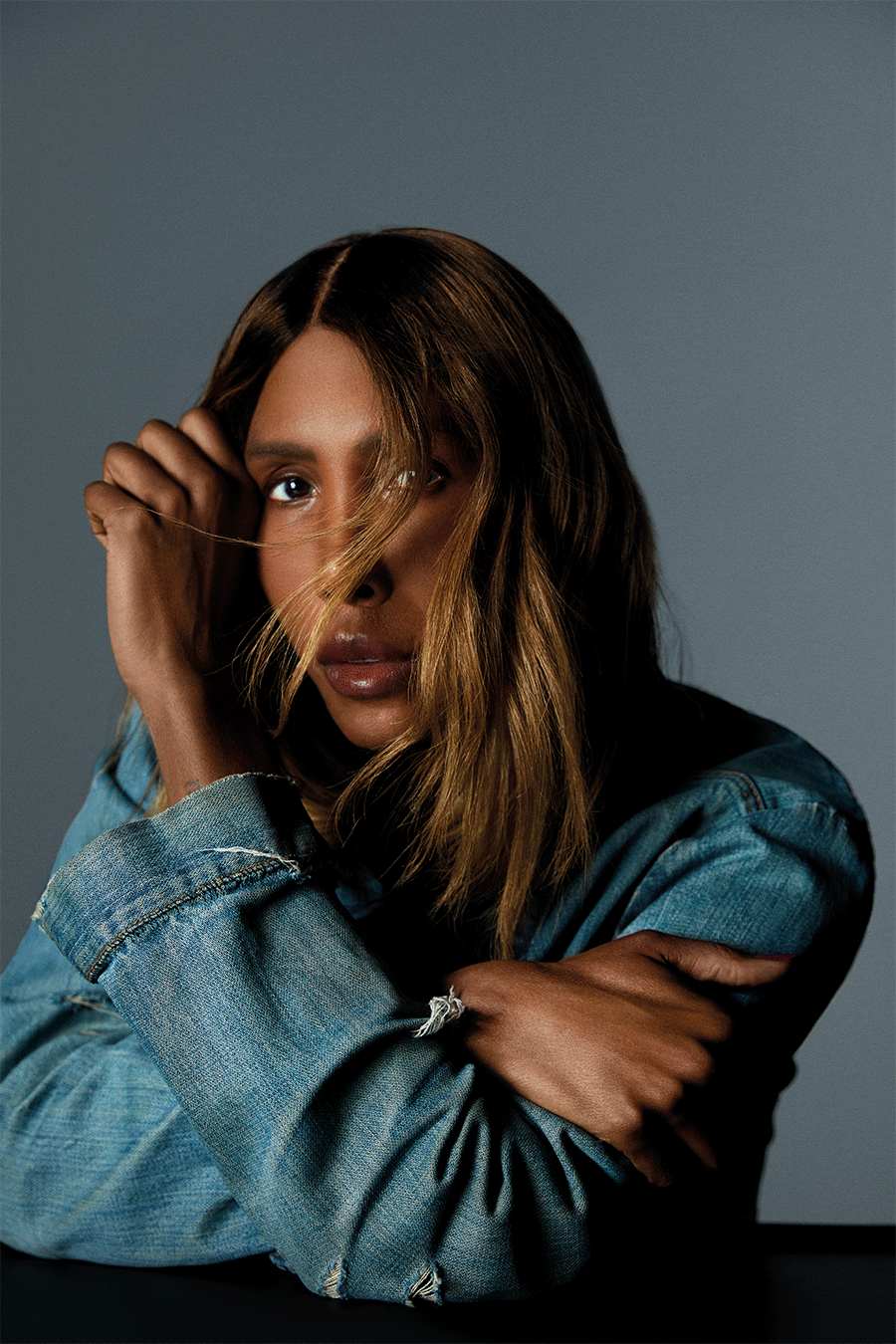
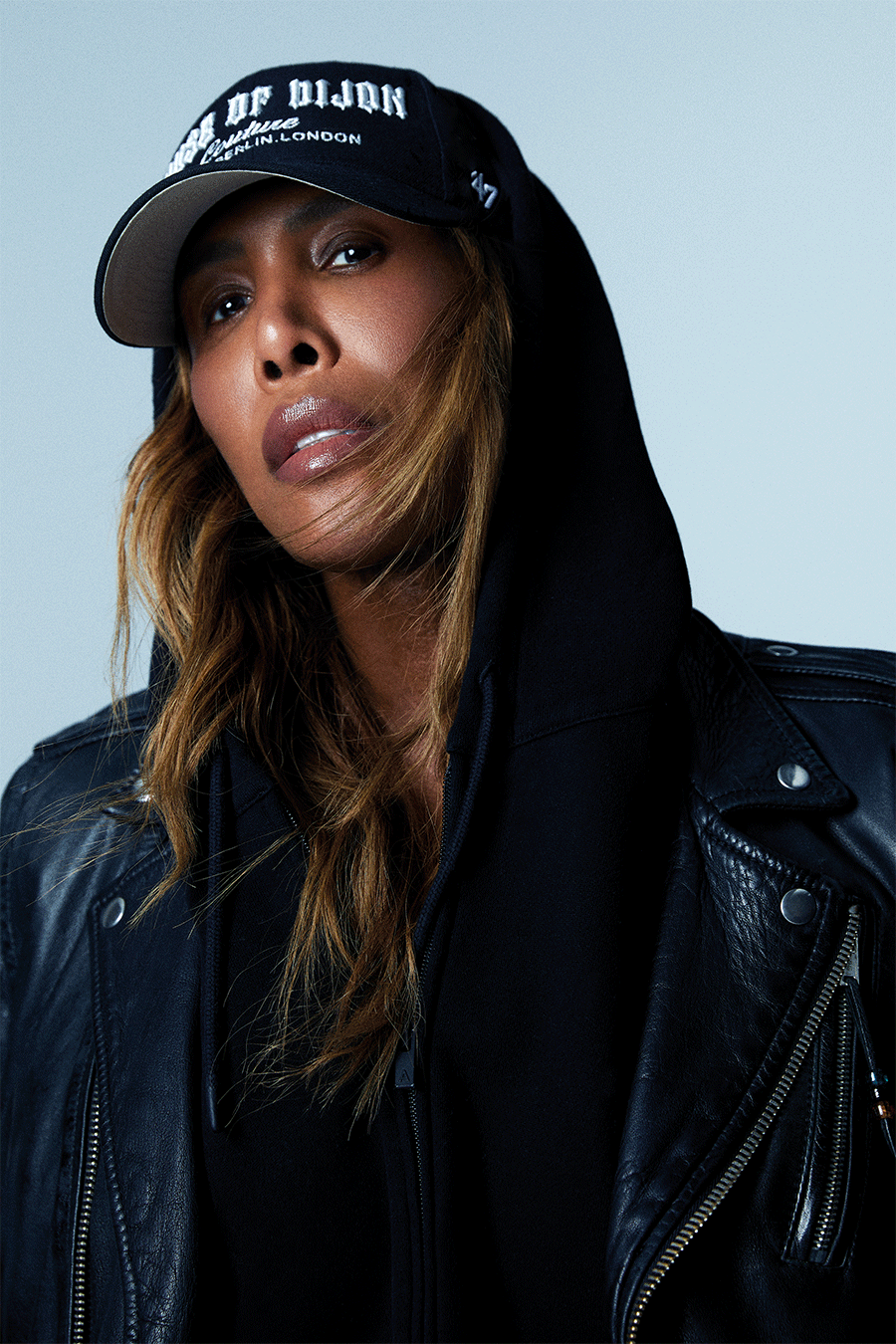
Following a short-lived weekly party on the Lower East Side in the early 2000s, sometimes playing for just one or two people, it was playing at friend and fellow house DJ Tedd Patterson’s birthday that led to a residency, at a club she couldn’t remember the name of. Honey was eventually on the scene seven nights a week, DJing at big-room clubs and gay Black hip-hop parties, going to watch her friends play at The Apartment and Shelter. “I just hung out everywhere,” she said. “I went to gay parties, straight parties, drag parties. I used to DJ a trans sex party—that was wild.” The anecdotes piled up, and I got the sense that Honey is so used to relaying her own lore that it’s something of a default mode for her. “That [sex party was] a whole other can of wax, but I’m a Gemini, and Geminis are notoriously nosy, so I have this voracious appetite to know things, even if it’s not for me. Just a nosy bitch!”
Honey first met Danny Tenaglia in New York. She got her first mixer from him, after the pair were introduced by Kevin McHugh, AKA Ambivalent and the cofounder of Maxi Records. “I remember walking up to [Danny] and saying ‘I’m gonna make a record with you one day,'” she recalled. “He looked at me in horror, like, ‘Who are you?’ And by the way, that hasn’t happened yet. I’m still holding out.” In the 2017 Mixmag feature, Tenaglia remembered Honey’s range already on display in these early days: “She was always up on the latest tracks whether it was New York, Chicago, French, German, British, Italian,” he said. “Her knowledge and appreciation for more than just one style is what I respected about her the most.”
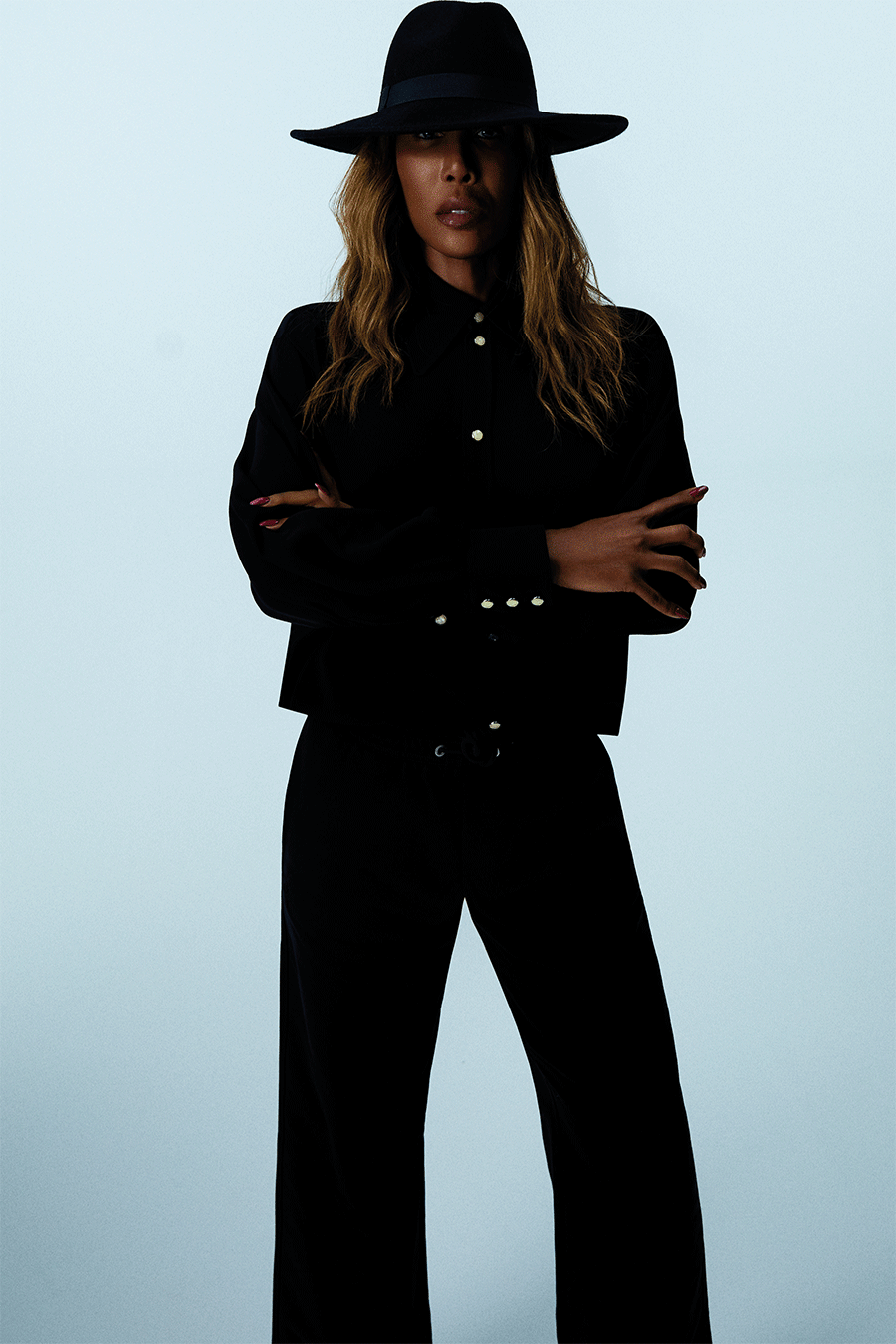
“She was and is exceptional,” Laverne Cox said in a podcast interview, summarising Honey’s presence and influence in glowing terms. “She is so good at what she does that she can’t be denied.”
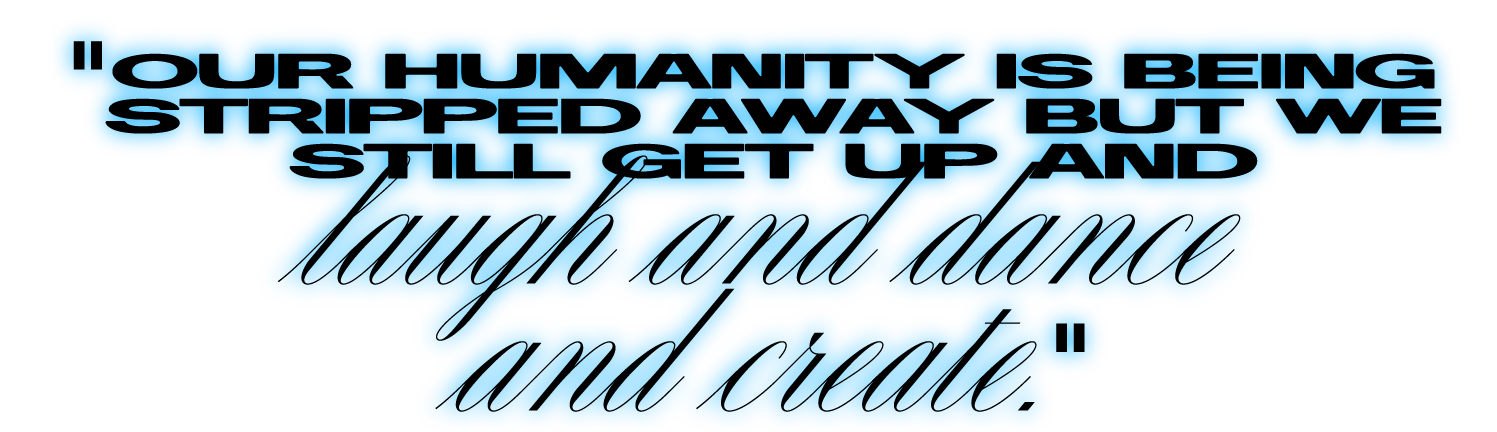
“[The trans community] found me, they saw me,” Honey said with warmth. “They celebrate your quirks and put a gold star on all the things that the world tells you don’t matter. That’s why, to this day, I value queer and trans culture so deeply, [because of] how much magic has come out of oppression. Even today, our humanity is being stripped away, but we still get up and laugh and dance and fuck and have fun and dress up and go out and create. Mad respect—and I’m including myself in that.”
In the mid-2000s, Honey started to get noticed by a fashion crowd—a natural fit, she posited, given that “fashion has always played a big role in club culture.” A fixture on the decks at gay dive bars, where a lot of designers liked to hang out, “they would inevitably invite me to DJ afterparties.” She sees the fashion world as a natural extension of the dance music world. “Talking about following the footsteps of my mentors, Frankie Knuckles went to fashion school, Larry Levan went to fashion school. I don’t think there’s ever been a difference between the two,” she said. Friendships with Kim Jones, formerly of Dior and Fendi, and Riccardo Tisci (Givenchy, Burberry), “gave me a lot of visibility in the fashion world,” which led to commissions for runway soundtracks and, eventually, the launch of Honey Fucking Dijon with Comme des Garçons.
The fashion world paved the way, paradoxically, for Honey’s re-emergence in dance music. This time, at a mainstream level. Now, she felt seasoned and unfazed by the attention or demands of the crowds. “My favourite is ‘Can you play something I can dance to?’ Girl, I don’t know what you dance to!” The Honey Dijon mix of house, techno and disco is rambunctious and welcoming enough that it can scale up and down easily, from Fuse and fabric to Time Warp and Hï Ibiza, and more exclusive spaces still. “Starting in New York, being able to DJ all these different types of parties has given me the muscle to walk into a space and know how to connect to an audience in my own way.”
Of course, Honey’s critics would probably describe her as a sellout for working with a dance music interloper like Beyoncé, or someone who’s sold out her roots for a slice of celebrity. Those people might be missing the point, or the context. “Have I ever compromised my artistic integrity for the cheque?” she mused, before pausing. “I have to be very honest, I’ve adapted, but not compromised.”
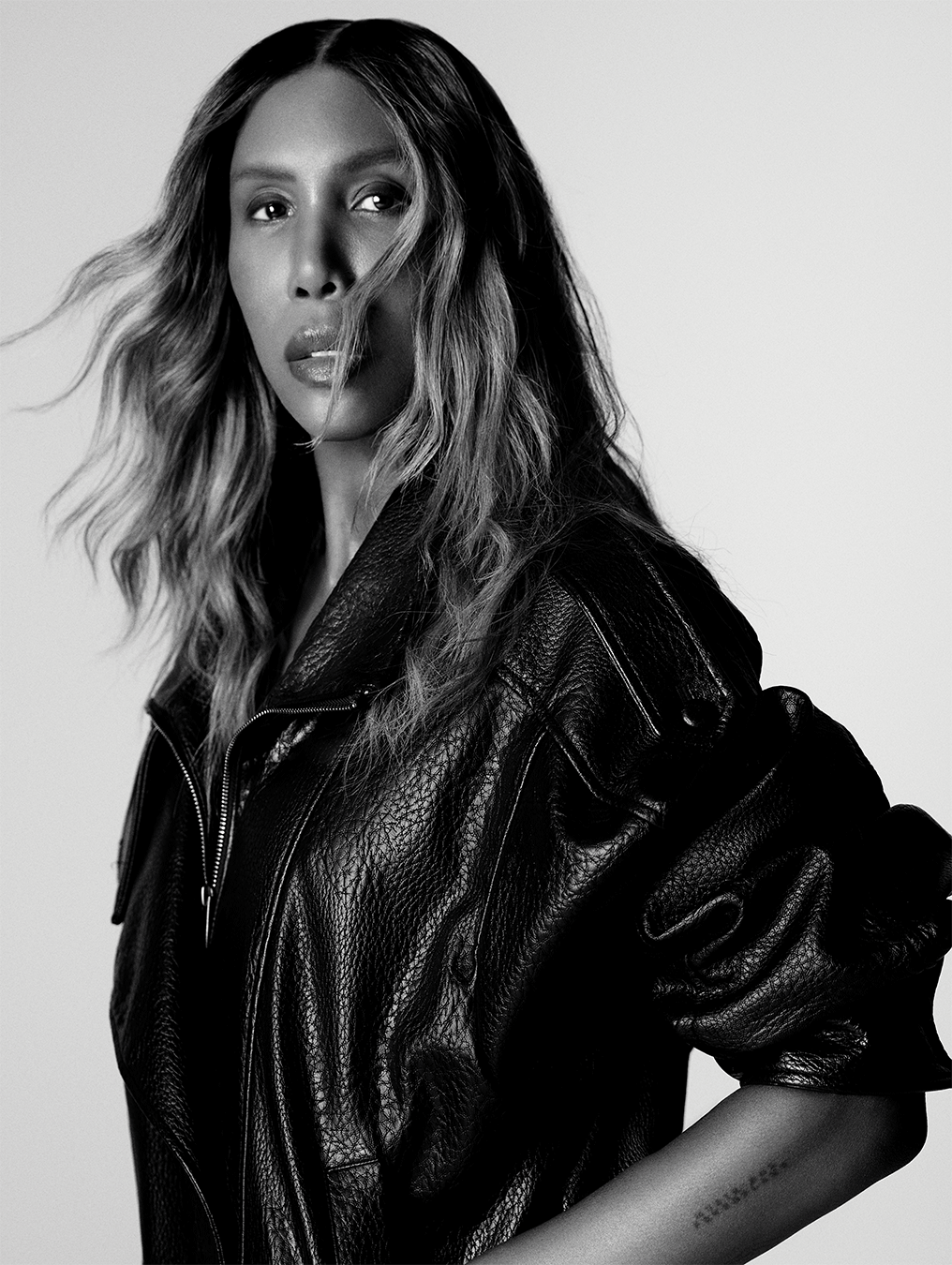
Clubbing gets a bad rap, Honey said, because of all the hedonism; critics don’t see the club as a third space for anyone who doesn’t necessarily feel comfortable expressing themselves in mainstream society. “Drug use and sex exists in corporate offices, it exists in shopping malls, in our governments,” she said. “It’s a bit shit to blame all of that on nightclubbing. Nightlife can be a place of healing and release and joy and celebration–that, to me, is what The Nightlife is about.”
The Nightlife, however, doesn’t really answer the question of Honey’s career: who does she really want to be at this juncture? Throughout our conversation, she tended to speak in generalities even when pressed, and sounded most animated when complaining about how noisy the restaurant was—although her relatively low energy could be the result of the chemical peel she’d had earlier in the day. Most often, she sounds like someone with a protective shell firmly in place, who has limits to what she’ll reveal and what she leaves to the public’s imagination.
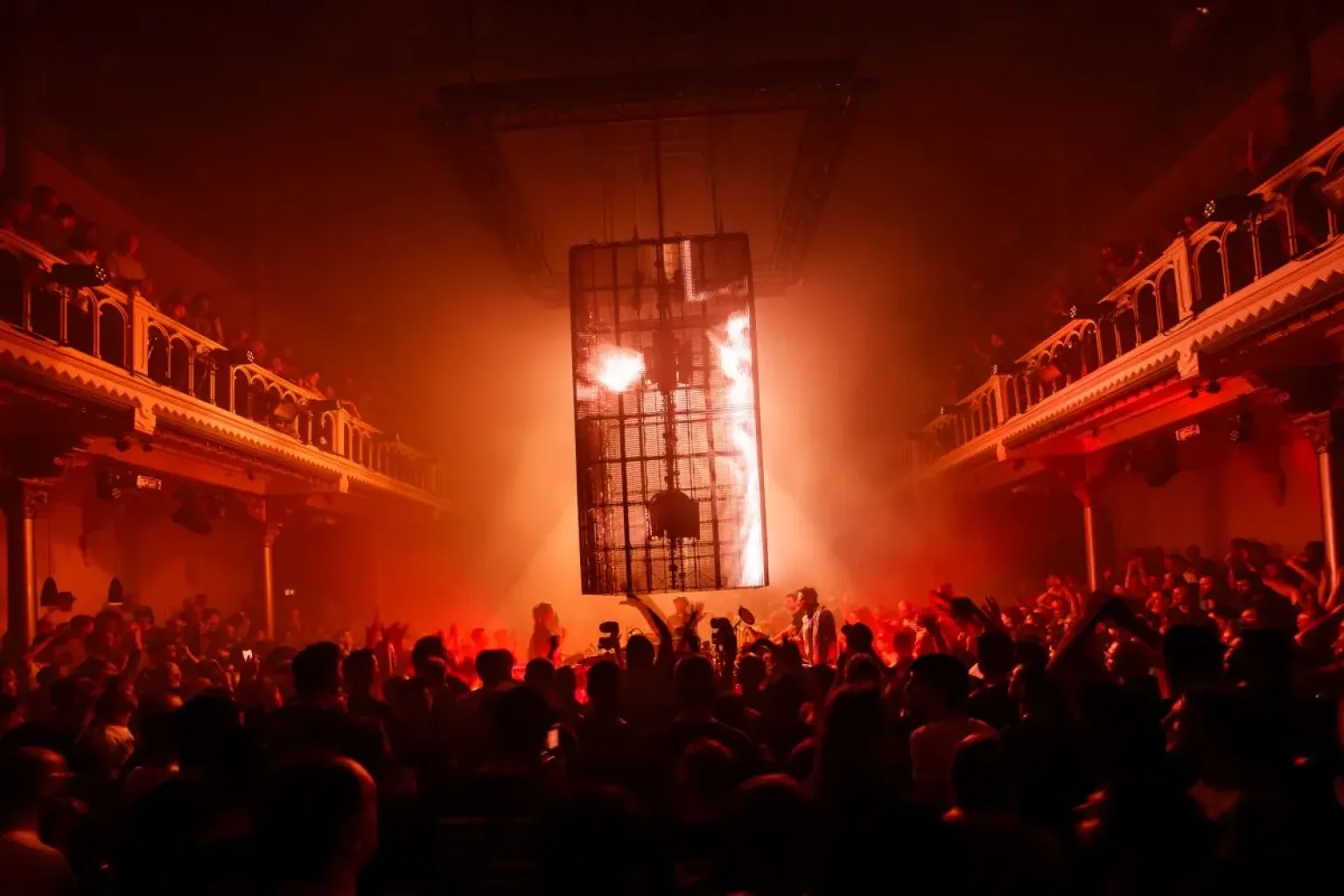
In binding the glitz of the pop world and the mystery of the club, The Nightlife is the vessel through which Honey wants to speak. At the heart, that’s what she has always been trying to do. “I still enjoy playing small clubs, the Lux’s and Panorama Bars of the world… Those places really feed my soul, because I feel like I’m allowed to DJ and not entertain,” she said. “When I’m at festivals, it’s entertainment. It’s a spectacle.”
“But I still consider myself to be quite an underground DJ,” she continued. “I’m sure a lot of heads would differ, because I’m not playing some B-side that I crate-digged in Southeast Asia in the middle of a pond, or that I found on Mars,” she said imperiously. “I’m not a head-scratcher like that. I’m not a fan of elitism in that way. But I don’t play commercial dance music.”
Chicago taught her that “great music has no expiration date,” and that she could love artists like The B-52s—the first album she ever bought—as much as she loved The Aztec Mystic (AKA DJ Rolando) or Richie Hawtin. That she inspired a generation of lesser DJs who wanted to emulate her brassy, high-camp, high-pleasure style—in search of some quick cash or a few hundred thousand Instagram followers—doesn’t make what she does less valuable, or mean that her embrace of 2020s pop music equates to her selling out. “Chicago house music, everyone thinks it’s four-to-the-floor, but early house music parties, it was not like that,” she said, emphatically. “It was like gumbo. Everything but the kitchen sink, as long as it rocked.”
When she first started out, Honey’s goal was simple: “I wanted to be one of the best house DJs in the world. I can’t say that I am, but I’m still working towards it. I’m still trying to hammer that nail.” But her level of achievement reveals something different. There are few artists who have managed to do all that she has while maintaining respect from both the underground and the mainstream, and even fewer who still feel vital so deep into their career. “I feel that I’ve been able to meet so many of my heroes through music, I’ve been able to walk through doors, through music, through fashion. I’ve been able to work with some of the most culture-shifting artists to ever walk the planet,” she wrapped up. “I’ve been able to get so close to so many of the flames that lit the fire in me. That’s been the wonderful thing.”





Leave A Comment
You must be logged in to post a comment.