
DJ Mag spoke with João Ervedosa, Maria Guedes and Daniel Mota about Paraíso, which features never-before-seen archive footage of raves in castles and interviews with key figures from Portuguese dance music history
A new documentary digging into Portugal’s rave and dance music history is set to be released.
Paraíso will premiere at Lisbon’s independent film festival IndieLisboa this Sunday (4th May), and features “first-hand testimonies” from 38 contributors, many considered pioneers of Portuguese dance music. Among the contributors are former long-running Lux Frágil resident Yen Sung and ‘Touch Me’ hit-maker Rui da Silva. Danny Tenaglia also makes an appearance; he remixed Underground Sound of Lisbon’s era-defining classic ‘So Get Up’ and famously played at the Santa Maria da Feira medieval castle rave in 1994.
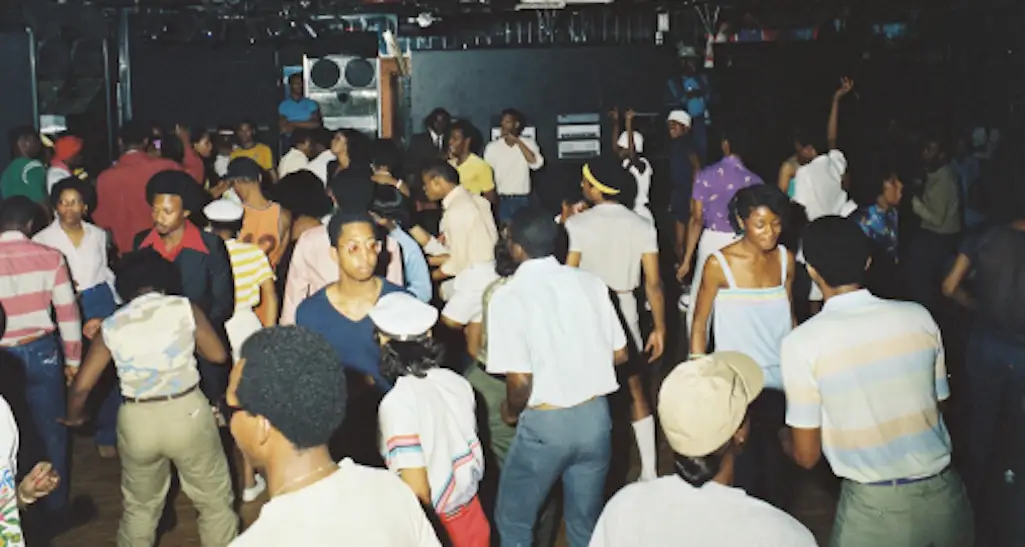
The illuminating 78-minute film maps out a dance music movement that took root in the early ‘90s during the emergence of rave culture. Knitted together from hours of never-before-seen home footage, Paraíso takes viewers backstage at parties and straight to the heart of 5,000-person raves in castles. The extensive VHS archives were amassed from private collectors and national broadcasters Rádio e Televisão de Portugal (RTP) and Sociedade Independente de Comunicação (SIC).
Masterminded by João Ervedosa aka DJ/producer Shcuro and Maria Guedes aka DJ/label boss Maria Amor, the documentary sprang from the pair’s Paraíso show for Lisbon’s Rádio Quântica, during which they would often interview dance music figureheads from Portugal, such as Luís Leite. Guests often spoke about flyers and footage they had stashed away at home, which sparked the idea for a visual project.
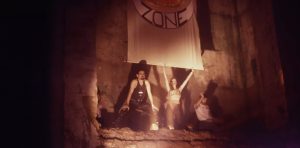
“We realised right from the start that radio would not be the ideal medium to tell this story as it would be incomplete because it lacks the visual side of it all,” Ervedosa told DJ Mag.
Armed with “three or four IKEA bags full of VHS tapes,” Ervedosa and Guedes used their holidays to go through the footage, which spanned everything from home-taped Portuguese television shows and adult videos to candid handycam footage from parties. “They would just film very naively, whatever would be in the party,” said Guedes.
“And it was all so cool to watch because it looks like a party from the future, which is not exactly what we would expect, you know? There was loads of diversity, people of many ages… And it looked very intentional and very fun,” she added.
“Someone had a handycam at the castle rave,” continued Guedes. “You see everything, you see the castle, you see every DJ we’ve grown up with. All the familiar faces, even celebs from when we were kids… And everyone was just vibing in a fucking castle…. It was mind-bending stuff to watch, you know?”

In order to bring the expansive project to life, the pair linked up with director Daniel Mota, a colleague of Ervedosa’s at RTP. They began shooting in-person contributor interviews around 2017, favouring an interview style that paired people based on their prior relationship within music. Subjects were often interviewed in a location that held some significance to their musical involvement.
Speaking to DJ Mag, Mota recalled his initial doubts about being able to pull it all off. That was, until they came across the work of photographer Da Fonseca. “He had an absurd amount of photographs from that time,” said Mota. “They were all in really bad shape, he has never developed them… but I was telling him, this is why this documentary hasn’t been made before, because, for some reason, we were waiting for this.”
Following the painstaking digitisation of some 1,000 photographs, the Paraíso documentary began to take shape.
One of the historic aspects that stood out for Mota was the way in which the Portuguese media haplessly handled the surging rave movement at the time. “It’s hilarious, it’s absurd… There’s one Portuguese journalist who describes it as ‘the raven party,’” he recalled.
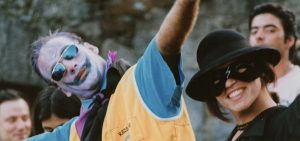
Mota’s eyes were opened to a rave history about which he knew very little. “A lot of people don’t know about what happened in this space of Portuguese music, and it’s really relevant, it’s really important,” he said.
“I think it surprised me how emotional I got, not only because of the time that was spent making this movie, but also because of what the movie is, because I’m truly proud of it,” he added.
Guedes was impressed by the decentralised aspect of the scene. “That’s one of the most iconic things we learned. That actually, it was not focused on either Lisbon or Porto at all.”
“Because there were more [events] in these cities, but the rest were happening everywhere,” agreed Ervedosa.
“You know, it was like a proper community thing… really organised and all done by themselves,” said Guedes of the DIY ethos of the movement.

This DIY approach extended to the making of the documentary. “It was all done with Daniel’s equipment. Inês [Coutinho – aka Violet, who assisted on the film] and me and João and Marco [Rodrigues – aka Photonz, who also assisted] would have hair ties pulling up the mics and stuff. It was all as DIY as you can get,” explained Guedes.
Paraíso depicts the golden age of ‘90s rave culture in Portugal while zooming out on some of its landmark moments, such as the international success of ‘Touch Me’. “I think when Portuguese media caught up to the club scene, it was already over, mainstream and slightly less interesting,” offered Mota of dance music’s commercial transition.
However, for Mota, there was a “B-side” to Paraíso. “We’re always talking a lot about whether this is a documentary that we want to see, because some of those guys who achieved that level of popularity are right now personal trainers, or they work in stores, or they sell houses,” he stressed. “That’s the reality, and it’s also a really harsh criticism of the way Portugal treats its culture. And that’s the saddest thing for me, it’s not their fault, it’s just that Portugal doesn’t handle its cultural beings. For us, culture is something that entertains us… and the governments keep on not supporting culture.”
Beloved Lisbon queer space Planeta Manas, founded in 2021 by the mina and Rádio Quântica collectives, is hosting its final party on 25th July. In a statement, the team said that they could no longer continue in its current space under the increased pressure from the police and Lisbon authorities. Find out how to support Manas here.
Paraíso will be screened on 9th May at Lisbon’s Cinema São Jorge and on 17th May at Cinema Passos Manuel in Porto, with other screenings in the works.
Check here for info on future screenings and watch the trailer for Paraíso below.
Find out how to support Rádio Quântica here.


Leave A Comment
You must be logged in to post a comment.