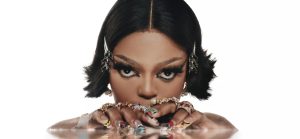
DBN Gogo is the godmother of amapiano. Whether through the stories she tells in her sets and releases, or the wisdom she shares to help young artists navigate the industry, she’s a source of inspiration for many and a driving force in South African electronic music. DJ Mag’s Ria Hylton learns where she got her fighting spirit, how she’s impacted the wider culture, and why amapiano’s connection to the house music history of South Africa must not be lost
Saturday evening, mid-March 2020. Mandisa Radebe steps into the DJ booth at Soweto’s Moja Café for a mix that will make an impact far beyond Gauteng. The first half is pure South African old school — beloved house cuts from the early ’00s through ’10s — followed by a final hour of amapiano that will command the crowd into chorus. From Phonique’s ‘You, That I’m With’, to Raw Artistic Soul’s remix of the timeless ‘Summer Breeze’, Culoe De Song’s pensive ‘Webaba’, and Dennis Ferrer’s classic take on Fish Go Deep’s ‘The Cure & The Cause’, the crowd is on its feet. The DJ oozes a cool, calm energy. She seems to know every lyric, dance move and person in the room. Thirty minutes in she teases Charles Webster’s ‘La Mezcla’ club mix, pumping the bass on every beat, way beyond 12 o’clock — and when the bassline drops, the dancefloor roars with approval. She cracks a small smile.
Radebe uploaded the set weeks later, introducing DBN Gogo to the world and the world to amapiano. In the five years since, she’s played every possible continent, released scores of music, and pushed amapiano in the unlikeliest of places. “I play in a lot of spaces where a lot of ’piano DJs have never played,” she tells DJ Mag on a video call from her home in Johannesburg. “So it’s always about not being too hard on myself, not being too hard on the crowd, and telling the story from my own perspective.” From Moja Café to Afro Nation to Tomorrowland, she’s won fans among the well-initiated and the newly curious, opening for dance music heavyweights like Keinemusik, and sharing billings with fellow SA acts such as DESIREE.
Back home, she’s a lighthouse: a reassuring guide for new waves of talent, a friendly face willing to show others the lay of the land. It’s something we note in our many interactions from afar. Whether over video or phone calls, voice notes or messages, Radebe is a natural storyteller, willing to explain — in detail — her vision for the scene, her peers. And as she talks about ’piano’s future, its scope, its mystery, we can’t help nodding in agreement. “I think she always focused on being really great technically, telling a good story and taking you on a journey, which is what the best DJs do,” UK-based amapiano artist Charisse Chikwiri, AKA Charisse C, replies when we ask about Radebe’s success. “She breaks new music and everybody has always known and trusted her for that. She’s respected by the biggest names, they all respect her.”

“People won’t remember you just because you played all the hits — any DJ can do that. People will remember you for how you made them feel while you were playing. It’s a transfer of energy.”
It’s a point echoed by Melissa Penny, manager at Piano People — one of the largest amapiano brands outside South Africa. “She’s always been seen as a leader and maintains this godmother role in the scene. She’s touring the world, but she’s still in the studio with the kids when she’s back home. And she understands what room she’s walking into, she’ll bring the energy. You could put her anywhere and she’ll do a killer set.” Radebe explains her rise as a simple case of serendipity, a confluence of events. “I think it was just about being in this space at this time — just before something switched,” she explains. “And being a name that people know and trust.”
In many ways, amapiano is thriving. Years on from its global explosion, the sound has spawned myriad sub-genres, been reinterpreted by global hip-hop, Afrobeats and R&B stars, and won its first Grammy. Streaming numbers are also up. In 2019, the genre clocked in 34 million Spotify streams, tripling to 102 million in 2020, and almost again to 300 million in 2021. In 2023, it managed 1.4 billion streams, already reaching 855 million by mid-2024. Radebe believes, and evidence suggests, there’s still room for growth, which is why she’s conscious about platforming and schooling as much talent as she can. Her label Zikode is home to artists like UNLIMITED SOUL, Stixx and DJ Stopper, while her KwaGogo party series is dedicated to showcasing all the new talent in her orbit.
In a past interview, however, Radebe said that there was a time when it felt like amapiano was running away from South Africans — how does she feel about things now? “Amapiano is skyrocketing really fast,” she replies. “I do still think it is running away from us, but we’ve been able to solidify our footing, making sure people know where it’s from, that we make it, and that this is where you’re gonna get it authentically. And even the consumer has chosen it; this is the type of ’piano they want.” There was also a time when global audiences struggled to tell the difference between Afrobeats, amapiano and the Nigerian take on the sound, often referred to as Afropiano.
“A lot of people have incorporated it into their sounds and beautifully so,” she continues. “I would take Asake as an example. He’s still very much in Afrobeats, but he uses a log drum in almost every single one of his songs. We used to joke that the biggest amapiano artist is Asake, until Tyla came.” South African singer and songwriter Tyla’s 2024 Grammy win for ‘Water’, which topped music charts across the globe, and was the first solo song by an African artist to reach 1 billion Spotify streams, showed the potential for amapiano’s continued growth and fusion. “She incorporated the sound into something that’s more R&B, and that’s the thing about ’piano, it can blend into anything seamlessly, which is why people love it. But the structure of Afrobeats is completely different to the structure of amapiano.”
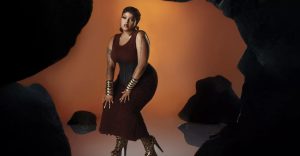
One of Radebe’s main missions has been to present amapiano as it was intended to be played, in spaces that betray its house roots, while not giving in to the logic of pop-music composition: shorter intros, faster tempos. “When it’s played, it’s faster and then songs are getting shorter, which makes some ’piano producers produce ’piano like that. We’re gonna struggle when we have to play dance festivals,” she continues. “It’s a conversation that’s happening now. They [promoters] are struggling to find DJs that can play longer than a one-hour set. When I was first getting into DJing, certain venues used to give you two-hour slots, so fewer people were on the line-up and you’d be playing longer. And that’s where you get your experience and your stamina. You’re not going to get to the level of a Black Coffee or a Keinemusik playing one-hour sets.”
Another aim is to create more space for herself and peers to tell a more expansive story of African electronic music. She may be best known for her contributions to amapiano, but across our conversations it becomes clear that she sees herself as a dance music artist in the broadest sense of the term. And this shows in her back catalogue, where we find Afro-tech and 3-step among the many variations of amapiano. “We need ’piano and Afro-house and Afro-tech and 3-step to move in one direction, so that we’re not limited to one type of electronic music,” she says. “It’s all good and well that amapiano is so celebrated in diasporic spaces alongside urban music, but it has to absolutely stay in the electronic space too. It’s house — we should be able to be hitting the two types of audiences at the same time; it’s possible.”
Madisa was born in KwaMashu, a Durban township, after apartheid but before the country’s first democratic election. Her father, Jeff Radebe, was an active ANC member imprisoned for seven years on Robben Island, who went on to serve in every government cabinet from 1994 to 2019. Her mother, Thuthukile Skweyiya, also an ANC veteran, jumped the border into Swaziland to escape persecution. She lived in exile in Europe years before her appointment as ambassador to France in the late ’90s. Radebe describes her childhood as nurturing, but firm. She lived in Cape Town, Johannesburg and Pretoria before moving to Paris around the age of six, where she remained for the following five years.
Her parents were always on call, her father in various ministerial roles back home, and her mother often on hosting duties for dignitaries and other guests at their ambassador residence. She lived a fairly independent life, walking the streets of Paris late at night and entertaining herself while her parents worked, but school was tricky and she often felt homesick. “My mum tells me that all the time I was there I couldn’t wait to come back home.” The warmth and music are what she missed most. “There were a lot of things that made me feel self-conscious at the time, but I was in a really good place — I could walk anywhere by myself, I was more free.”
MTV and British music were big influences around this time; she recalls Kylie Minogue, Green Day, Limp Bizkit and Robbie Williams as among some of her favourite acts. The sounds of home — releases of kwaito groups like TKZee and Big Nuz, as well as house mixes by the likes of DJ Fresh (SA) and Black Coffee — also made a big impression.
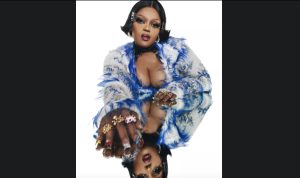
“Amapiano is skyrocketing really fast. I do still think it is running away from [South Africans], but we’ve been able to solidify our footing, making sure people know where it’s from, that we make it, and that this is where you’re gonna get it authentically.”
“South Africa was so special in December; you always had a hit song that would come out that would break the year in. All the different radio stations would have a song of the year.” House was so ingrained in the culture that, growing up, Radebe thought house came from South Africa. “The way Soul Candi used to operate, you thought this stuff was from SA,” she says, bemused at the thought. “Even to find that Monique Bingham is from America — this was a lady we’d been listening to for years and she’s not even South African.”
Her older brother was into US hip-hop and her mother was good friends with activist and singer Miriam Makeba, but Radebe’s musical taste didn’t come through the family. “I think I got my fighting spirit from my parents,” she shares when we ask what influence they did have. “I also knew I would never do anything similar to what they did because I saw how much it took from them. It’s not easy, fighting for your country, then working for your country. Going from a time when you’re oppressed to a time when you’re figuring out what to do with your freedom.”
In the early ’10s, while still a law student in Pretoria, Radebe was getting paid to rock up to events. Before she was DJing she was what was known locally as groovist — someone that loves music, is a trusted face on the club scene and knows the musical landscape inside out. Wednesday through Sunday, she would be out with an entourage somewhere in town. Mushroom Lounge would pay her 1,500 rand and a spirit bottle just to attend on a Sunday. “We were just always the vibe. Fridays, when you’d go to the club, you’d put on your heels; Saturdays would be your daytime vibes,” she laughs a hearty laugh. “It was a good time.” One of her main watering holes was Hatfield Square, an outdoor space tucked away from the main road, lined with bars and outdoor benches for students and any other passers by to drop in. Hip-hop heads, house faithfuls, sokkie lovers: all were catered for. “If you didn’t find your friends on campus you would definitely find them in Hatfield drinking,” she remembers. “You would barely miss a day.”
But by 2017, she’d had her fill of sub-par DJ sets. Increasingly under-inspired by the commercial house playing at the usual spots, she decided to lean into the old-school records that made her fall in love with house. Her friend DJ Venom gave her a few lessons at Stones, a sports bar and club in Melville she was doing promo work for, and she practised a few hours every Friday. Five months in, she was playing the warm-up slot for 200 rand. Friends helped her land on a DJ name. DBN (pronounced de-ben) represented Durban, while Gogo, which means grandma in Zulu, cast her as a wise feminine figure.
Two years on, Radebe had released her debut single ‘Mayonice’ with Jobe London, Makhanj & The LowKeys, was spinning more amapiano, and entering the final stages of her law degree. Things were picking up, but she couldn’t juggle it all much longer — something had to give. “I had a few subjects left, but my attention span was just not there,” she tells us. “I even tried to study part time, but I couldn’t do both.” She sat her parents down and told them she was leaving uni. “I said to them, ‘I’m sorry, guys, whatever I need to finish, I will pay for it myself’. That was literally the last day my parents gave me money for anything.”
Few had a 2020 like Radebe. By the time Covid hit, she’d moved out of the family home and was looking forward to a busy schedule of festival gigs. But when the world went into lockdown, she had to pivot fast. “I was like, I know if I don’t take this opportunity to build and do the stuff that I need to do I will never get it again — I didn’t have a Plan B. Sure, I could go home, try school again, but I knew nothing was going to come of it.” After uploading her Moja Café set, Shimza and PH invited Radebe to perform on national television for their Lockdown House Party series. That performance brought a new kind of attention. “That was the thing that really sparked a lot of interest in me, not just in Durban and here in Jo’burg, but people from all over, because it really trended for quite a few days.”


Radebe landed a number of paid online gigs, and by May she’d hired equipment and was streaming from her living room. Her Quarantunes live sessions were a hit at home and abroad, and it wasn’t just amapiano — she dropped Afro-tech and old school mixes too, reminding the audience of her house roots. Other collaborations came thick and fast. One key connect was a B2B with Major League Djz on their Balcony Mixes series, which Radebe appeared on twice. “It was really great for the culture,” she remembers. “When you play there, you want to put your best foot forward, come with all your exclusives, all your most amazing music, and also preview new work.” Her first Balcony Mixes video stands at just over 5 million views at the time of writing.
One striking thing about Radebe is her cultural reach. During the lockdown she sparked a number of viral moments, including the #Glazzoff challenge — a dance involving a champagne flute — and the sippy cup craze that followed. In fact, she’s the sole reason many female amapiano DJs are never seen without one. “I saw a picture of Beyoncé with this very fancy Versace cup and I was like, I need a sippy cup! It made sense: I could have a bigger drink, keep my ice cool and it’s safe, even just for the equipment.” Clubbers started buying that same cup in droves and Cotton On, a retail company with stores across the country, quickly expanded its cup range. Radebe launched her own late last year.
“It really is the DBN Gogo cup, she made them what they are,” Chikwiri shares. “She has a cupboard full of cups too, so when we’d all go to hers, everybody would take their cup from the cupboard, go out and bring the cup back. Everybody that rolls with DBN Gogo carries a cup.” Gogo’s release of ‘Dakiwe’ with Lady Du spawned another dance craze where Gogo and crew would gather and move in a chain-like motion, chin and hands flipping in sync. “That felt like a real moment in terms of building a dance culture,” Penny remembers. “She’s always on top of trends.”
Radebe is as much a fashion phenomenon as she is a musical one. Her signature cup, zulu bangles and two watches are rarely out of sight, but everything else is constantly in play. Short pleated skirts and half shirts, plunge neck corsets and baggy jeans — she’ll pair casual wear with high-end garms, plucky, unshrinking looks that appear effortless. Chikwiri has seen the way in which she’s impacted the wider culture for women especially. “She’s a curvy woman and people would talk about how she’d wear a lot of crop tops,” she explains. “Some people would post comments, saying things like, ‘Somebody of your size shouldn’t be wearing that’, and she would always gracefully clap back. Gogo always looks incredible and owns herself, owns her body, shows there’s no shame in being a curvy woman. You look at her and she just oozes this core calm confidence, this sureness in self. That is affirming for so many women.”
Radebe dropped her first EP in 2020. ‘Thokoza Café’, a collaboration with Dinho, was unique for its lyrically led and female-focused content. “Pre-pandemic a lot of amapiano wasn’t lyrical at all, and when it did become lyrical it was really crude, the women’s voices were the ad libs,” Chikwiri explains. “That first EP she dropped was women’s stories, I think that’s what so many people loved about it.” Tracks like ‘iVibe’ and ‘Pour’ offered amusing takes on club life, but it’s the smouldering ‘French Kiss’ — the first record to showcase Radebe’s vocals — that continues to receive a lot of love. Other hits soon followed: ‘Khuza Gogo’ with Blaqnick & Master MasterBlaq, ‘Possible’ with Musa Keys, Dinho and Lebza The Villain, by which point flight routes were opening up.

“I think that was one of the best times, playing when we were just fresh out of Covid. Watching people sing back the words to songs, bar for bar, taking it in as their own — you can’t recreate that feeling.”
As the world eased out of lockdown, amapiano artists moved fast. Radebe’s first destination was Europe, but it took a long time to arrive, owing to the restrictions in place at the time. The traffic light system, which rated a country based on its vaccination and infection levels, eased the world back into some form of travel, but it could take weeks to get to a destination depending on where you started. “South Africa was a red zone, which was crazy because our infections were far lower than everywhere else in the world, but we could not go directly to America or to Europe.”
Radebe headed to Ghana, a yellow zone, where she had to remain for two weeks, before flying to the UK, which came with another week of quarantine. “Imagine the costs involved in that, just to have enough days to say that you are Covid-free, to be able to work.” The first place she landed was London, playing the inaugural AmaFest, the largest amapiano event outside Africa. “I think that was one of the best times, playing when we were just fresh out of Covid. Watching people sing back the words to songs, bar for bar, taking it in as their own — you can’t recreate that feeling.”
By the end of 2021, Radebe had a good decade of clubbing under her belt. International gigs were coming thick and fast, she was collaborating with talent back home, and she also had a quiet way of getting things done: schooling new recruits on the music business, making sure they had their paperwork in order, advising on how to roll out releases. But if this buzz was going to turn into anything lasting she’d need to build a bigger team. In 2022 she signed a label deal with Universal Music Group Africa, and set up Zikode Records, named after one of her clans. Zikode was a way to release her own music and cultivate the talent she was coming across, many of whom had been struggling in the industry. “They [the artists] were having issues before, and I was like, ‘I don’t have a problem helping you. If you want to come and release music we can help you do that, and then after your contract is done you’re more than welcome to go figure it out on your own’. I’m not in the business of keeping people or trying to sign them into deals where I own their stuff forever. People need to be able to grow.”
She built a studio and invited new recruits into sessions, formalising the blueprint she’d established. “These guys really wanted to be able to drop music and have their voices heard, and then to learn how the music industry is. I think a lot of them have realised that it’s not as easy as they thought and that you really do have to have a plan for yourself. You need to know what it is that you want to do, what you want to achieve and how you want to go about things. A lot of these things cost money; nothing’s for free.”
In 2022, Radebe hosted her second Boiler Room event, announced a European tour with dates in the UK, the Netherlands, Belgium and Cyprus, and debuted at Afro Nation Portugal. She also collaborated on a slew of tracks — including ‘Bells’, ‘Buya’, ‘Bambelela’ and ‘Back2School’ — remixed Keinemusik’s ‘Les Gout’, and, with her Zikode crew, contributed two tracks to the Black Panther: Wakanda Forever soundtrack. It was also the year of her album debut, which landed in late November. Made in just two weeks, ‘Whats Real’ was decidedly slowburn. Cinematic opener ‘MARADEBE’ called to mind Jodeci’s ‘Diary Of A Mad Band’ era, while the bounce, breezy vocals and topline on album closer ‘JABULA’ was the most songlike. Aside from Afro-tech anomaly, ‘MDALI’, this felt like her most inward-looking project yet.
The following year, she announced a world tour, bringing amapiano to new spots across North and South America. Zikode released its first compilation, ‘ZIKODE PRSNTZ’, and Radebe doubled down on her single releases, dropping future hit ‘Funk 55’, and her rework of electro-house pioneer Benny Benassi’s ‘Satisfaction’. Then in early 2024, she played a wild card. ‘Click Bait’ blurred the lines between African electronic music, blending elements of amapiano and Afro-house. “That felt natural to me at the time,” Radebe says about the EP project. “There’s so much music in South Africa, so how do we bridge the gap? How do we get people to understand that amapiano is still part of dance music?”
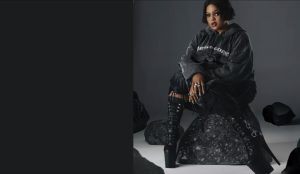
More amapiano hits followed, like her collab with Tyler ICU & LeeMcKrazy on ‘Balimele’ and her rework of Dennis Ferrer’s ‘Touch The Sky’, but Radebe is always on the lookout for new ways to tell the genre’s story and bring fresh voices into the fold. KwaGogo, which she launched in 2023, is one way. The first event was held at Carfax in Newton, Jo’burg, and the second at Constitution Hill, home of the Old Fort Prison Complex and South Africa’s Constitutional Court. But Radebe plans to take things global, collaborating with festivals in ways similar to what Keinemusik has done with Zamna Tulum. “From the time I met them to what they’re doing now is incredible,” she says of the trio. “And I think that’s an important thing that artists need to understand — the way that a lot of events, even festivals, are now moving. When you headline a festival, you have to bring more than just your DJ set.”
February, 2025. DBN Gogo is shortlisted for a Beatport Award. Her Afro Nation set last year has landed her in the best mix category and it has her thinking about Moja Café. In just five years she’s gone from playing to home crowds in the hundreds, to international audiences in the tens of thousands. And with headline gigs scheduled for Afro Nation and Central Park this year, Radebe is proving once again that the initial buzz was more than justified. “I think it’s safe to say that it’s really important for DJs to always have live mixes online — especially women,” she muses in a voice note. “I always say, people won’t remember you just because you played all the hits — any DJ can do that. People will remember you for how you made them feel while you were playing. It’s a transfer of energy.”
Her vision for amapiano, however, feels bigger than her career. Teaching its history, its house throughline, connecting the dots to other African electronic dance: that’s the main goal. “People think it’s [amapiano] a fad because of how quickly it’s risen and how many people want to be part of it, and I think that’s just the vulture-like way of the industry. But it’s proven itself year after year, and inside South Africa, it’s what we make, it’s what we like. “This thing is here to stay. It may not be the same sound in the next ten years, but it is something that we, South Africans, are willing to push and protect.”

Leave A Comment
You must be logged in to post a comment.