** This article was originally published in Resident Advisor on February 18, 2020
Inside the studio (and creative mind) of a true house music innovator.
The track would influence scenes well beyond Chicago, nowhere more so than Detroit. It was there that Trent and Chez Damier, the legendary Detroit producer and Music Institute resident, forged one of the great musical partnerships of ’90s house music. The music they produced in Kevin Saunderson’s state-of-the-art studio and released through the Prescription label melded the epic feeling of “Altered States” with high-fidelity sonics and a mission to do no less than evolve house music. Even if Trent and Damier’s partnership lasted for just a few years in the mid-’90s, it feels like they succeeded: it is actually difficult to imagine house music today without the influence of Prescription.
Trent has continued to evolve, too. While living in New York after Prescription’s classic era, his sound became even grander, exemplified by the live feel and intricate instrumentation of the records he put out through Future Vision Records in the ’00s, where one side of a 12-inch could barely contain a single track at 33 RPM. Now back living in Chicago, he’s continued to explore new angles on his musical impulse, from hip-hop production to ambitious, genre-averse live projects. These days, Trent is once again making music on the South Side, working and vibing from a basement teeming with records and inspiration ephemera, and thick with incense smoke. On a frigid afternoon this winter, I descended the stairs and caught up with Trent at the epicenter of his creative life, where production is less a technical exercise than a spiritual one.


The first thing I was struck by when I walked into studio is… it has a vibe. Can you tell me about the vibe that you’ve created for this space?
Well, obviously, you can feel the creativity in here. For me, it’s very important to have various types of stimulation. I need to make the space as beautiful and as organic as possible, [because] I spend a lot of time down here. This is a couple years’ work. This was just a dirty old basement—the house is 100 years old. So for me it was creating a situation where I could just express myself. Having plants, and having reference material with the books and records, and color—very important. Color is extremely important, right?
Why is color so important?
To me, music, to a certain degree, is playing with color. [Colors] have different vibrations. Those vibrations actually fit along with sonics and things of that nature. There’s certain tones that inspire certain things. I have my own set of color palettes that I use.
I’m seeing a lot of blue in here. What does that color signify to you?
A few things. People might say it’s somewhat of a melancholy kind of color, or it’s a moody color, but blue has a lot of depth. It’s also, if you notice in the universe, or let’s say just say the earth, blue is a very prominent color as well—the sky, and the water, that kind of thing. Just personally, I have a certain attachment to it. There are certain types of blues that I like, that really kind of touch me, and that puts me in a place. It just fits along with my vibration. When I’m in the studio, I always have a palette in mind and a story that I want to tell. Color and sound and storytelling are all mixed together.
You mentioned that it’s really important that you have inspiring objects around: music, books—
Artefacts.
What does that bring to the vibe in here?
Well, I mean, everything. There’s a Native American saying that says, “Everything has a manitou. Everything has a spirit in it.” Right? So, for me, there is obviously spirit in some of these masks and things that I have and meaning behind some of these things. Whether it be a Jean-Michel Basquiat picture, or [photos of] Miles Davis or Dizzy Gillespie or… I got a whole bunch of Prince stuff around here, too.
It’s true. There’s a Dizzy Gillespie poster…
Right.
Frankie Knuckles, obviously.
Yeah. Lee “Scratch” Perry. Andy Warhol.
Keith Haring as well.
All that. Both of my kids love Keith Haring now, because I raised them on it. Point being, I like my spaces to be a representation of me. Outside of [music], I am what’s called a Babalawo, which is a high priest in the African culture Ifá. I’ve been studying that for 20 years, as a matter of fact. Ifá explains about how the universe is connected, and all these things are connected. There’s a big connectivity going on all the time, and each one of these things that I’ve picked up has a connection to me, but also has a connection to other things in the universe, and that’s how I see it. So, each one of these ancestors that are here, they’ve inspired me while they were living in some form or fashion. I just make sure that I keep them around to remind me of the greatness, because these guys were next level.

You grew up both in a musical household, where your parents had a big record collection and you played multiple instruments, and during an era in your hometown where there was a lot happening musically. How does that all stitch together?
Well, at first, let me just say this. Before we said “house music” or anything like that, we were involved in what we called “imports.” The electronic scene was really big here, but the “house music” aspect, in terms of the heterosexual community, didn’t really come in until later. By the time it reached my ears, I had already been exposed to disco, because my father worked as vice president of a record pool here. I was exposed to 12-inches and all that kind of stuff early on, but it was just cool music in the house that my father had access to.
By [the 1980s], Mendel High School was doing their sock hops and the culture that was being created in the club was spilling out into street culture, but on an underground level. It wasn’t like everybody was into this—it was considered not only obscure, but like we were the punk kids. If you associated with that, you were looked at as being eccentric.
Why were you seeking it out?
I think the music finds you to a certain degree. If you have the honor of coming in contact with something that really speaks to you, that’s a special thing. Those of us that were exposed to this early on, at an early age, it was something special. It was something that was very exclusive. It was one thing to be involved in the street culture; it’s another thing to be feeling like you’re involved in something that not everybody else is getting. You would get a tape that might have been recorded at the Music Box or the Power Plant or some other special place, and you feel like it just dropped down out of the sky. You felt like you were a part of some secret plan. That made you even more confident in being yourself, to a certain degree. This is our own world outside of the world. This is the soundtrack that goes along with it. And dare to be different among your own people that might fucking criticize you or want to beat you up.
It was very punk. That’s why I’ve always associated with the whole punk scene, because it’s very handmade, make it up yourself, be into your own fucking thing. Be you. DIY. This was some renegade shit. It kind of bridged together a lot of different worlds. The world of innovation, the world of high fashion, high art, you know what I mean? Being around people of different cultures, races or whatever the case may be, or just different backgrounds or different neighborhoods, different sexual preferences. It opened you up to another whole level of thinking.
What’s your first move toward actually making music?
Getting a Gemini 101 turntable, which was the cheapest turntable that you could get at the time—like, pitch with your finger. I think you could buy one for a hundred bucks or some shit. That was a big feat. Let alone getting a mixer, let alone getting a whole soundsystem so you could play a party or practice. You start there. Then once you have that, then maybe, “OK, I want to make some tracks, too. I got some ideas.” So, you get a little beat machine. It might have been a Boss. You start out making little beats, that kind of thing. Little tracks, rhythm tracks—that’s what we called them—to play at the party. That was as far as it went. You just wanted to play that shit at the party or have something that other people didn’t have. That was your rare record.
The one that you made yourself.
Exactly.
You were making these moves into creating your own music when you are really young—at least maybe five, six, seven years younger than a lot of people who get into this stuff. Do you feel like that was an advantage for you on any level? Like, if you start learning a foreign language when you’re 11, versus when you’re 13 or 14, it might be the difference between becoming fluent or not. Do you ever feel like that plays into your experience in house music?
That’s funny you say that, because yeah, it’s been part of who I am all this time. I grew up in this. I eat, breathe this music. It is who I am. I think it gave me an advantage, but it wasn’t like it was easy to get in. Guys were definitely like, “Man, what the fuck you know? You young.” They definitely tried to put me in my place. I had to really prove myself for being a younger guy. I created my own parties and did other things to make myself a viable source in a highly competitive environment.

What do you think differentiated your generation of Chicago producers and DJs from the ones that came slightly before?
I was maybe the third generation of producers and DJs that came around—you have Frankie [Knuckles] and Ron Hardy, then you have the Larry Heards and the Marshall Jeffersons, and then you have people like myself, Terry Hunter, Armando Gallop, Mike Dunn. People like Larry and Marshall and what they were doing, not only was it innovative, it was outer space music to a certain degree. Larry and Marshall—they were musicians, straight up. I think that with guys like myself and Terry and a few other folks, we were coming from more of a street music [perspective]. I had a musical background, but shit, I’m just making tracks.
There’s a fairly well established story about how you made your earliest tracks: basically, you had a friend who came from a rich family, you’d go over to his house and record with all his drum machines and synthesizers, and some years later, material from those jams becomes The Afterlife EP. Did you have a sense back then that something would come out of those jams?
I was only maybe a freshman in high school—we’re talking about mid-’80s. George Perry is his name. George and I met and we became cool. He was an extremely eccentric dude for the time. His parents, his dad was a doctor or something and they had a nice home over in an area of Chicago called Pill Hill.
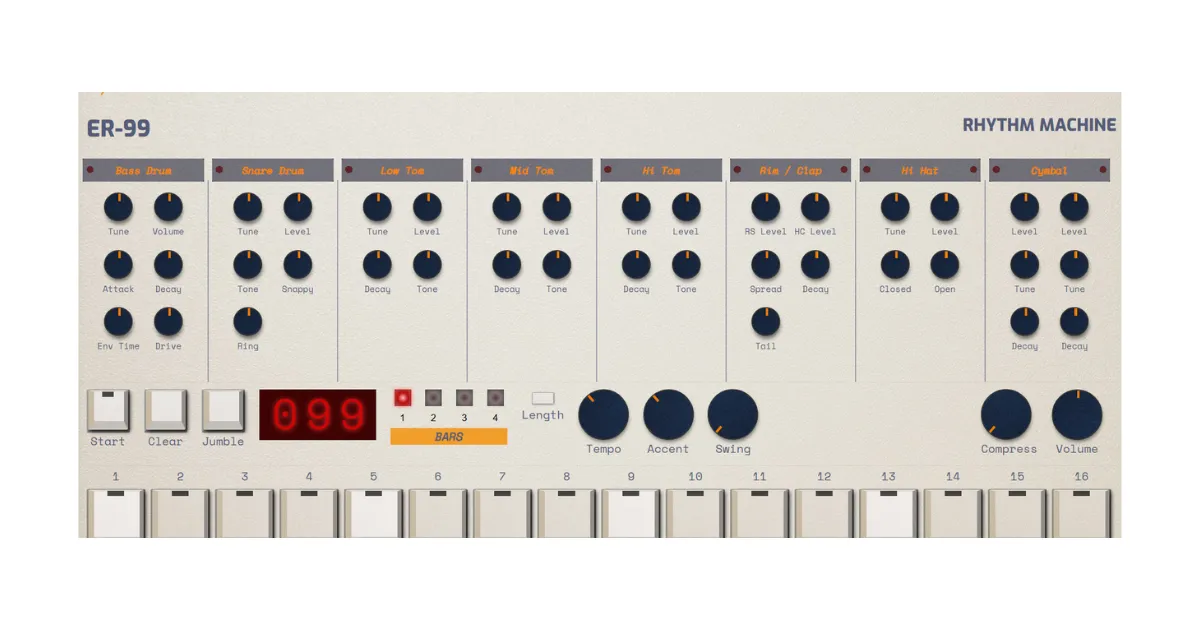
George had it set up, man. He was really off into his thing. He had a nice keyboard—a Roland D-50, I think—at the time. We’d hook up my [Roland TR] 626 drum machine and the 909 and had all that running through a mixer, and it sounded fucking great. I was becoming a name in the DJ game, so I wanted to exercise my ideas and expand upon them. I mean, it happened just like that, through a natural progression of me just doing it over and over again.
If I’m getting the timeline right, you’re making these tracks in ’86, ’87—but nothing comes out until 1990.
Basically, [the tracks that were eventually released were] just tapes. They were jams.
How did a track like “Altered States,” from The Afterlife, go from jam to release?
It was just really done straight from tape to record, though Armando [Gallop] and I did some post-production. We put it from tape to two-inch tape, and that was it. There were no extra ingredients or anything put on top of it other than Armando’s edit at the beginning. That was it.
Do your tracks tend to come out fully formed like that, or is it usually more of a process moving from idea to finished product?
There’s a spirit that happens, an energy that’s created within me. It’s like I’m on a search for it, for completion. Sometimes there’s a clear piece of consciousness that happens where it’s like I know exactly what I want to do, and I’ve got to go make it happen right now, and I try and go and articulate that. Then I start layering, because my production is based upon layering.
Even from those early tracks, the fact that you were working in layers was really apparent. “Altered States” and “The Afterlife” sound so different on a surface level from the records that came out on Prescription or, later on, Future Vision, but you had a sonic signature from the very beginning that’s carried through. You’ve got this really tense, intricate, super-tightly-wound rhythmic stuff happening. But above it, there are more sustained, expansive elements that give the whole track a kind of sci-fi bigness.
That’s my personality. That’s hard and soft at the same time, rough and beautiful at the same time. I’m a guy who grew up in the streets—not streets like I’m slinging on the corners, no shit like that, but I’m an urban guy, and I know how to handle myself out here. This is where I come from. You’re talking to me in the south side of Chicago, where [in the news] they talk about all the violence—I’m right here up in this shit, you know what I mean? I’ve been around the world, but I’ve been right back here. Experiencing all that, it gives me dynamics.


I want to talk about how the outside world makes its way into your productions—about how influence works for you. There’s a pretty famous story about you and Chez Damier, your partner in Prescription, going to Sound Factory in New York, getting your mind blown by Junior Vasquez, flying back the next morning to Detroit—your home base at the time—and immediately getting into the studio and producing “Morning Factory,” one of Prescription’s all-time classics. Does that story exemplify the way ideas tend to come together over the course of your career?
I function on the analogue level, meaning taking real experiences and transforming them into digital format. How do I take what’s here and what I’m feeling in my spirit and translate that to the keys, the drums, or whatever the case may be, so that I almost transport [listeners] into my experience? I’ve been able over the years to master that with myself, but it takes time to do that—to be able to articulate yourself in a certain way and to put spirit into your records.
That’s why I always try to put a live element into whatever I’m doing, even though it’s [mostly made with] electronics. Early ’80s music, 1980 to 1984—you listen to that sound, you can’t beat it. Why? People were getting used to using synthesizers, so you have this element of almost alien technology meeting organic analogue feelings. When you hear sounds [from a synthesizer] being used on a human level, an organic level, an analogue level, it creates this other thing that I don’t think people have been able to put their finger on exactly. It’s the mixture of heaven and earth.
Being able to make music that you can transport, being able to create a sound that people can step inside—that was the idea behind Prescription. Take me through how that sound came together, in the wake of The Afterlife EP.
The ideology behind Prescription was to open people’s minds, because we felt at the time that Chicago music was getting pigeonholed as being “tracks.” I was like, “That’s cool, but it’s not about tracks, it’s about music.” Cajmere was doing his thing, but his stuff was more track-oriented, “percolated.” It caught on because his street music is straight booty shaking-type shit. That’s fine, and it has its place, but this music is far more sophisticated than that, the experience is far more sophisticated than that. [Prescription] was about acting as a mechanism to change the vibration. That was the idea, but it turned into the process. It was just a lot of hardcore work, painstaking fucking work.
Let’s back up a bit to how this begins, which would have been in the first part of the ’90s. You move to Detroit, where you’ve linked up with Chez Damier and are making music out of Kevin Saunderson’s KMS Studios. At the time, KMS was a million-dollar facility, with every high-end piece of equipment you could imagine—all the bells and whistles. How do you not get lost in an environment like that? How do you keep it focused and keep it real to where you came from as a producer? I can imagine a lot of people would walk into that situation and just be like, “Where do I begin?”
For me, it was like a kid in a candy store—I was like, “Wow, this is the shit.” It was like opening up a bigger door to a bigger room, and I loved it. That’s what I wanted. It’s the difference between having a keyboard and a drum machine and having ten drum machines and ten motherfucking keyboards.
Are you somebody who has ever set constraints for yourself when you’re in the studio, as an exercise in keeping yourself focused? You go into KMS, you have access to literally everything, but you’re like, “OK, today we’re just using these two things and we’re going to see what we can do there.”
No. Never. I’m going to follow this path and wherever we go is where we’re going. That’s how it is. Because then the sky’s the limit. If there’s a specific thing that I’m trying to accomplish, I know where to go get it. You really have to—and especially at that time you had to—take the time out to study all of the modules that you had. With Kevin’s stuff, some keyboards and [other gear] that he had in there I didn’t fuck with. Some of the stuff in his studio was too experimental. It was like, “OK, I’m not ready to do a film score just yet.” You know what I’m saying?
What would be an example of something that you didn’t even bother with?
Kevin had gotten one of the first Waldorfs that were ever put out. We tried to hook it up and couldn’t get that shit to work at all. We were like, “This shit is just alien. We need a spaceship to go along with this.” We just left it alone. But the Kurzweil K2000 was the basis of the Prescription sound, and that was a keyboard that was not being used [regularly at KMS] at the time. The Kurzweil K2000 was my favorite fucking keyboard to this day. If I could get a hold of another one…
Is it fairly rare at this point?
I’m not sure now. I looked online and I didn’t see one. I think I left [mine] in a studio that I was recording out of, and I left it there too long basically. Came back, and it was gone.
That’ll happen sometimes.

I wanted to ask you about collaboration and mentorship, which I see as threads running through your production career. How do you like to collaborate with other producers? What are you looking for in a collaborator, or in a mentee?
Being a producer is, you have the talent of being able to see something and then create something out of nothing. And sometimes it means being a producer of people, seeing talent. A great person that does that, who we know is one of the best, is Quincy Jones. You know what I mean? One of the greatest producers of all time. But, being able to produce talent, being able to see something in somebody who doesn’t even know it’s there, and you pull it out? I did a lot of that. And I’ve been behind a few careers in terms of creating a platform for them so that they can do their thing. But to be honest with you, it’s more like I can see potential, based upon somebody’s taste—the types of things that they’re into, which I can see a similar strain there of where I’ve come from and what I wanted somebody to do for me, which is to take me and pull me along, whatever the case may be. So I’ve tried to do that with other people. A few of them have been very humble and given me respect and praised me for helping them out and we have great relationships to this day. And I’m proud of where they’ve gone and what they’re doing.
Then you have others, man, where they turn around and stab you right in the fucking back. So it’s like a double-edged sword. I have experienced more of the stabbing-in-the-back than the people that have been very gracious. You know what I mean? Money comes in the picture, fame comes in the picture, then all of a sudden amnesia comes into the fucking picture. I have no problem, for instance, telling you everybody that helped me out or did something for me, because it takes nothing from you to do that.
In other words, it doesn’t diminish your own accomplishments.
Not at all, man.
But some people feel threatened by that.
Quite a bit. Among many things. But yes, it’s happened quite a bit. And then I deal with people that I can see are confident in their own shit. And I think it’s better to be like that. There’s nothing wrong with reaching back and lifting somebody up, but make sure you’re not lifting up a snake.
There’s obviously a lot of politics in this music scene. How do keep that noise out of the studio? Maybe it creeps in sometimes, but do you have techniques for dealing with that—for trying to keep the focus squarely on why you’re in there creating?
You got to develop thick skin, bro—thick fucking skin. You have to also believe in yourself when nobody else does, because it’s going to happen. Anybody who’s been successful has had to deal with the fucking haters. It could be in your own house, it could be somebody out on the street, it could be your boy. What you have to do is just concentrate on what fucking matters.
Business is fucking business. That’s the other thing, too. I’ve been able to develop that understanding over the years. You develop a sense of being able to deal with different situations, dynamics. Wisdom with experience allows you to handle it the best. Any and everybody’s going to have to go through it on some level, because you’re dealing with people. A lot of people are disenfranchised with themselves and where their careers are and what they’re doing. And they’re busy looking at what the fuck you’re doing and criticizing that.
So sometimes you have to ride it out and wait for things to turn the other way.
Ride the karma horse, buddy. Ride that motherfucker. Stay focused. Haters is going to come.

There are a handful of moments in your career where you’ve ended up in a humbling situation. I remember reading about you moving to New York in the late ’90s off the back of Prescription. You’d made or been involved in a number of classic records, in a classic record label—really in helping create an entire classic sound. You’d even remixed Basic Channel. But in New York, you were suddenly just another guy on the dance floor. Was that intentional? Do you see the worth in that?
I mean, life had already humbled me anyway. I had lost a lot of fucking money opening the space [in Chicago]. I had a 7500-square-foot space, and I was developing it as an events place, and also a place where I could develop my talents and engage with the art community. USG is what it was called—Urban Sound Gallery. They ran me out of that shit because I was black, and I had money, and I had a space, so… I was selling drugs out of the space?
Obviously.
And then at the same time I was starting another label. I won’t get into it, but that wasn’t going well, because the guy I started it with was tricking off the money. So I said, “OK, well, I don’t have any choice but to go to fucking New York. I need to be inspired again.” That’s what I did, and that’s how I do. Ground up, there in New York.
New York has got its own level. People in New York are very surface about things, because it’s business. They’ll fuck with you even if they don’t like you, but they’ll go home and be like, “Fuck that motherfucker.” They’ll be behind your back, plotting and scheming and talking about you. Chicago’s a little more overt. “I don’t like that motherfucker. I’mma let him know I don’t like him.” Chicago has more of a small-town-big-city kind of mentality. But New York is… oof. New York is a motherfucker. I spent a lot of time on the dance floor—I mean, I’m considered what they would call a “baby powder kid.” People know me in the house dance community for dancing.
How long did you live there?
Altogether it was ten years.
How do you feel like your music changed over the course of those ten years?
What I was able to do in New York was start working more with my inclinations for live sound, because New York has got some badass musicians. Chicago’s got badass musicians there, too, but you have a lot of dope working musicians in New York. I was working with Giant Step, [where] the live element was very prominent. They were the big purveyors of acid jazz. Groove Collective was the in-house band for Giant Step. When I started working there doing production, I started using the Giant Step Groove Collective guys—the Groovies as they say—on my productions. So I started incorporating a lot of that into my sound.
It was also kind of comparable to what was happening at the time. You got guys like Joe Claussell, Louie Vega and Kenny Dope—and remember because they put out the Nuyorican Soul album, Giant Step did. Straight live musicians, and it was dope. It set a tone. So it put me in a position where I could start expanding my production prowess. I just developed my thing, so it kind of changed my style on that level. I was searching for a certain level of, once again, fidelity and sophistication. And so that’s what happened.
Had you worked with live musicians before? Was that an adjustment—a new sonic element you really had to learn how to wrangle?
By that time I could kind of really articulate what I want—I could tell guys what to do, because I played percussion and I played keys. Only thing I couldn’t do was guitar. If I needed to say something, I could talk to them enough to get them where I wanted to go, or point them in the right direction.

You’re now in your fourth decade making music. Is there anything that you still really want to do that you haven’t done yet? Or something that you’re working on now that you haven’t shown anybody yet?
My band. A few years back, I put out this album called Cinematic Travels, which was supposed to be a live performance album. And that didn’t really come to fruition. But most recently in the last year, it just happened. I created this thing called WARM, which is an idea I came up with in 1992 or ’93. And so I’m putting it into fruition now, pretty much playing everything. It’s some other shit. It’s very much an ode to the side of me that listens to other things outside of house music. In my house, I don’t really listen to “house music”—let’s put it like that.
So you play that in the clubs, but not a whole lot when you’re hanging out in here, listening to music on that big system over there and getting inspired?
Not at all. Matter of fact, it’s the least thing that’s played in my house. I’ll put it this way—the stuff that’s on my Worldwide FM show, that’s the kind of stuff I play. And you barely hear any house music on it, because it’s not what really inspires me. That’s not at all where any of [my music] comes from, because that’s not really what house music comes from. House music comes from an amalgamation of sounds, right? It was people’s articulation of what that amalgamation of sounds was. No one said, “Oh, this is house music”—it was never like that. There was the style of music that Frankie Knuckles was playing at the Warehouse, which is where the name comes from. Motherfuckers made a track that sounded like the music that Frankie was playing, and called it house music. Boom, end of story. You know what I mean? But if [people] haven’t heard the live band [with] Ron Trent on drums and keys and guitars, they haven’t seen [me] yet.
Now that you’re at the point in your career and with your craft where you can articulate things through fully live instrumentation, is there still a place in your production practice for sampling and drum machines? Do you still get excited about that?
I get inspired by different things at different times, and it depends on what’s going on. I get inspiration from books, or I might watch a movie, or I might have a thought, an impression about something. As long as I have these things around to get to that, I’m using it. Live, electronic—it depends on what I’m picking up in the ether, and then I’m going with that.
So it’s less about the way you’re articulating it. It’s about it getting articulated.
Exactly. Keep yourself open. One of my teachers, who is a percussion player, said that Herbie Hancock told him, “Learn a technique, and then forget it.” So that means learn how to work this shit, learn the technical side of it, and after that, forget it. Let yourself be open to your own, because that’s when innovation happens. That’s when it happens, when you let go. That’s why [referring to poster], this cat here, Miles Davis, that’s why he’s one of the masters—he never stopped. He went from the bebop era all the way into fusion.
And he was unapologetic about what he was doing. I’m thinking about On The Corner, a record with an infamously lousy reputation around the time it was released. But I’m not mad when I listen to that album now.
Same thing happened with Prescription. When Prescription came out, people were like, “Oh yeah, this is some cool shit. But we’re going to keep playing this ‘Percolator’ stuff.” But then we were getting momentum, and eventually it went somewhere. But it wasn’t until the 2000s when people looked back, like, “That shit is fucking amazing. What the fuck, wait a minute… Prescription?” And people started really wanting to understand what it was all about. Did that shit 26 years ago [laughs]. When you’re pioneering and being innovative, you’ve got to get used to that. You’re leading the people to a certain degree. You’re in front of it. People ain’t going to always understand you. It’s OK to be the weird kid on the block.





Leave A Comment
You must be logged in to post a comment.