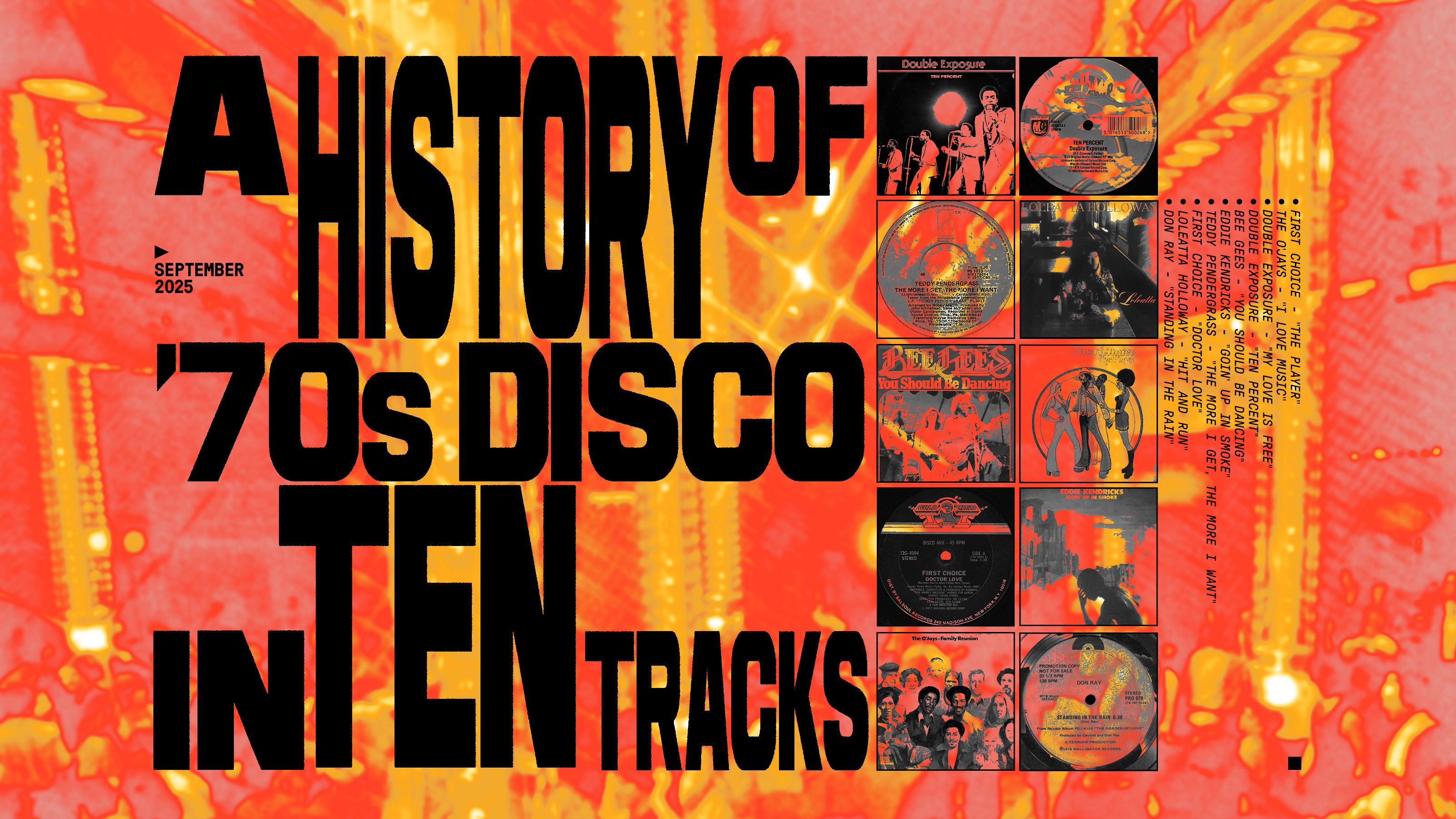
A History of ’70s Disco in Ten Tracks
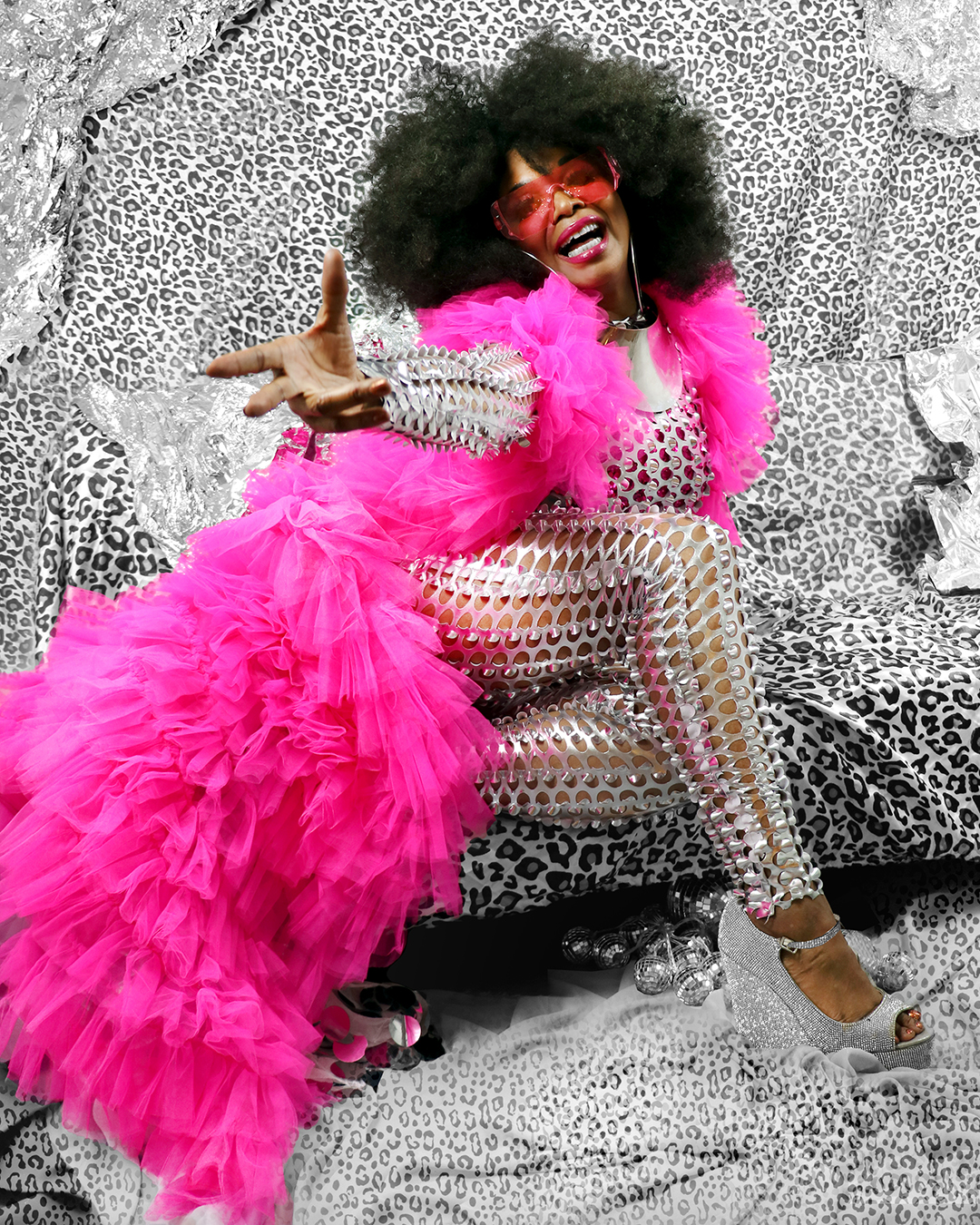
Barbara Tucker is among the most important house and soul vocalists living today. With the spirit of Studio 54 back, she runs down her essential feel-good jams, from Loleatta Holloway to the Bee Gees.
But despite being associated with the golden era of house, Tucker considers herself a passionate disciple of disco. She’s worked extensively with legendary producer Cerrone, providing vocals for live performances as well as the 2007 nu-disco track “Lie to Me.” For her, disco provided a lifeline and her most foundational musical experiences. “First of all, I love disco,” Tucker asserted over the phone from a holiday in Ibiza. “If you hear this music, you’re not going to be a wallflower. You’re getting up to dance.”
It’s this galvanising energy that catapulted disco from underground darling to global sensation. Emerging from Black and Latine subcultures in 1970s New York, the sound was born from late-’60s R&B and funk, the spirituality of soul and the layered instrumentation of salsa. The genre thrived in the clandestine scene associated with queer communities and helped to birth contemporary club culture. Discoteques became sites of expression, opulent clothing and sexual liberation.
Tucker may have been too young to enjoy the culture at its zenith, but disco was nevertheless the sonic fabric of her coming of age in Brooklyn: the velvet ropes of clubs like Studio 54, Paradise Garage and Leviticus she couldn’t yet enter, doing the hustle in Fort Greene Park or hearing The O’Jays blasting at the local record shop.
The joy Tucker associates with disco contrasts heavily with the backlash the movement faced. By the late ’70s, at the height of its popularity, disgruntled rock fans began the “disco sucks” campaign, culminating in the infamous Disco Demolition Night at Chicago baseball stadium Comiskey Park in 1979. Led by local DJ Steve Dahl, the rally resulted in the detonation of a dumpster filled with disco vinyl. More than 5,000 fans stormed the field, requiring riot police to disperse the crowds.
What followed was disco’s sharp decline, precipitated by the racist, homophobic agenda of the anti-disco campaigners. For a time, the genre disappeared from the public eye and returned to the recesses of counter-culture. However, through the years, it’s proven its resilience through various resurgences. Most notably, its crossover appeal within pop has provided newer generations with a valuable entry point. Artists like Sophie Ellis-Bextor lit up the charts with the nu-disco of the early ’00s, while pandemic-era albums such as Dua Lipa’s Future Nostalgia and Jessie Ware’s What’s Your Pleasure? evoked the escapism and pleasure of disco at its peak.
For our latest A History In Ten Tracks, Tucker sketched out her very personal history of disco. Her selections, which range from contagiously funky beats to the charismatic vocals of Teddy Pendergrass, demonstrate that disco is eternal. It’s not just a genre; it’s a full-body expression of togetherness.
First Choice – “The Player”
[Philly Groove, 1974]
This one is funky. Let me tell you something: the R&B, dance and disco producers back then were nasty, dirty and funky. We’d feel those funk songs in our lower gut, even if there were no vocals. The music, oh, it was hot! We’d hustle to this track.
I loved Rochelle Fleming (formerly of First Choice) even more [after] I had the opportunity to record with her, which was a dream. I never could’ve known that Louie Vega would one day bring Fleming and myself together to do the remake of “Love Having You Around” by Stevie Wonder.
The O’Jays – “I Love Music”
[Philadelphia International Records, 1975]
I’ll never forget this: on my way home from junior high school, I had to transfer from one bus to the other, and my bus stop was right in front of the record store. They used to play “I Love Music” on the speakers outside. My mum would give me money, so I’d buy a little 45 RPM record. I couldn’t help but move. I was waiting for the bus, hearing this song, just moving. Lyrically, it resonates. Musically, it resonates.
Double Exposure – “My Love Is Free”
[Salsoul Records, 1976]
Oh my goodness! Years later, at [legendary New York party] The Underground Network, Don Welch and I did a classics night once a month. We booked Double Exposure. It was amazing. Who would’ve guessed I would’ve been in the music business, singing with, dancing with or booking these artists?
Double Exposure – “Ten Percent”
[Salsoul Records, 1976]
“Ten Percent” might’ve been the #1 song for hustling. When you heard Double Exposure songs like “Ten Percent” and “My Love Is Free,” you were instantly looking for someone to hustle with. You didn’t want to dance by yourself. Back then, I don’t remember seeing people in Fort Greene Park dancing by themselves as much as people looking for somebody to hustle with. I might’ve been young, but the older guys would hustle with me ‘cos I was doing it!
Bee Gees – “You Should Be Dancing”
[RSO Records, 1976]
“You should be dancing, yeaaah.” The way the Bee Gees sang, their harmonies, the fact they were brothers… They had so much style when they dropped their songs and lyrics. Of course, it was all tied in with the film Saturday Night Fever.
At my house in Brooklyn, we didn’t have a big stereo, but when my brother finally got a record player, we were in the basement listening to music. This song was just amazing. It’s feel-good music. It’s music that, if you hear it, you’re not going to be a wallflower. You’re not going to just sit there. You’re getting up to dance.
Eddie Kendricks – “Goin’ Up in Smoke”
[Tamla / Motown Records, 1976]
When this song came out, I wouldn’t have heard it in a club because I was too young. I would’ve heard it outside at a block party or on a TV dance show. It’s like the sound of church with dance music underneath. Not only was this song danceable, but being someone of Christian belief, it reminded me of scripture. “Wow, they’re singing this song in the club? It’s like a prophecy of what’s to come.” I could dance to it, but it was conscious—it was a good feeling for me. When Ten City remade the songs years later, I was like, “It’s back!”
Teddy Pendergrass – “The More I Get, the More I Want”
[Philadelphia International Records, 1977]
Teddy, oh my goodness! Every track hits on this album. I remember being with my brother in the basement of our house, him and his three friends. They’d be practicing how to hustle with me.
Teddy Pendergrass was an amazing artist with drive. You see, singers in that era had such drive. They sang with their heart. I don’t know how many times it took to record this song. The vocal delivery was wonderful, the music was on-point. This is one of the best eras of music.
First Choice – “Doctor Love”
[Gold Mind Records, 1977]
I could’ve just chosen First Choice’s whole Delusions album, but I wanted to give some other artists some play. It’s awesome when an artist has more than one track and you can go into their library and everything hits. It was amazing to hear and watch First Choice on TV as a child. Soul Train was part of our tapestry growing up, and of knowing what it is to feel the sassiness of recording artists. Today, it seems that artists can be very regimented, or follow the sound of another artist. Artists back then had their own style.
Loleatta Holloway – “Hit and Run”
[Gold Mind Records, 1977]
Oh my goodness, I love this song. It reminds me of my friend. I was on my way to junior high school and I got off the bus to meet her. We weren’t at a club but we could appreciate good disco music. The two of us were showing each other the lyrics. I just remember copying from her, “Now, I may be an old fashioned country girl.” We had to know the lyrics and they had to be on-point.
Don Ray – “Standing In The Rain”
[Polydor, 1978]
“The leaves were falling down!” Hearing this again, I see myself as clear as day in Fort Greene Park in Brooklyn. The DJ is playing and everyone’s hustling. Back in that day—we’re talking ’70s New York, specifically Brooklyn—it was about finding a partner and hustling.
I still feel good about this song. Cerrone is the producer and when I sang it while touring with him, I’d say, “You know this song was really big in Brooklyn and New York!” This is one of my favourite songs he ever did.





Leave A Comment
You must be logged in to post a comment.