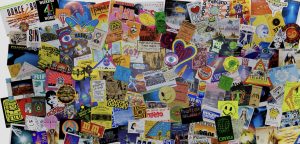
With 15,000 flyers from the golden age of UK rave and acid house in his possession, and countless others from around the world stored on the Phatmedia website he’s run since 1998, collector Dave Nicholson has built an essential archive of dance music’s visual history. His new book on Velocity Press, UK Rave Flyers 1988–1989, is the first part of a new trilogy illuminating this vast library alongside anecdotes and interviews with those who were there. Daniel Dylan Wray dialled him up to find out more.
Dave Nicholson has been collecting rave flyers since before he could legally step foot in a club. In 1998, he set up Phatmedia as part of a project at art college. It has gone on to become the largest database of old school rave flyers on the internet. Part archive, part community, people upload and share classic flyers from Belgium to San Diego via Coventry, for parties that span everything from hardcore to house.
Now he has just released a book: phatmedia presents UK Rave Flyers 1988–1989 on Velocity Press. While many of the flyers on the page are the very essence of primitive design, with some even including hand scrawled text, the book is slickly designed and comprehensive, stretching over 300 pages and featuring over 800 flyers from over 50 different club nights that took place during the peak of acid house in the UK.
Accompanied by interviews with DJs, designers, ravers and promoters, featured clubs include The Haçienda, Shoom, Hedonism, Future, Spectrum, Land Of Oz, Apocalypse Now, Hypnosis, and Sunrise. It’s not all big hitters and household names though; the book offers a cross-country overview that dives deep into lesser known parties as much as the household names.
We caught up with Nicholson, who talked us through the book’s creation, as well as his lifelong dedication to a field that was once heavily niche but now commands huge interest and investment from collectors. Read on below.


So, where did your obsessive journey begin with collecting rave flyers?
“Yeah, obsessive is right. I remember being handed a flyer for Fantazia when I was 13 and straight away the imagery just takes you to a different place. I remember thinking, ‘Wow, this isn’t something you see every day. This isn’t in your Smash Hits magazine. I want to find out what this is. I want to find out more. Who are these names on the back?’ I was attracted to the mystique of it all. And obviously the design is meant to draw you in if you’re on that sort of wavelength, should we say, the trippy artwork and the fractals and everything like that.”
Did this coincide with you being into that kind of music?
“Yeah, around the same time I was given a mixtape by someone and it was Carl Cox at The Eclipse. I think that was the first time I’d ever really heard anything like that. I was like, ‘Wow, this is amazing. So, it’s about the same sort of time we’re getting the flyers, and it just opens up a whole new world of, like, what are these things, these raves? It wasn’t for a few years until we actually managed to get into a rave, just before my 16th birthday in Plymouth, but before that we were tracking down all the information we could. It was brilliant and great fun. You’d get a group of mates on a Saturday and you go around the record stores. Because we were too young to be going raving, the next best thing we could do is just seek out all these rave flyers.”
What does your personal collection look like?
“I’ve got about 15,000 give or take. In the basement I’ve got thousands of flyers from the later club years and all-around Europe. But in the office I’ve got two big Bisley filing cabinets stacked with probably about 10,000 in. Then I’ve separated all the rarer stuff – all the ‘80s stuff and all my hometown Plymouth flyers. I call that my gold. They’re in special box cabinets up on the shelves. Everything’s filed A-Z and most stuff’s digitised, so I can easily grab them through the finder on my Mac or just go into the cabinets and know exactly where a flyer is.”

“During lockdown it just went crazy… We were seeing a few flyers go for over £1,000 – ones that I’d paid £10 or £20 for back in the early 2000s. If I’d have let all mine go back then I could have paid off my mortgage.”
Are all the flyers in the book from your personal collection?
“I started collecting the flyers for the book about seven years ago and at that point there were a lot that weren’t from my collection. But then lockdown came in and the rave flyer collection scene just went crazy. I was running a group with a few friends that had 3,000 people in it and then after six months of lockdown, there were 50,000 people in there. So that just opened up a whole world of new collections and possibilities – buying, selling, trading. In the book, I think about 400 or 500 are from my collection, so there’s still a lot from other people. In the acknowledgements page, you’ll see quite a few names. That’s people that I have visited, and scanned their collections, or they sent me their flyers in the post.”
How do you go about tracking down little bits of paper from 35 years ago when you’re looking for one you don’t have?
“It is tricky. Having run the Phatmedia website since 1998, the archive has built and built over the years. So I’ve got to know quite a lot of what’s out there, what flyers are there, what nights were big. But I still find new things out as I’m going along.I’m always scrolling and trawling through Facebook. You just search, ‘Oh, what’s this promoter? What’s this night?’ Then you start talking to someone that went to one of those nights and then they put me in contact with a DJ or a promoter. Next thing, I’m phoning them up and I have a three-hour conversation about that night with them.”
What was the thinking behind collating the years 1988-89 for this book?
“Originally it was going to be one book, 1988-92. But the more I looked into it, the more there was a huge amount of history, so it just grew and grew. In the end, me and Colin [publisher of Velocity Press] decided, well, let’s split this into three books and do it properly. So, I’m already working on book two.”
Would you say there’s any recognisable themes that define this era?
“I guess there’s two different themes, really. You’ve got the quite West End-styled flyers of Future and Shoom and then you’ve got the more DIY ‘break into a warehouse’ type flyers – just very rudimentary and shove a smiley on. Then, as you see the things going bigger out into the M25, like those Energy raves, there’s a lot more full colour as a lot more money was being spent. And one of the most common design themes after the smiley is probably Keith Haring. Mark Wigan from the Brain club was friends with him and went out to New York and did some art with him. I know some other flyers do have a nod to that; they say thanks to the Keith Haring foundation on the back. Some of them legitimately have his cooperation but others have blatantly ripped it off.”
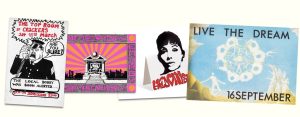

“The artwork changed so much. I don’t think the use of Photoshop and digital imagery added to the designs. They went away from the hand drawn and the airbrushed to being more mass produced, and it just didn’t hold that same mystique.”
It seems like you’ve made a real point of avoiding just the usual big name London clubs here?
“I really wanted to represent and make sure all these towns that often get overlooked were represented, like Jive Turkey in Sheffield. Obviously, you have The Haçienda in Manchester but there were other things going on, there were all these little illegal nights and there was Sweat it Out by the Donnelly Brothers. The whole thing was up and down the country. What was really interesting was finding more about the Blackburn raves. I just didn’t really know how big they were. What they were up to was crazy.”
A lot of the pages contain interviews and stories from DJs and promoters. Were there any real discoveries along the way or any nuggets of information you particularly enjoyed finding?
“Sunrise’s Midsummer Night’s Dream was an interesting one, as that was one of the most famous, or infamous, raves. It spawned The Sun headlines ‘Ecstasy Airport’ and ‘Spaced Out’ [after they infiltrated their 1989 rave held in White Waltham aircraft hangar]. That was brilliant, finding people who were actually on the front cover of The Sun and had to explain to their parents on the Monday morning why they weren’t at their mates’ house because they were busy raving in an aircraft hangar. And I actually spoke to the cameraman who took those photos and he didn’t have a clue what his photos led to. He had no idea it was one of the most infamous newspaper articles in the whole rave scene and copies sell for £300.”
Are rave flyers worth a lot of money these days?
“During lockdown it just went crazy. Everyone had time on their hands, so people were going into their lofts, into their granny’s attics or their basements, and finding these collections or wanting to add to their own. So prices just went mad. We were seeing a few flyers go for over £1,000 – ones that I’d paid £10 or £20 for back in the early 2000s. If I’d have let all mine go back then I could have paid off my mortgage. Then as people went back to work, the prices sort of settled down again and now it’s a bit of a plateau.”
As someone with a vast knowledge and collection, do you view there being something of a golden period for these kinds of flyers? Was there a point when they dropped off or became less interesting?
“I used to discard anything from the mid-90s onwards, but then I found that hard as there are just so many flyers [from that era]. So I do keep them but I don’t actively collect the later ones. The artwork changed so much. I don’t think the use of Photoshop and digital imagery added to the designs. They went away from the hand drawn and the airbrushed to being more mass produced, and it just didn’t hold that same mystique. So with the books we’re going up to 1993 – that’s my cut off point to the classic rave design era.”
phatmedia presents UK Rave Flyers 1988–1989 is out now on Velocity Press. Buy it here.





Leave A Comment
You must be logged in to post a comment.