
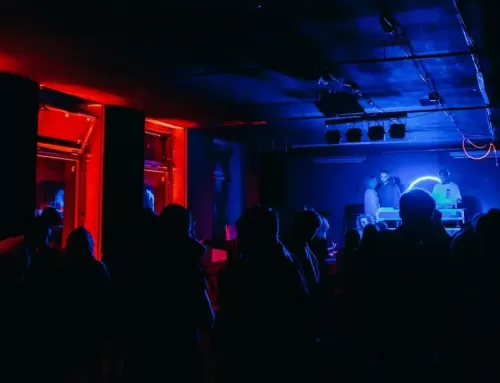
Watch a turntablist work a pair of direct-drive decks. It is a physical act. Fingers manipulate the vinyl and the crossfader clicks. Hours of solitary practice translate into a live rhythm. That is the traditional art of the DJ. Now look at a modern stadium main stage. A lone figure stands behind four CDJs under a massive LED screen. They wave a towel and press a single glowing cue button. A pre-programmed track kicks in perfectly on time with the pyrotechnics. Both performers hold the exact same title. But the meaning of the word has completely changed.
During the early 2010s, American music executives recognized the massive profit potential of Chicago house and Detroit techno. They repackaged the culture into a highly marketable product and called it EDM. In the process, the industry largely erased the marginalized Black, Brown, and queer youth who built the original foundations. Today, corporate popularity rankings dictate the entire industry. Look at the annual Top 100 lists, and you will see heavily marketed pop producers holding the highest spots. The technical masters who treat the decks as actual instruments are completely absent. The role has shifted from live physical manipulation to triggering a pre-planned sequence to climb a corporate leaderboard.
TL;DR: The modern commercial electronic music industry co-opted the DJ title to market stadium pop producers. Global rankings like the DJ Mag Top 100 now dictate massive booking fees based on advertising budgets rather than actual mixing skills. This corporate system completely excludes technically proficient instrumentalists who manipulate analog gear.
How Did We Lose the Physical Art of the Mix?
Pioneer released the CDJ-2000nexus in September 2012. It came with a Beat-Sync button that automatically beat-matched tracks via a master and slave deck link. This small piece of plastic fundamentally altered the barrier to entry.
Before this technology arrived DJs had to train their ears to match tempos. They nudged the jog wheels manually. They rode the pitch fader. Taking away the risk of a trainwreck transition removed the tension from the room. Performance became a rigid routine instead of a vulnerable human exchange. Anyone could now stand on a stage and appear to be mixing.
The Erasure of Bronx Basements and Chicago Warehouses
The origins of the DJ do not trace back to massive European festivals. The craft was born in the marginalized neighborhoods of 1970s New York. Clive Campbell threw a back-to-school party in a Bronx apartment complex in 1973. Under the name DJ Kool Herc he looped percussive breaks using two identical vinyl records. This technique transformed the DJ from a passive selector into an active musician.
Concurrently the foundations of electronic dance music emerged in the Midwest. Frankie Knuckles provided a sanctuary for Black, Hispanic, and queer youth at a Chicago nightclub called the Warehouse. These spaces served as survival mechanisms. They offered a physical release from daily urban struggles. The DJ was the trusted guide for communities seeking refuge from systemic oppression.
What Happens When Corporations Buy the Groove?
Wall Street eventually realized the massive profit potential of kids dancing in fields. Media executives executed a calculated corporate buyout of dance music. In 2012 Robert F.X. Sillerman refounded SFX Entertainment with the explicit goal to build a festival empire. He purchased major promoters and digital storefronts to control the entire supply chain.
This corporate monopoly demanded a highly marketable product. It pushed massive audio buildups and heavy bass drops over intricate live mixing. The underground club focus shifted entirely to the main stage. You can see how this changed audio production entirely if you look at the technical breakdown on mixing sub bass for club sound systems. Producers started writing tracks specifically engineered for massive stadium speakers. They needed a metric to sell these new stadium headliners to investors.
The Economics of the DJ Mag Top 100
Global popularity polls reveal exactly how the definition of a DJ collapsed. The DJ Mag Top 100 claims to crown the best artists in the world. Instead it functions as a pure marketing index. Landing a high spot on this chart directly dictates the massive booking fees artists can command at festivals in Asia and America. DJs secure their spots by investing massive sums of money into targeted advertising campaigns. They buy their way onto the list.
The ranking system frequently rewards a corporate avatar who employs uncredited ghost producers. It ignores the working musician reading a dark room at 2 AM. The voting process relies heavily on social media reach rather than independent talent evaluation. The system became so disconnected from actual club culture that Resident Advisor completely discontinued its own Top 100 list in 2017. They realized the ranking format promoted unhealthy commercial competition instead of supporting genuine underground talent.
The Producer vs. The DJ Reality
The tension finally boiled over into public view during the peak of the festival boom. Electronic artist Deadmau5 published a highly controversial blog post in 2012 acknowledging the reality of modern performances.
“We all hit play. It’s no secret. When it comes to ‘live’ performance of EDM… that’s about the most it seems you can do anyway”.
The industry rewards studio production above technical deck skills. Artists ascend to global superstardom by producing chart-topping pop collaborations in their bedrooms. They secure high-paying festival slots based on Spotify streams. When they arrive at the gig the equipment acts as a prop. They perform an elaborate pantomime routine for an hour. The market is brutally saturated. Resident Advisor data shows that out of over 134,000 DJ profiles only 1.6 percent actually secure five or more future bookings. The few who do reach the top of the financial ladder rarely use analog turntables.
Why Are Technical Masters Missing From the Charts?
Technical legends like A-Trak and DJ Jazzy Jeff do not appear anywhere near the top of commercial rankings. Legendary turntablist DJ Craze highlighted this absurdity in a 2014 video routine. He mocked the modern festival act by triggering a single air-horn sample and shouting at the crowd. “I’ll even get tweets from fans that say ‘You’re not even a DJ you’re just pressing a button!’ and I’m like ‘Exactly!’”.
If you want to see actual technical ranking you have to look at the DMC World DJ Championships. This competition installs expert judges to evaluate pure technical skill. DJ Craze won the DMC World title in 1999 by blending futuristic technical mastery with deep musicality. He treated the turntables as a complex instrument. That level of rigorous manual control does not translate to a fan-voted magazine poll.










Leave A Comment
You must be logged in to post a comment.